In the Sketchbook – July 2016

Welcome to In the Sketchbook, a monthly look at fashion design sketches that we are working on for ourselves. Sketching garments on a personal croquis is a great way for the individual couture enthusiast to move beyond the use of commercial patterns and into a world of personalized design! It can be intimidating at first, but with a little bit of practice it becomes something you look forward to. Join us for a look of what we have going on In the Sketchbook! Brought to you by Wendy Grossman of Couture Counsellor and Steph King from Siouxzeegirl Designs.

On this third installment of In the Sketchbook, I’m exploring combining structured fabrics with soft, drapey fabrics and asymmetry.

Earlier this month, I was getting off the elevator after a morning workout as a neighbor was getting on to go to her office. She was wearing a lovely navy linen jacket and a flowy skirt in a floral print. I thought about how nice she looked and the image brought to mind two fabric pairings I have that are waiting to become something new to wear.

Both of the soft fabrics were acquisitions from A Fabric Place outside Baltimore in May. The gorgeous sage green wool crepe was a gift from my dear friend Stephanie King, who saw how perfectly it goes with the green, peach and pink silk charmeuse. The blue-gray wool was also a purchase from A Fabric Place. It was part of an assignment during Sarah Veblen’s Design I class for me to pair a sheer floral with a “serious” fabric.

Here are the sketches.

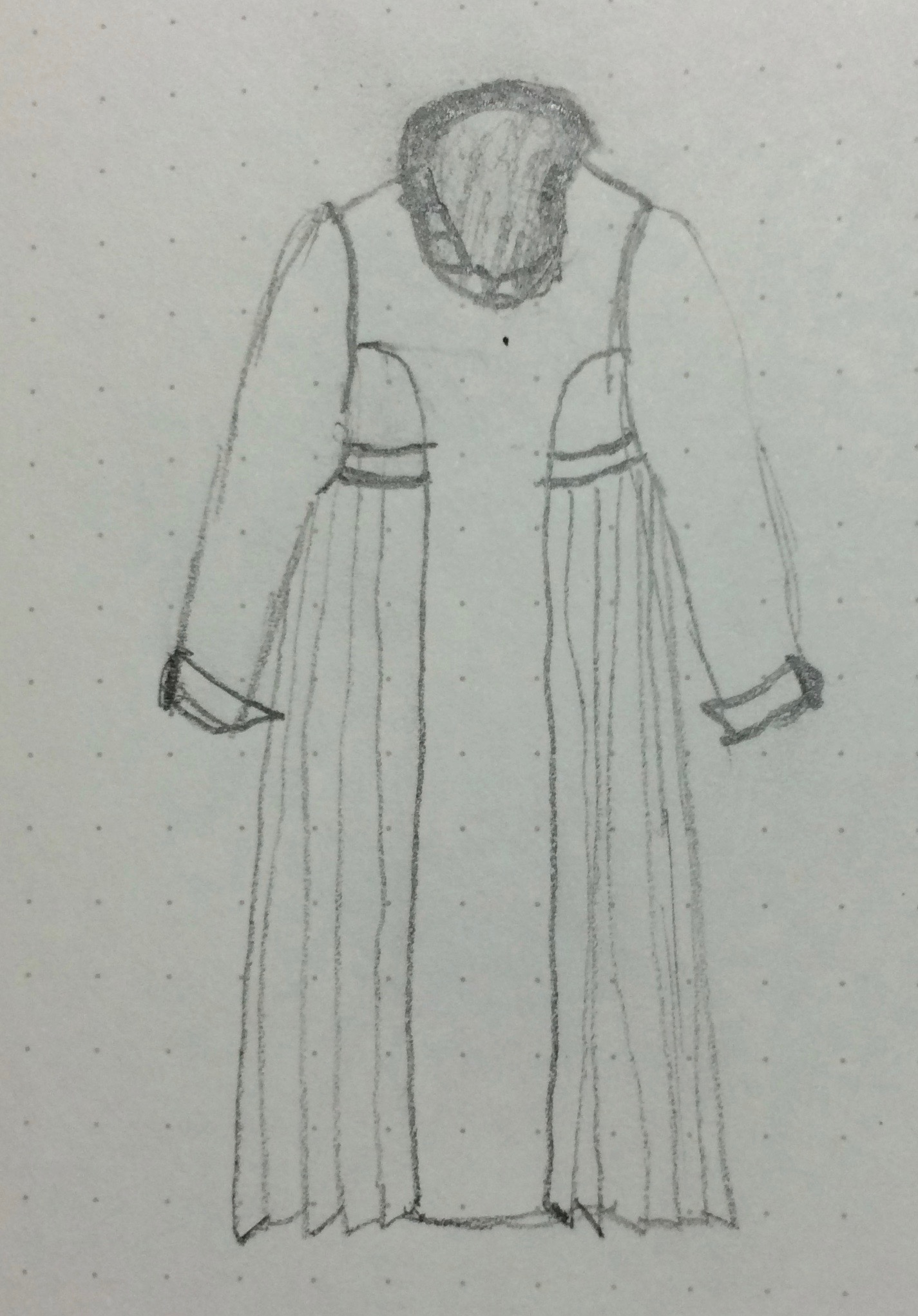
I’m thinking asymmetric coat dress for one of the two fabric combinations. I haven’t settled on the neckline/collar yet, but if I go with the green, I thought the charmeuse would be nice as a cuff and maybe a band on the dress as well as the mock skirt peeking out from underneath the wool. If I go with the blue-gray, I’m thinking soft folds everywhere the sheer is used (but not actual ruffles). These ideas need to percolate some more.

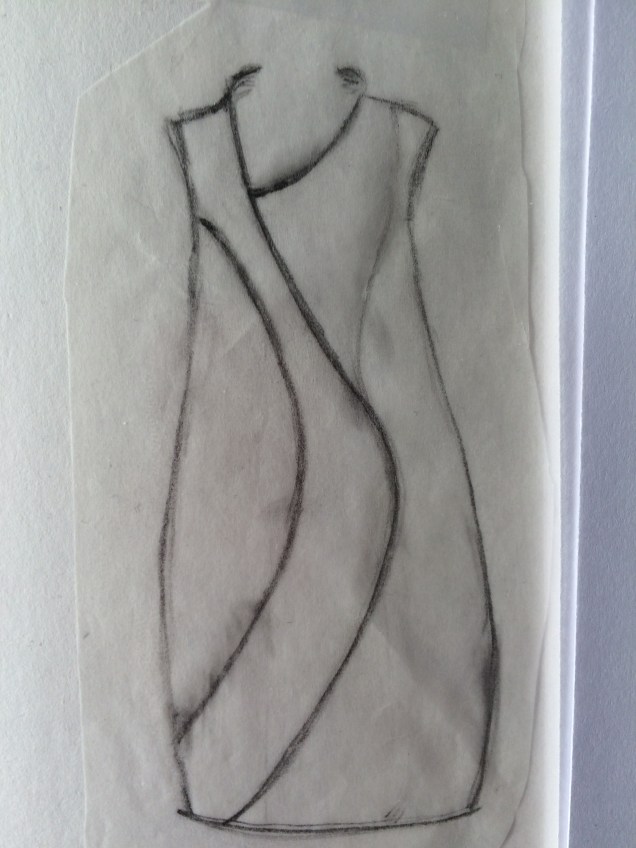
Here is another asymmetrical design idea that’s been percolating in my brain. It was an assignment in Design 1 to come up with a “swoop” design.

IMG_1884

The pattern work on that one will be quite the project.

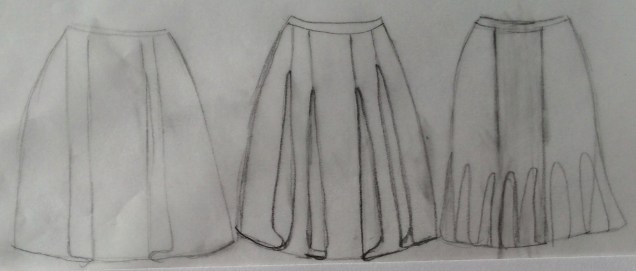
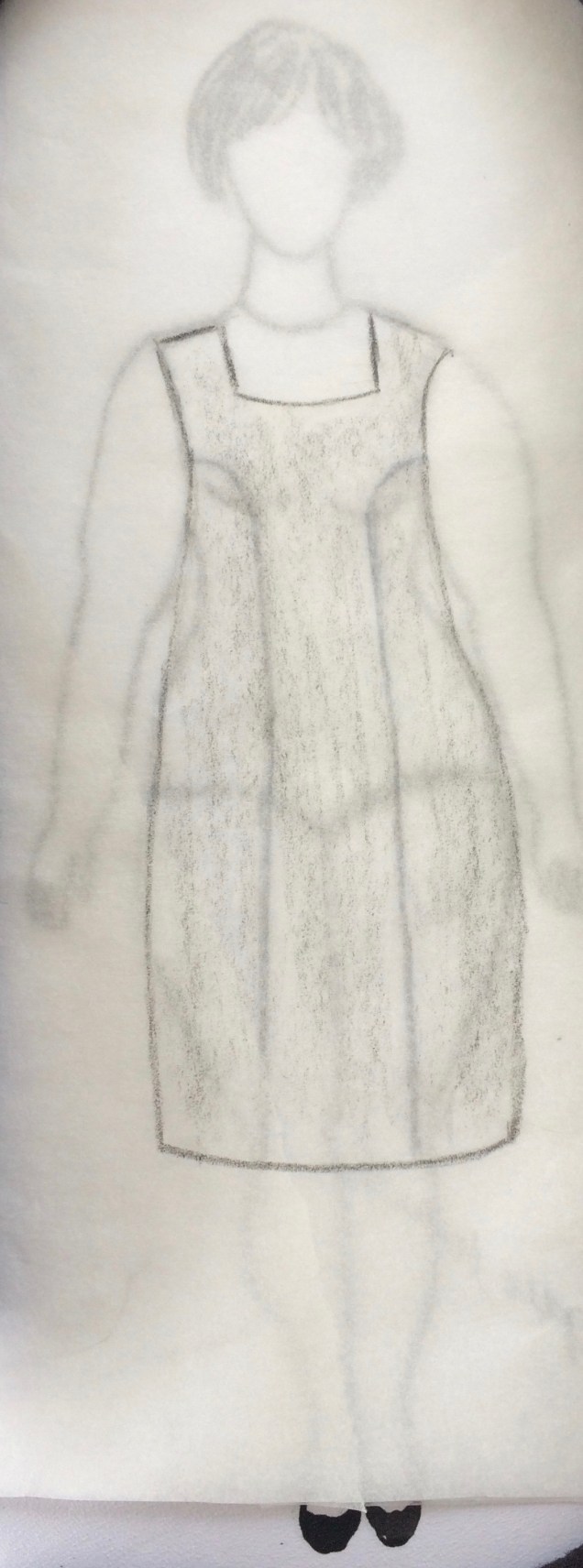
Right now, I’m in relaxed summer mode with my sewing. I found some fabric in a drapey light neutral that I was thinking about making into a summer skirt. The fabric doesn’t lend itself to pleats, but I wanted a relaxed silhouette. S0, here are the ideas I sketched out as possibilities.

IMG_1883 (1)

Lots to think about.

I’d love to hear what you think about these and about what you’re sketching. Be sure to check out what’s in Steph’s sketchbook at 10 Sewing Machines & a Serger.

The Belated Spoonflower Challenge Dress

IMG_1761

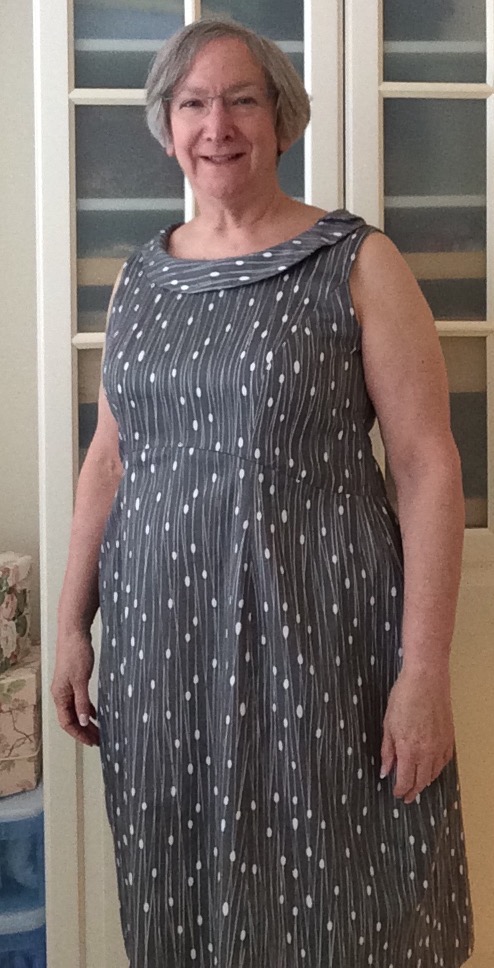
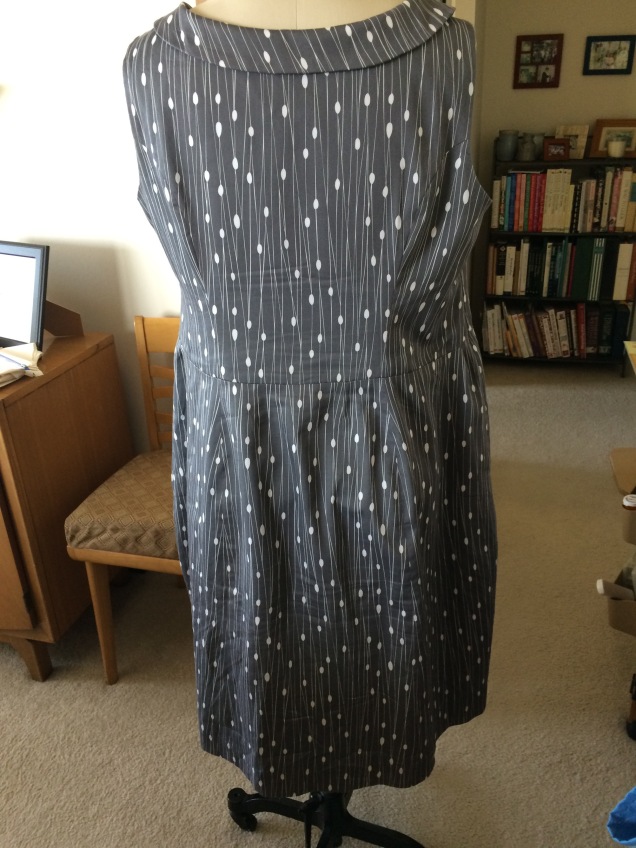
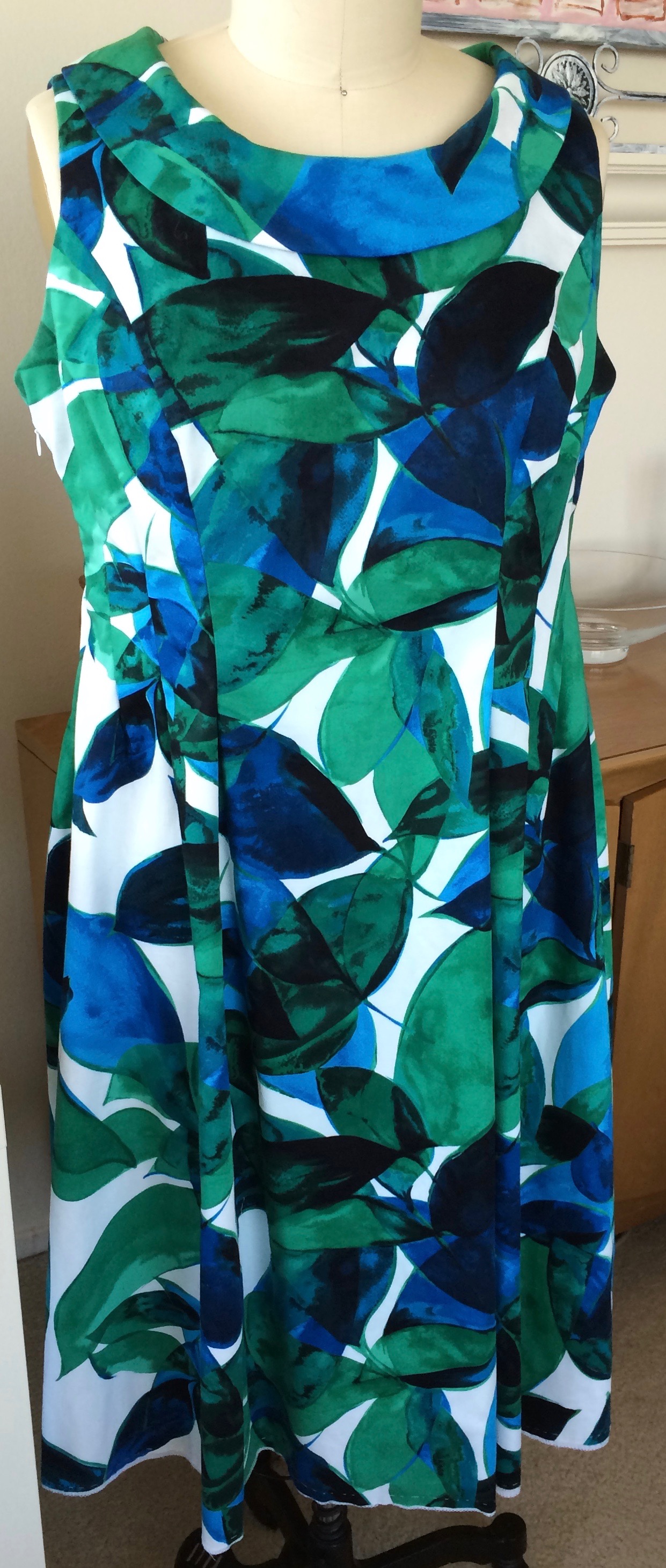
The latest addition to my self-designed wardrobe is a dress made from organic cotton sateen in the print called Entangled, which was designed by Heather Dutton of Hang Tight Studio and sold on Spoonflower.com. I intended to wear it in the ASG Chicago Chapter fashion show last October as part of a group challenge with other members of my neighborhood group, Sew Chicago. We had voted on the print and we could choose to make any garment using any of the fabrications and colors that were offered in this particular print. I really like the print and  I wanted to be part of the group on the runway, but I was the co-coordinator of that show and the dress didn’t get finished in time.

I tried it on for Sarah Veblen later that fall and she pinned out some of the fullness in the side seams and contoured them toward the hem. Nice improvement, but when I realized that making that change meant resetting the invisible zipper on one of the seams, it remained unfinished for months. I rationalized that this is a summer dress and there was no point in finishing it in the fall or winter. Then came the crunch for the Haute Couture Club of Chicago fashion show and the next thing I knew there was just barely enough time to get it done so I could wear it at the ASG National Conference in Indianapolis.

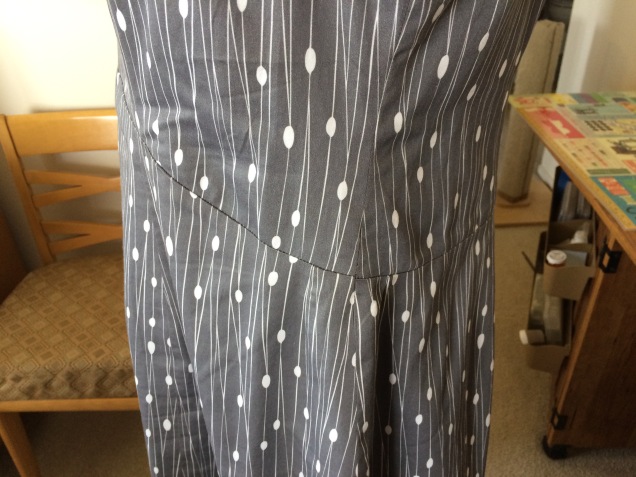
As you can see, the dress has a curved Empire seam. It dips quite a bit in the back.

IMG_1857

When I used this design again for my Little Black Dress, which is more fitted in the skirt, I modified the curve so that it didn’t dip as much.

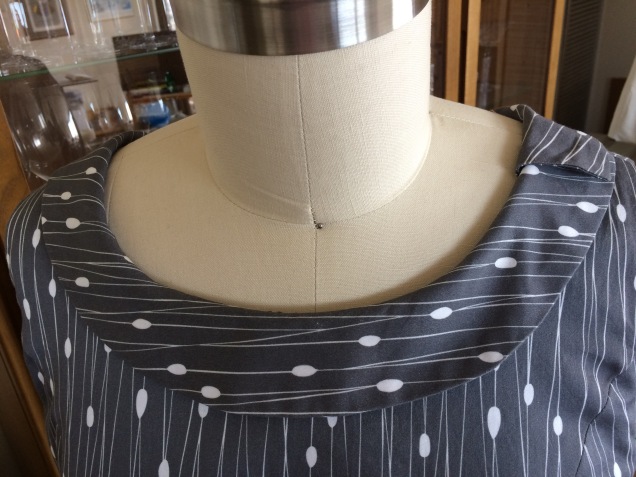
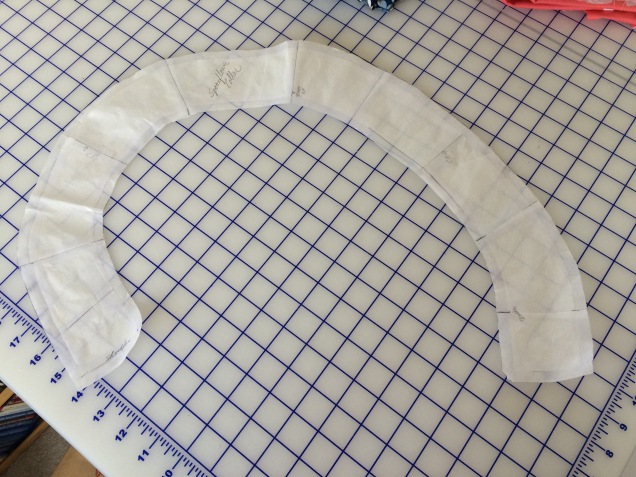
I was really excited about the way this print worked on the collar. I had seen a striped cotton dress on a mannequin in a store last summer that had a collar like this one. The stripes were vertical in the body of the dress and horizontal across the front of the collar. I knew this print would give a similar effect and that it would be a piece of cake to draft the pattern.

IMG_1856

It’s basically a Peter Pan Collar without a break in the back with the front edges extended to overlap a bit and shifted over to the side to go over one shoulder.

IMG_1859

I used small release pleats and tiny darts to control the fullness from the relaxed silhouette I was going for.

IMG_1858

I lined the dress in light blue Imperial cotton batiste. The overall effect is a dress that’s amazingly comfortable to wear.


In the Sketchbook – June 2016

Welcome to In the Sketchbook, a monthly look at fashion design sketches that we are working on for ourselves. Sketching garments on a personal croquis is a great way for the individual couture enthusiast to move beyond the use of commercial patterns and into a world of personalized design! It can be intimidating at first, but with a little bit of practice it becomes something you look forward to. Join us for a look of what we have going on In the Sketchbook! Brought to you by Wendy Grossman of Couture Counsellor and Steph King from Siouxzeegirl Designs.

This month, I’ve been playing with pleats. I like the idea of pleats in only part of a garment as an accent. In sketching on my croquis I’ve discovered that ideas that seem good in my head would look terrible on my body. Here’s an example:

IMG_1672

It’s so nice to be able to see what a mistake a design would be without investing more than a couple of minutes to sketch it out.

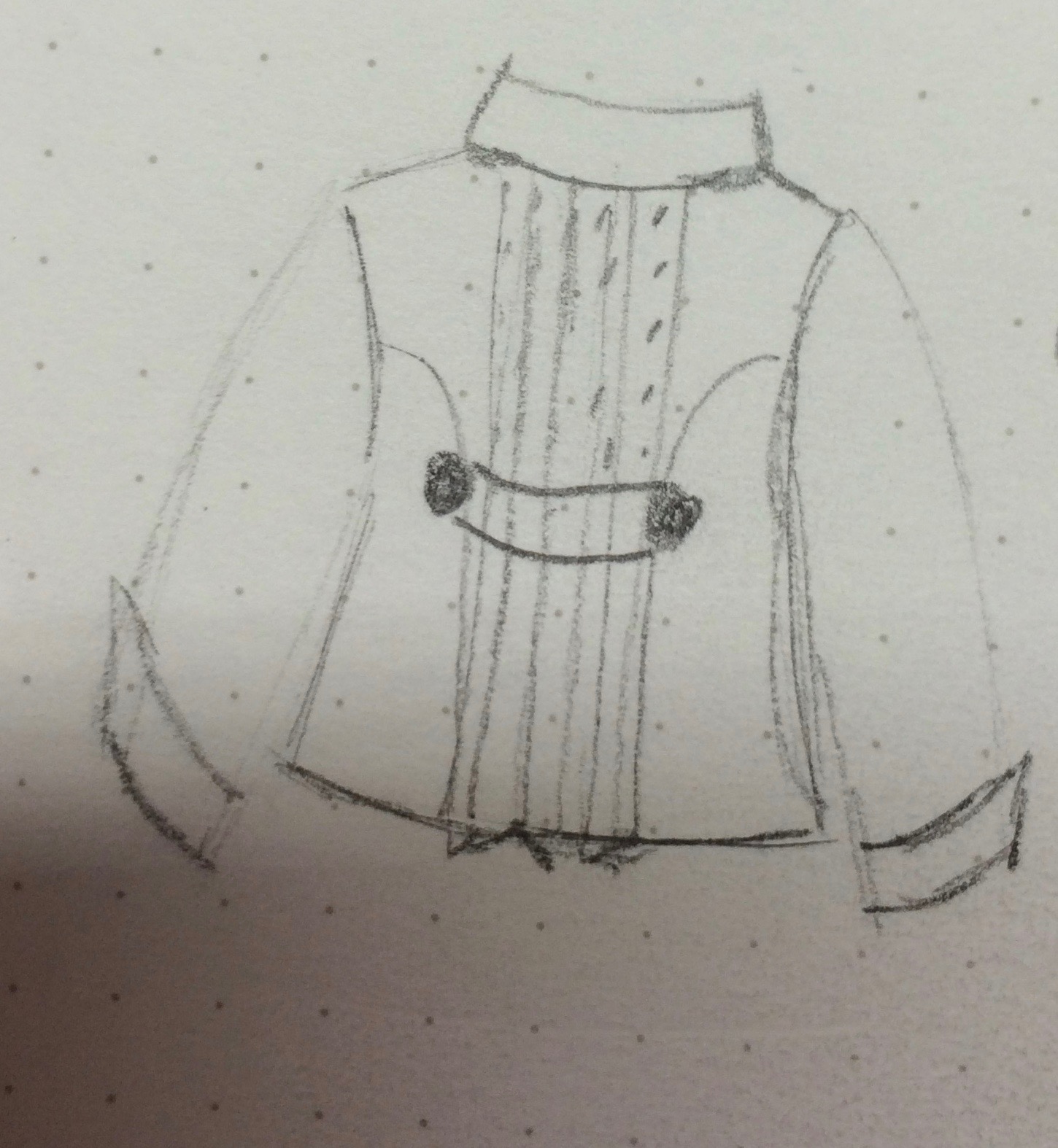
Here’s the back of a jacket that I think has some potential. The pleats would be stitched down with topstitching above the belt detail.

IMG_1673

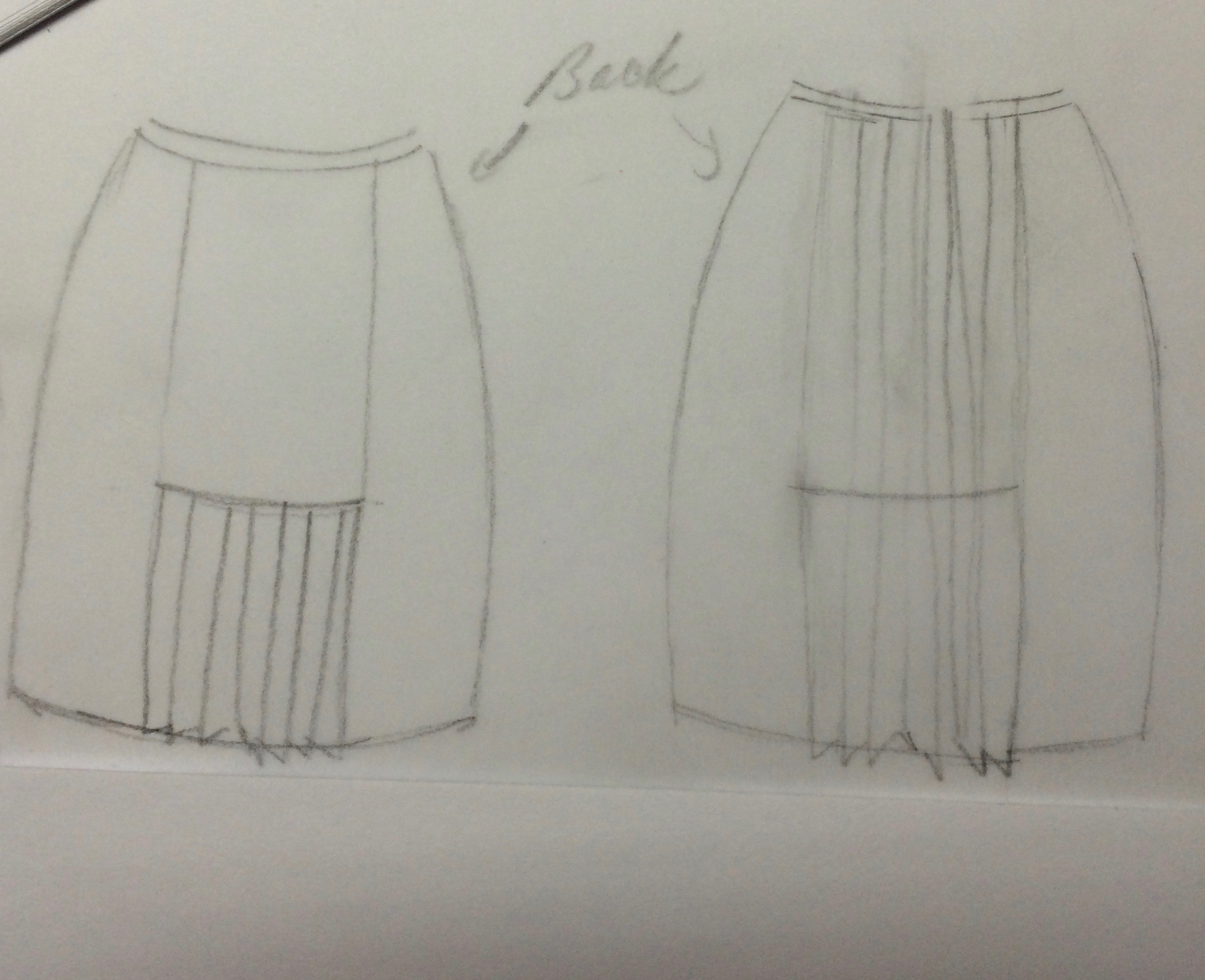
I tried out several different skirt designs to go with the jacket and erased them all. Then I tried out these  for the back of the skirt only.

IMG_1678

I need to let this percolate through my brain some more before deciding about the skirt.

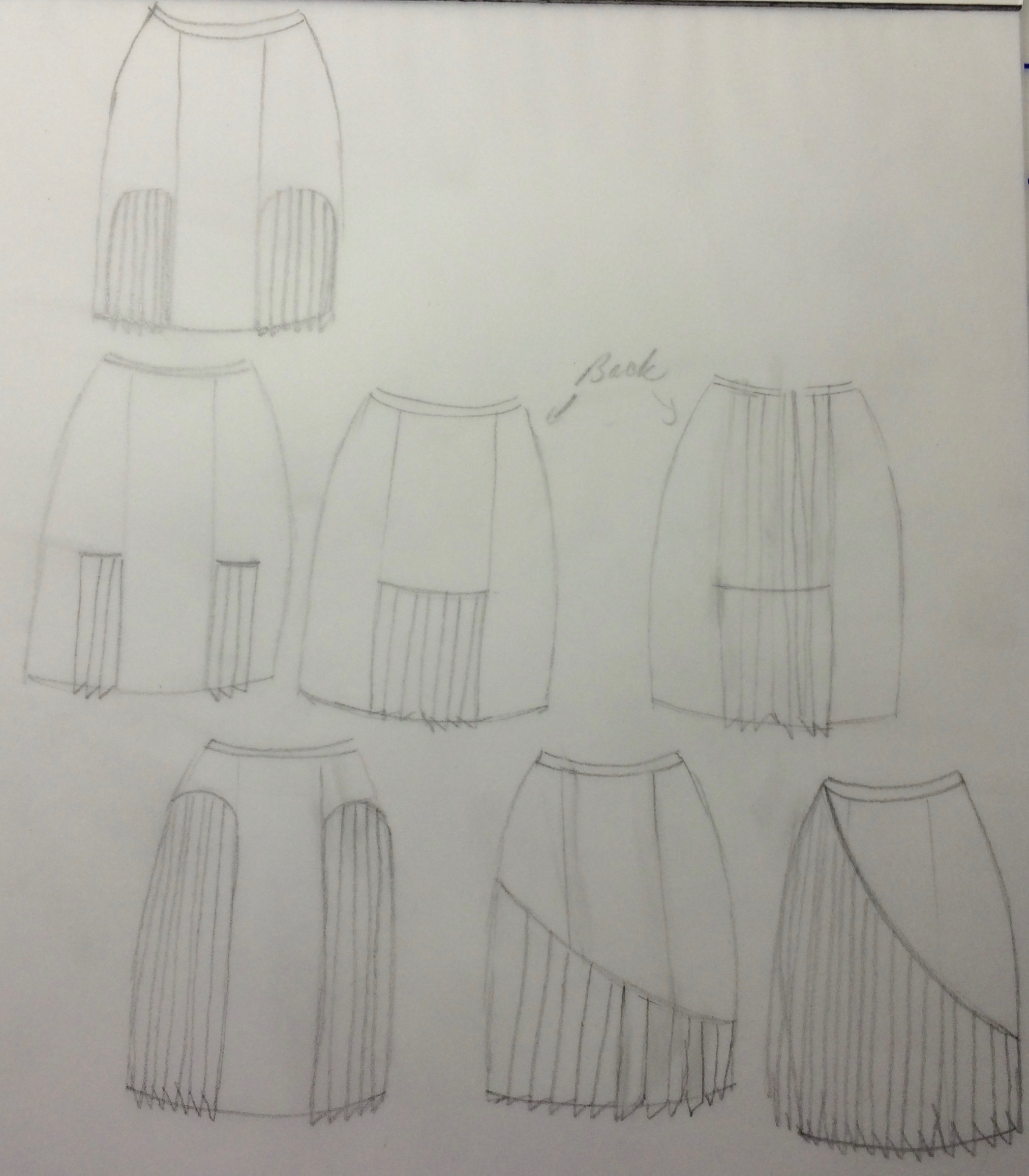
I added other skirts that have nothing to do with the jacket design.

IMG_1671

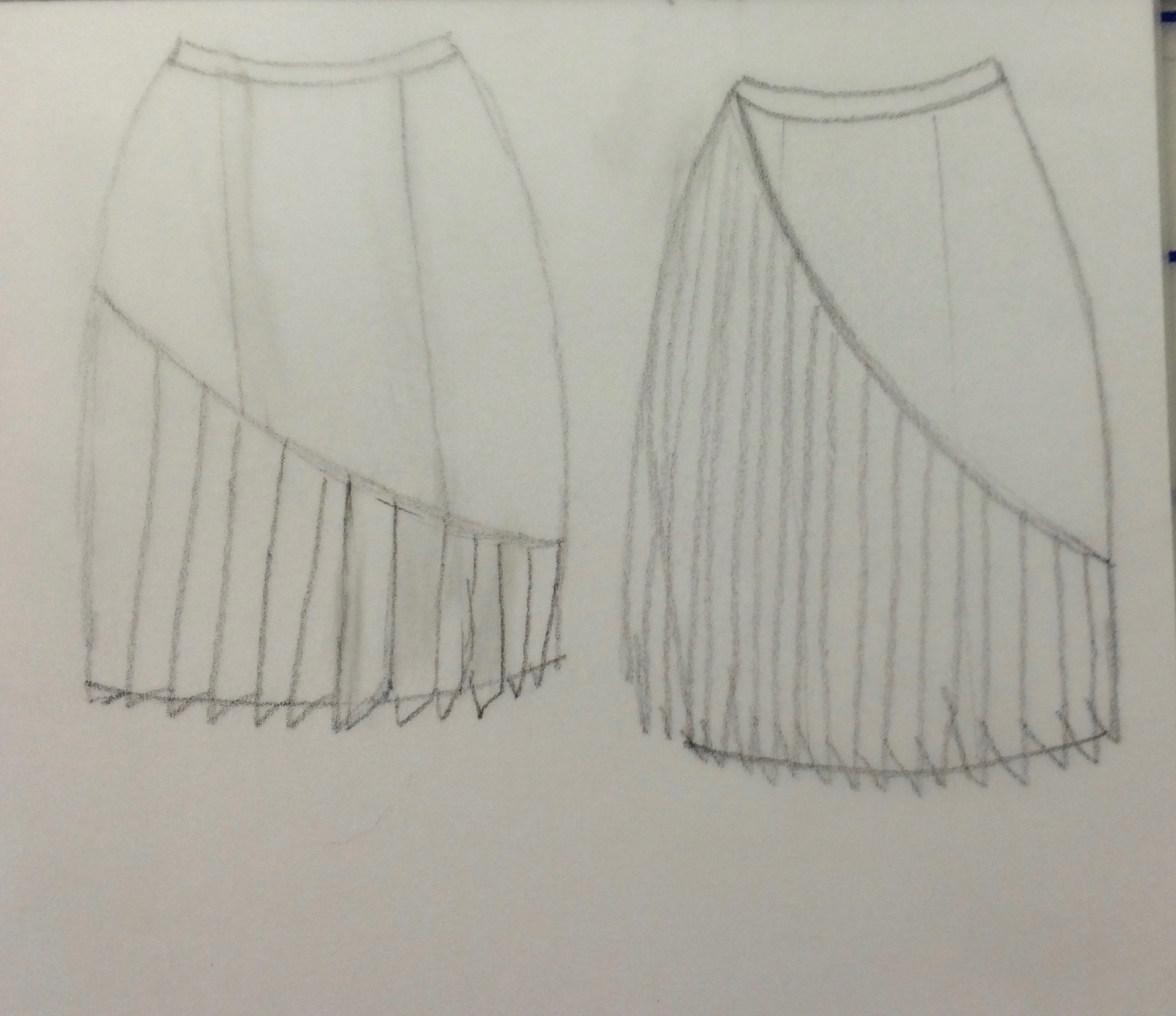
I think I’d like to try one of these:

IMG_1674

I’d love to hear what you think about these and about what you’re sketching. Be sure to check out what’s in Steph’s sketchbook at 10 Sewing Machines & a Serger.

A Big, Bold Departure from My Norm

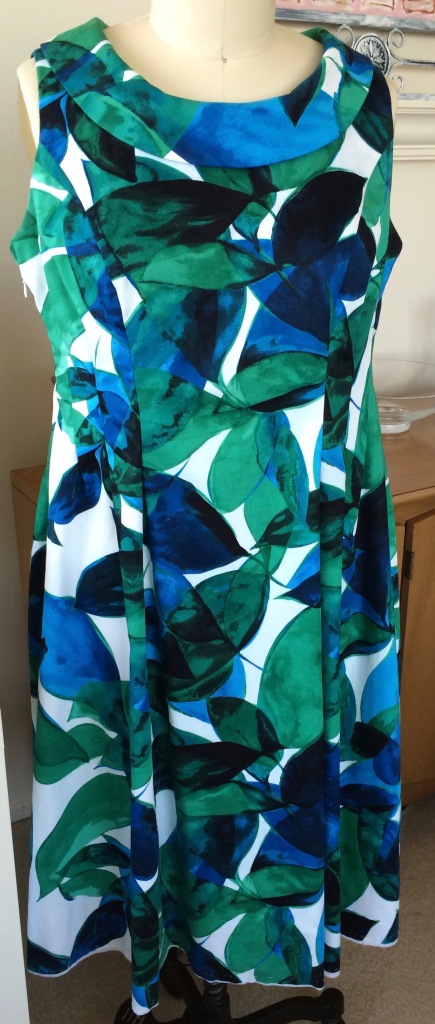
IMG_1399

This is a dress that really surprised me. After the Haute Couture Club of Chicago fashion show I was mentally and physically exhausted, but I still had another huge project ahead of me. I had taken on the task of designing and editing a cookbook for a bride-to-be and co-hosting her bridal shower, which was six days after the show in New York. I was feeling good about the fact that my dress for the wedding was pretty much done and really looking forward to sewing without a deadline for a while when I learned I was going to be invited to the rehearsal dinner. I don’t mean to sound ungrateful, but the only thing I could think of was that I had no idea what to sew and was fresh out of inspiration.

Not that it matters, but I didn’t want to wear the same silhouette to both events. Then there was the question of fabric. I didn’t really want to do black again, although I have a very nice black eyelet that would have been perfectly fine for a summer evening dinner party on the patio of a hip Brooklyn bistro. With all those negatives floating around in my head, is it any wonder I was uninspired?

The one thought that did develop was that I wanted a print in silk or linen, but I couldn’t find anything that appealed to me.  Clearly, I needed a mentoring session with Sarah Veblen to get me on track. Over FaceTime, I went through a pile of fabrics I have in my collection that could work, and we discussed each one. Most of the fabrics I have that could be made into cocktail or evening wear would work in any season other than summer. Other fabrics failed to spark any enthusiasm.

In discussing other possibilities I mentioned how much I liked this blue and green leaf print from Sawyer Brook and then quickly explained that I’d dismissed it because it was a large scale print with bold colors which brought it outside my comfort zone and the fabrication was wrong  —cotton sateen with stretch. Cotton can be a perfectly lovely fabric for a summer dress that’s a little bit dressy, but I’m not a fan of Lycra in woven fabrics. It interferes with the drape and makes the fabric overly heavy. It also makes the fabric uncomfortably warm, destroying its ability to breathe.

Once Sarah saw the print, she insisted that I order the fabric. Her answer to the fabrication objections was that I should underline the dress in cotton batiste and not line it.

With the fabric selected, it was time to develop a pattern. I wanted a full skirt, which was achieved by slashing and spreading copies of my basic armscye princess dress pattern pieces. Instead of a waist seam that would cut me in half and add bulk where I’m plenty bulky enough, I wanted to achieve the transition from a fitted bodice to the full skirt with fairly generous release pleats. I also wanted a wide, gently curved neckline and a rolled collar that had overlapping ends on one shoulder.

I was scheduled to share a day with my friend Steph King from Siouxigirl Designs working privately with Sarah Veblen before attending her class Exploring Fashion Design—Design I in mid-May. Steph brought several muslins and I had planned to do the same when we originally scheduled the session. But, with the leaf print dress project that needed to be completed before June 10, that became the only thing I was going to have time to work on that day. Grouse, grouse grouse!

Before flying to Baltimore, I drafted the pattern and mocked it up in muslin. I left the release pleats for Sarah to place and drape on me. We decided the dress needed a third pleat on each side at the front princess seam. That required angling the princess seam outward from above the waist to the hem. It also required some working out of the construction process, which ended up to be sewing the princess seam first and then pressing and clean finishing the seam allowances. The next step was to sew the release pleat, which started at the seam and branched out below.

We took a critical look at the collar and ultimately decided to eliminate the overlap at the shoulder. Instead, I connected it at center back. Sarah suggested a silk dupioni undercollar, which I interfaced with soft stretch fusible. The upper collar is underlined like the rest of the dress.

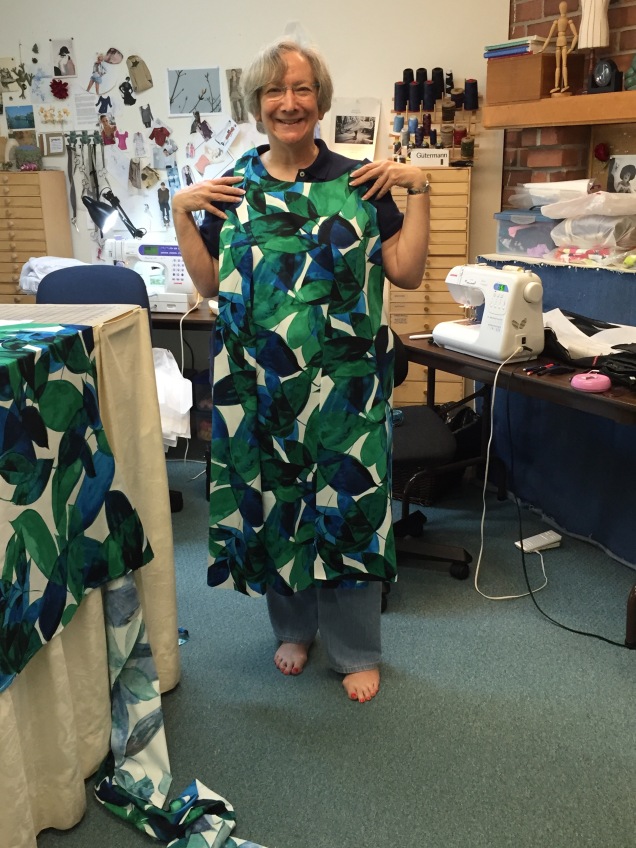
Sarah had told me to bring the fabric with me so she could help me lay out the pattern. Because of the scale and complexity of the print, I ordered lots of extra fabric. Ordinarily, I order three yards of fabric for a dress and I have plenty left over. I ordered five yards and don’t have much of anything usable left over. I knew that strategic placement of the pattern would require full pattern pieces for the front and back as well as the collar, because each piece had to be laid out on a single layer of fabric.

Sarah walked me through her thought process in placing pattern pieces. One of the primary goals was to break up the white areas. Next, it was important to avoid having the print march across the dress. This is not a print where we wanted to match motifs at seamlines, but we wanted transitions that weren’t jarring. If I had been left to my own devices on this step, I would have spent a lot of time wondering and questioning my decisions. Instead, Sarah guided me in placing each piece. She left me to pin and cut and then come up with an idea of where the adjacent piece should be placed while she worked with Steph or did something else.  I’m pretty sure all the placements I suggested were changed, but each time the reason for the adjustment made sense.
IMG_5613

The last decision to make was where to place the collar. We rejected having black at center front and knew we wanted to avoid white there. We opted for that pretty blue and found an orientation that worked. It took hours to get this thing placed and cut!

After hand basting the batiste to the fashion fabric, construction was fairly straightforward. I mentioned the process we worked out for the princess seam release pleat earlier. The other four release pleats (two on each side front panel) start and stop in the middle of the fabric with the starting points staggered. For these, I started with a locking stitch, then sewed for about an inch with very short stitches (1.1 on my machine). I then switched to a regular stitch length, returning to the short stitches an inch before the end. At the end, I used a locking stitch, stopped with needle down, raised the presser foot and pivoted then stitched over the last inch with the same short stitches.

The cotton batiste underlining really makes this dress work. It controls the stretch in the fashion fabric, which was the primary reason for adding it, but it also makes the skirt in the area below the release pleats fall in nice soft folds.

This is the first garment I’ve made in a long time that isn’t lined. Because it’s a summer dress and it already has that extra layer of underlining, Sarah advised me to not line it. The seam allowances are serge-finished. The side seams are pressed open and were serged before stitching. The princess seams were serged together after stitching, pressing and clipping the curves where necessary. Those seam allowances are pressed toward the center.

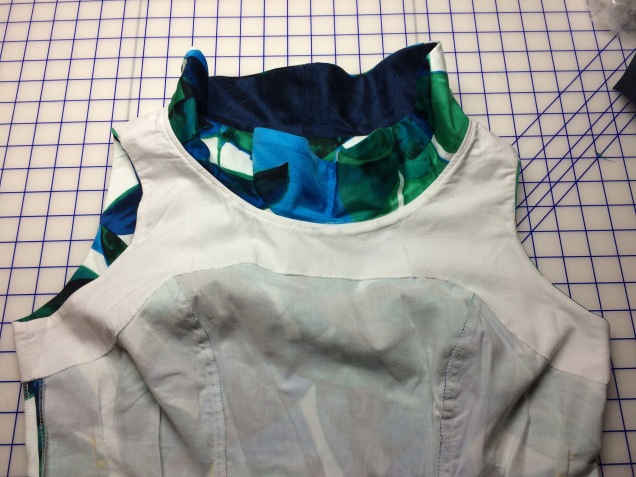
When working on the design, Sarah advised me to make a facing with the cotton batiste I used for underlining. I drafted an all-in-one facing for the neck and armholes and interfaced the batiste with soft stretch fusible. In drafting the facing, I was overly timid about its depth. For next time, I’ll draft a facing pattern that is more generous. In this one, I made sure I anchored the bottom edges by hand sewing them to the underlining. I also anchored the pleat intake the same way.
IMG_1618

I was able to attach the facing to the neck seam and armscyes completely by machine. I first attached the facing at the neck on the outside of the dress, with the collar sandwiched in between. With the underlined fashion fabric, interfaced undercollar and interfaced facing, there was a pretty hefty stack of layers to deal with and even more when sewing over the shoulder seams.

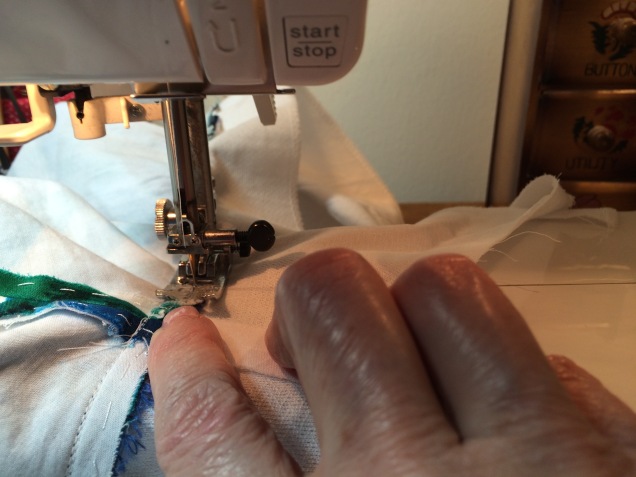
After stitching, pressing and clipping the curves where needed, I understitched all around. The key to understitching is to make sure the seam allowance and facing (or lining) are flat on the bed of the sewing machine and any clips to allow for curves are spread out so they can do their job. And it’s really important to make sure that the only things under the presser foot are the seam allowances and facing. In another project, I kept catching bits of the collar and decided I needed to take a break.
IMG_1352

To attach the collar, attach the facing and understitch, I used directional stitching. That is, I started at the shoulder seam and sewed to the center front, then sewed from the opposite shoulder to center front and repeated the process in the back.

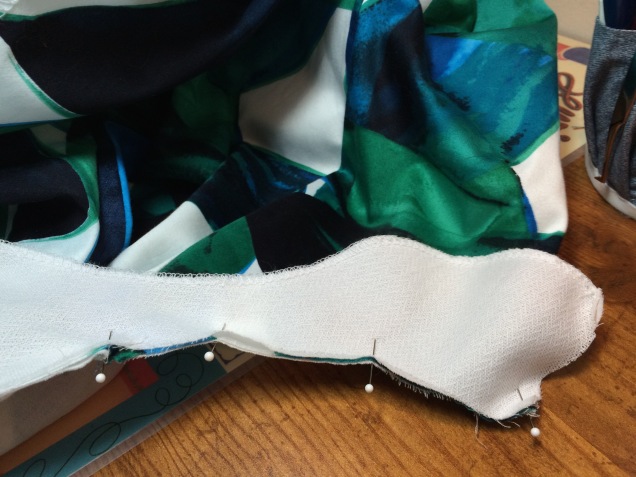
The facings are drafted with ¼ inch subtracted at the armscye from the shoulder, tapering back to the original seamline at the princess seams. This encourages the facing to stay hidden. To attach the facing at the armscyes, the facing is already turned to the inside of the dress, but by doing this step before the side seams were sewn, I was able to attach the lower part of the facing to the lower parts of the arsmscyes without any fancy gymnastics.
 

IMG_1354

Things get pretty weird looking when you get toward the shoulder seams. You have to reach in between the fashion fabric and facing and pull the work down through the opening at the bottom of the facing to pin and sew the rest of the seam. The way to avoid having to redo this step is to make sure that anything that isn’t supposed to be sewn stays tucked into the tube and the only layers under the presser foot are the underlined fashion fabric and the interfaced facing. Frequent stops with the needle down to feel for that ridge of excess fabric and readjust as needed prevents having to spend quality time with the seam ripper.

The way to make this process go smoothly is to pin and sew one side (front or back) to the shoulder seam, then pin and sew the opposite side. When pinning the second side, the work can slide out easily and because it’s sewn in place it stays where it belongs and creates a path that shows where the new stitching is supposed to end up.

When done, it looks like a fabric sausage.

After turning it out, it had to be pressed with favoring so the facing remains hidden. I understitched as far as possible and pressed again.

Every sewing project gives me grief at one point or another and this time it was the zipper. It’s an invisible zipper at the side seam, which I’ve done before and shouldn’t have been a big deal.

As much as I love the print and enjoy wearing the finished product, I’m still not a fan of stretch wovens. When the fabric arrived, it had some stubborn creases that resisted steaming and pressing and could only be removed with a vinegar and water solution and additional thorough pressing. The finished dress also developed quite a few creases in my suitcase and required thorough pressing before I could wear it. It’s pretty difficult to avoid woven fabrics with stretch these days, so I may just have to learn to live with these annoyances.

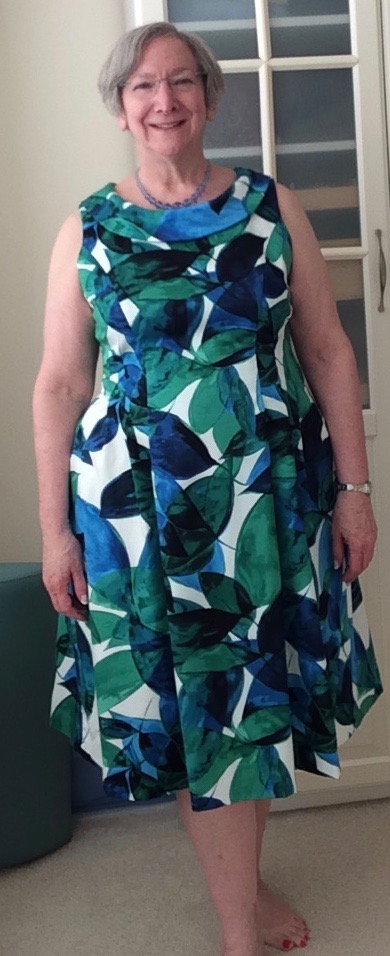
In the end, I think that overcoming the lack of inspiration, lack of enthusiasm for the fabrication and hesitation about wearing a big, bold print turned out to be worthwhile. I love the swishiness of the skirt and will keep this silhouette in my repertoire.
IMG_1466

My Little Black Dress

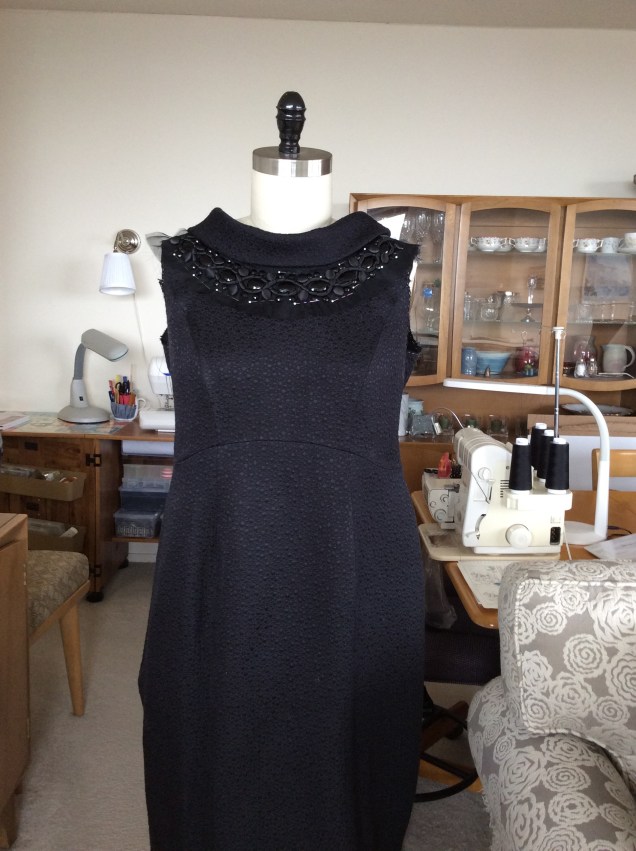
IMG_0230I needed a dress for an evening wedding in New York this month and, for once, I started early.  I brought a muslin, the fabric I wanted to use and the embellishment I was thinking of using to the You Choose Your Focus workshop Sarah Veblen taught here in Chicago in February.  The details of that workshop and the design of the dress are here.

With the pattern work done, the next step was to cut and then hand baste the silk organza underlining to the black silk and wool matelassé fashion fabric. This step seemed to take forever. The fashion fabric was pretty wiggly and underlining was still a new process for me. I found myself pulling out stitches and repinning organza to fashion fabric until I thought I’d lose my mind. It didn’t help that the clock was ticking on the fashion show I was co-chairing and work got really crazy. What I now know can be a relaxing, almost meditative part of sewing was none of the above for this project.

In addition to the underlining, the bias collar is supported by soft stretch fusible interfacing, which I fused to the silk organza before basting it to the fashion fabric. The dress is lined to the edge in silk charmeuse, so I also fused interfacing to the  the area around the neck and armscyes in the shape of what would have been a facing.

Once the fabric was underlined, I loved the hand of the combination and the way it behaved. The princess seams in the bodice went together beautifully. Once those were done, I was sure the skirt seams would be a breeze. I was wrong. More about that in a bit.

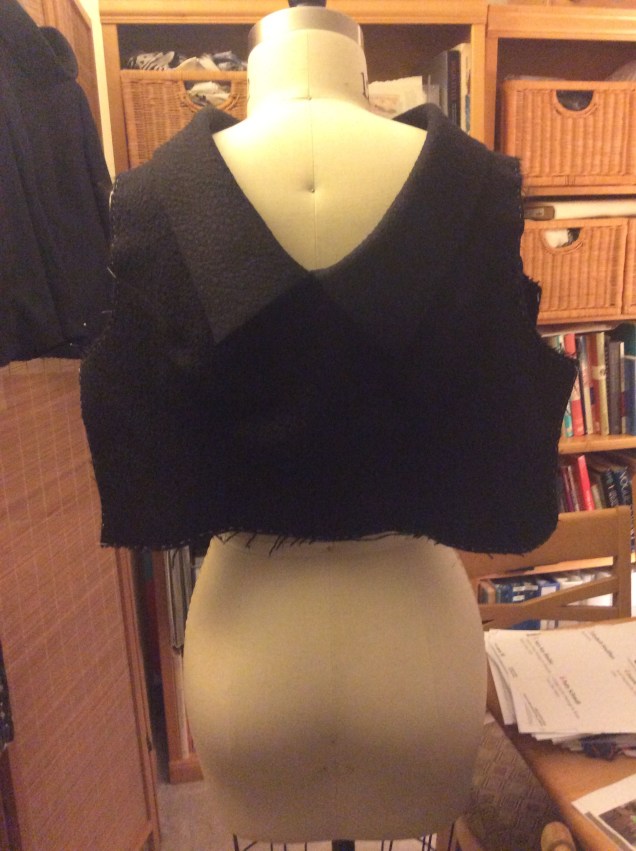
The collar/neckline seam always requires directional stitching and on this dress I was concerned about getting the point at center back right. This was a bit more challenging than usual because there is no center back seam in the dress. I followed Sarah’s instructions that included careful marking of the point and machine basting then checking the placement. Once I was satisfied that things were where they needed to be, I went back over the machine basting with a normal 2.5 stitch length. After checking it again to be sure it was right, the final step was to sew at 1.1 stitch length from about an inch away from the point, stop with the needle down and pivot and then continue for about an inch on the other side.

IMG_0228

With the part I was worried about behind me, I proceeded to sew the skirt pieces together. That’s when the trouble began. The first seam was off by more than 1/4″ by the time I got to the end, so I unstitched, steamed the pieces and made sure they matched when I repinned them. I stitched again after adjusting the tension on my machine and the same thing happened. I knew that if I couldn’t get the vertical seams to match there was no way I was going to be able to get the four-way intersections of vertical seams and Empire seams to come together. I was in a panic. All I could think to do was hand baste the seams before sewing them on the machine. I did this with one seam, saw that it worked and called it a night.

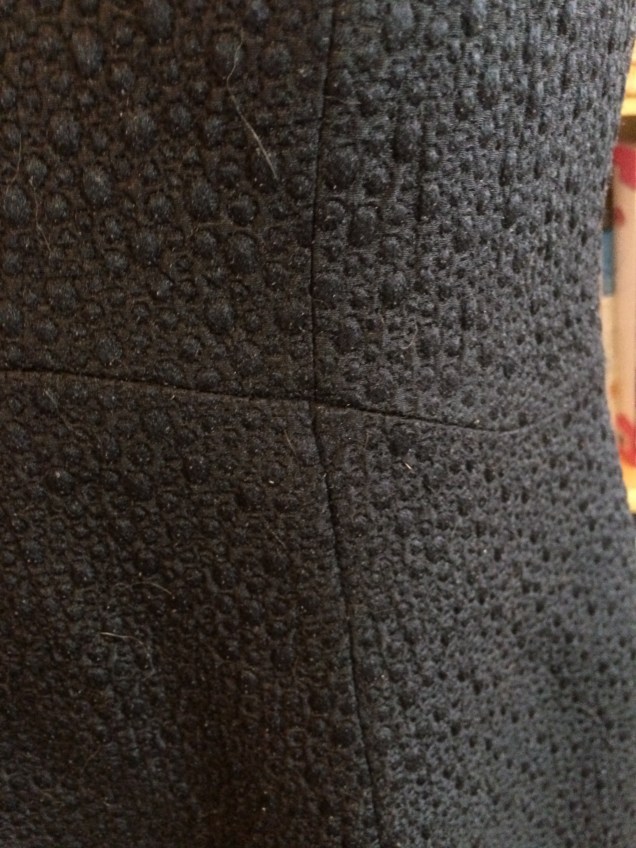
A couple of people suggested using a walking foot and Sarah confirmed that that should solve the problem. I’ve used a walking foot before and I don’t know why I resisted at first. Turns out that was the perfect solution. The walking foot is my new best friend. Here is how those four-way intersecting seams turned out.

IMG_1262

This made me think about those new machines that have built-in even feed and I had to push those thoughts out of my head! This is not the year for a new machine

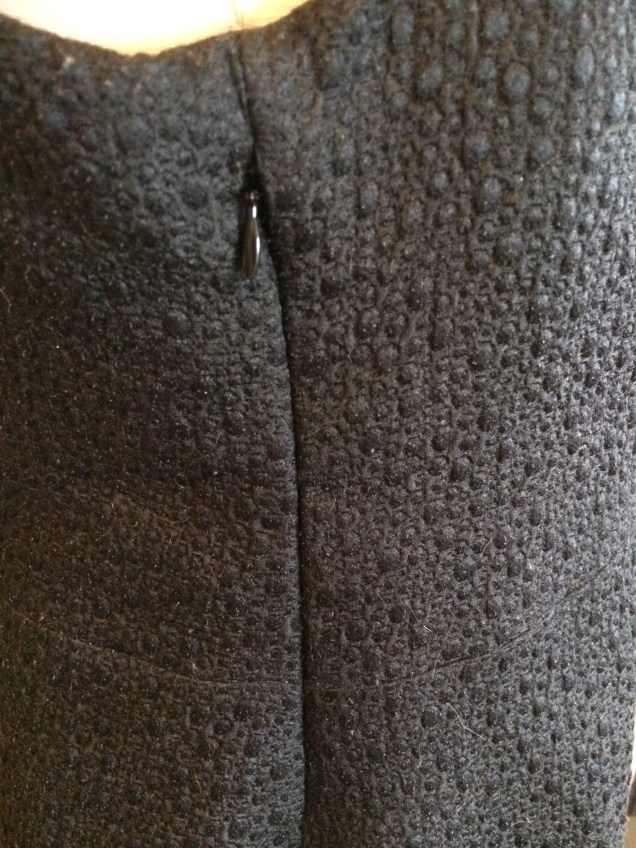
The next dilemma was the zipper. You can’t install an invisible zipper with a walking foot. That’s where hand basting was necessary. I sewed the first side of the zipper into the side seam as usual with the invisible zipper foot. I then hand basted the second side and made sure the Empire seam was aligned before sewing that side on the machine.  Here is the result.

IMG_1260

Whew!

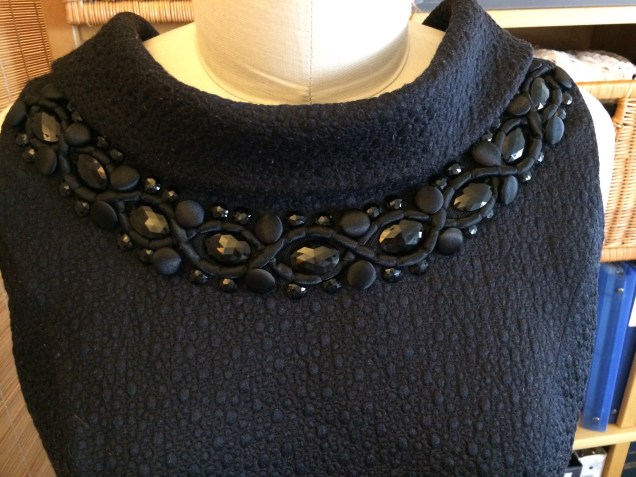
The next step was to attach the lovely trim from Soutache. Sarah had demonstrated how to clip the net backing until it fit the shape of the neckline seam. I clipped the rest of the netting and pinned the embellishment on the dress form so the placement would conform to the dress with a body inside instead of a flat surface.

IMG_1261

There are a LOT of beads and buttons in this trim!  I tried to sew each one before the fashion show, but I ran out of time. That’s why I needed my friends to rescue me with hemming and temporary stitching of the lining at the neck seam. After the show, I finished stitching every bead and every button to the dress and trimmed away the last of the stray netting at the edges. I then reattached the lining at the neck edge and understitched.

The dress is now ready to wear to the wedding. I’m also going to get another chance to model it in the ASG National Conference fashion show. This will be my first time in a fashion show at Conference. It should be fun.

PTPE.Haute Couture Fashion Show.2016-290

In The Sketchbook

Welcome to In the Sketchbook, a monthly look at fashion design sketches that we are working on for ourselves. Sketching garments on a personal croquis is a great way for the individual couture enthusiast to move beyond the use of commercial patterns and into a world of personalized design! It can be intimidating at first, but with a little bit of practice it becomes something you look forward to. Join us for a look of what we have going on In the Sketchbook! Brought to you by Wendy Grossman of Couture Counsellor and Steph King from Siouxzeegirl Designs.

If you had told me two weeks ago that I would look forward to sketching, I would have been convinced you were delusional. That was before I participated in Sarah Veblen’s six-day class, Exploring Fashion Design – Design 1. A review of that class will be the subject of a blog post coming up soon, but Steph King and I couldn’t wait to start sharing what we have in our sketchbooks.

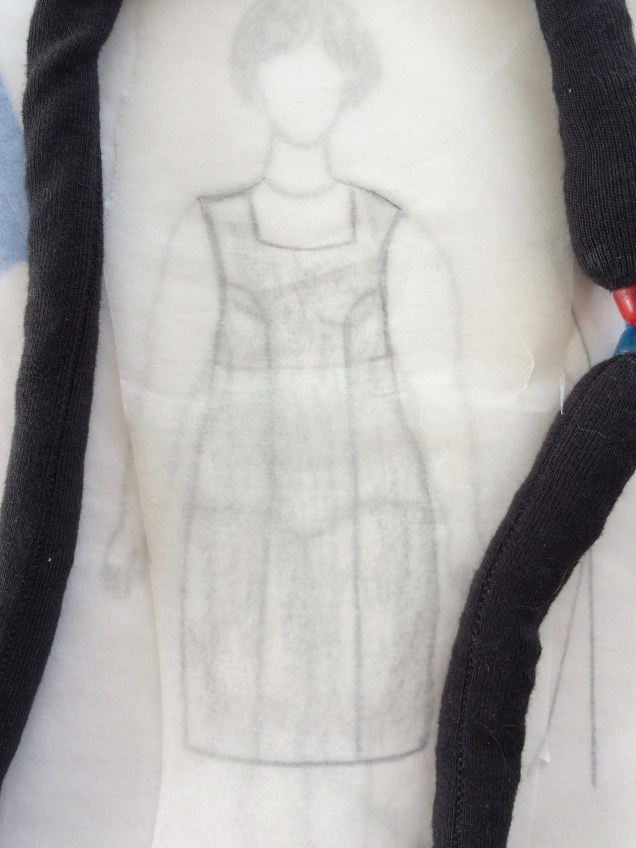
One of my class assignments was to find a length for a cropped jacket to wear with a coordinating or matching dress. I started with my basic armscye princess seamed sheath dress on the personal croquis developed in class.

IMG_1340

After trying out different lengths, I decided this one has the most pleasing proportions.

IMG_1341

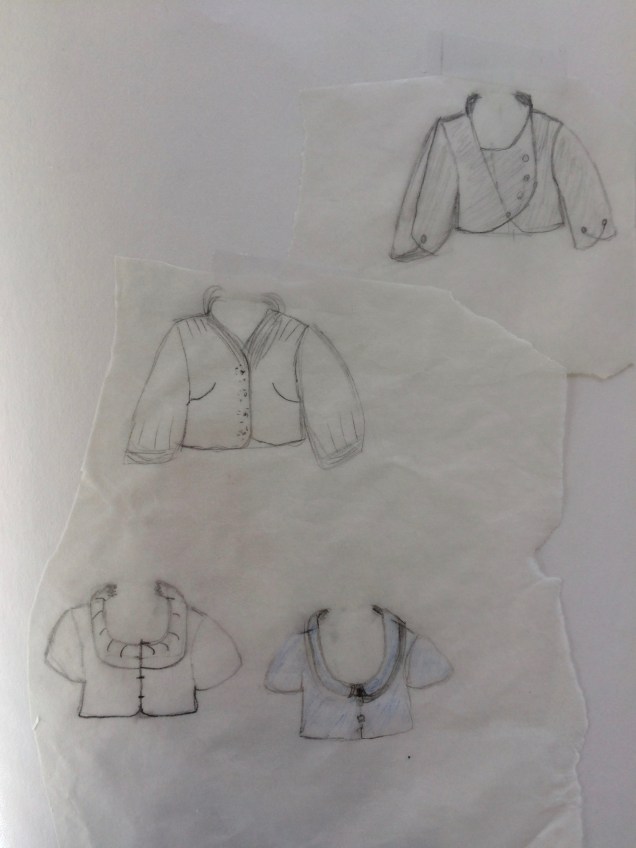
Next, I sketched out a few different jacket designs I might try.

IMG_1344

Since returning from class, I’ve decided I’d really like to develop a pattern for a linen jacket dress in two shades of blue that I’ve been thinking about for years. I know I want to incorporate both fabrics in the jacket by making a double collar and contrasting cuffs on short sleeves. I’d like the collar to be a rolled collar that stops well short of center front and frames the buttons, which may or may not be covered. Here is what I’ve come up with.

IMG_1343

I like the shape of the collar on the left better than the one on the right. If you look closely at the sketch, you can see that I’m playing with an Empire waist for the dress so I can make that two-toned as well with the lighter color on top. I haven’t come to a final decision on the shape of the dress neckline. That will take some more sketching to work out.

Getting this down on paper is so much better than trying to work it all out in my head. This is a very exciting step for me.

We would love to have this monthly feature grow into a link-up with other sewing bloggers. If you’re interested in joining in this creative adventure, please leave a comment to this post.

Homage Jacket Remake

Homage2

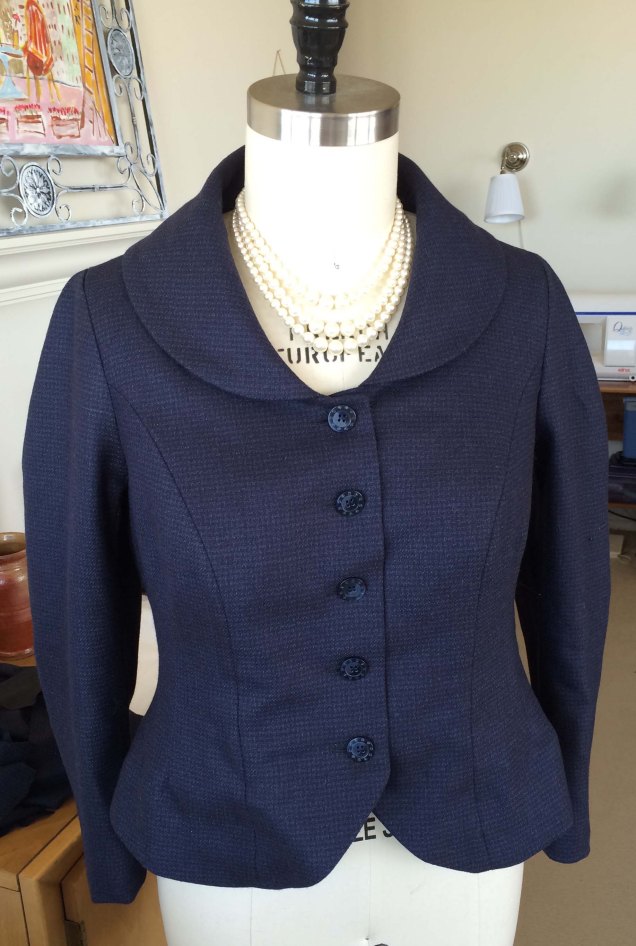
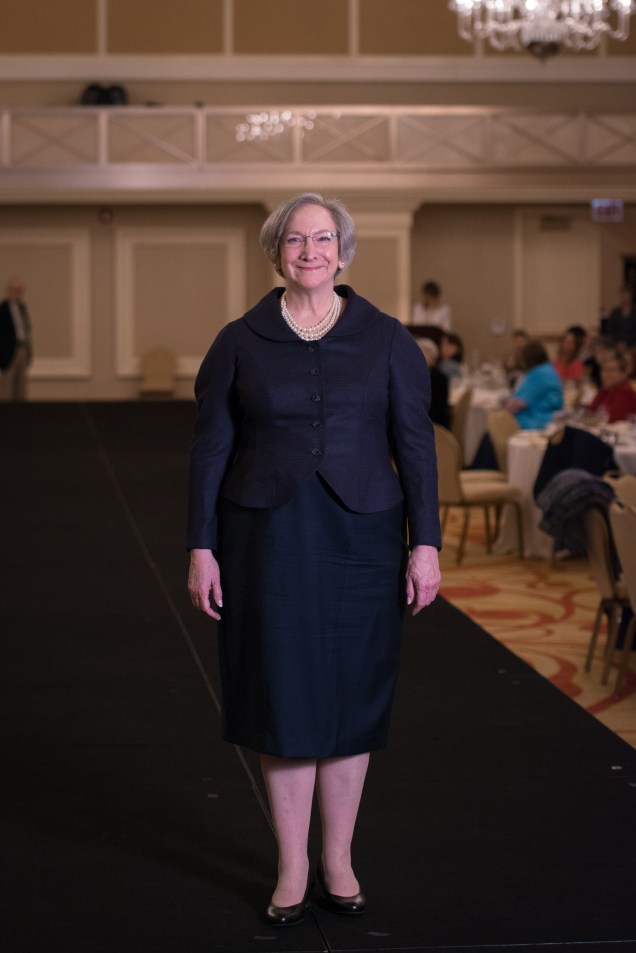
As I mentioned in my last post, one of the garments I showed in the Haute Couture Club of Chicago Fashion Show was a jacket inspired by Le Bar Suit, which was part of Christian Dior’s debut collection in 1947. The fashion show segment was based on a sewing challenge we called “My Homage To…” Setting aside the ribbing and corseting of the original, I really like the idea of dressing in a suit that has feminine contours and sends the message that you don’t have to dress like a man to be dressed for business.

I call this My Homage 2.0, a reference to the admonition we used to hear from tech gurus to never buy the 1.0 version of software. They told us it’s better to wait until the major bugs are worked out and the 2.0 version is released. For those of you who are not of “a certain age,” that’s from the pre-app days when software was an investment and loading it onto your computer took forever.

I chronicled some of the frustration I had with the first version of this jacket here. For version 2.0, I made a new muslin mock-up and brought it to one of Sarah Veblen’s You Choose Your Focus Workshop last November. I made the mock-up with 1″ seam allowances (not easy to do with princess seams and muslin that doesn’t drape). My weight had been creeping up (again!) and I felt that I needed a bit more room in the bust. I also mocked up my master jacket pattern for fine tuning at the same workshop. And, just to be on the safe side, I mocked up both my 3-piece sleeve for the Homage jacket and my 2-piece sleeve for the master jacket pattern. I was leaving nothing to chance.

The fabric choice for Homage 2.0 is the lovely navy and black check wool that I had bought from Sawyer Brook back when I first started to plan this jacket. That was probably two-ish years ago.

IMG_0214

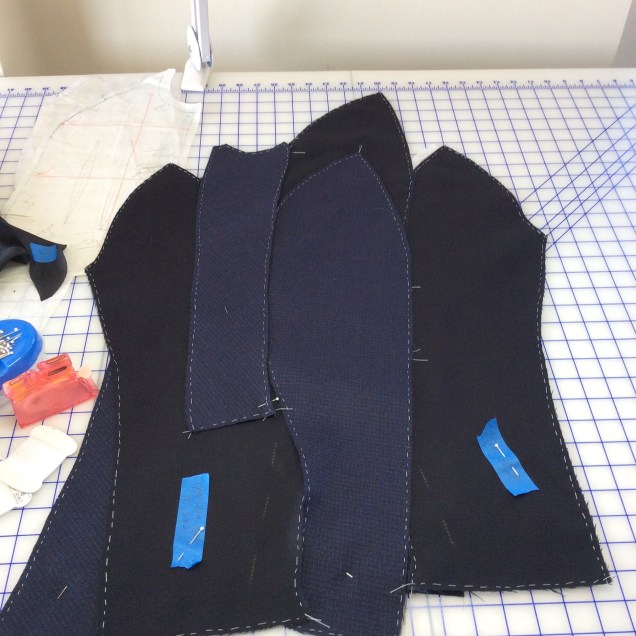
This was the first garment that I underlined with silk organza. It was daunting hand basting the organza to all those pieces, but when it was done I was so glad I took the time to do it. The wool took on more body without being stiff and was a dream to work with.

IMG_0715

Those tiny rows of checks required careful alignment of adjoining pieces at the hem, a full pattern and cutting from a single layer of fabric.

IMG_0872

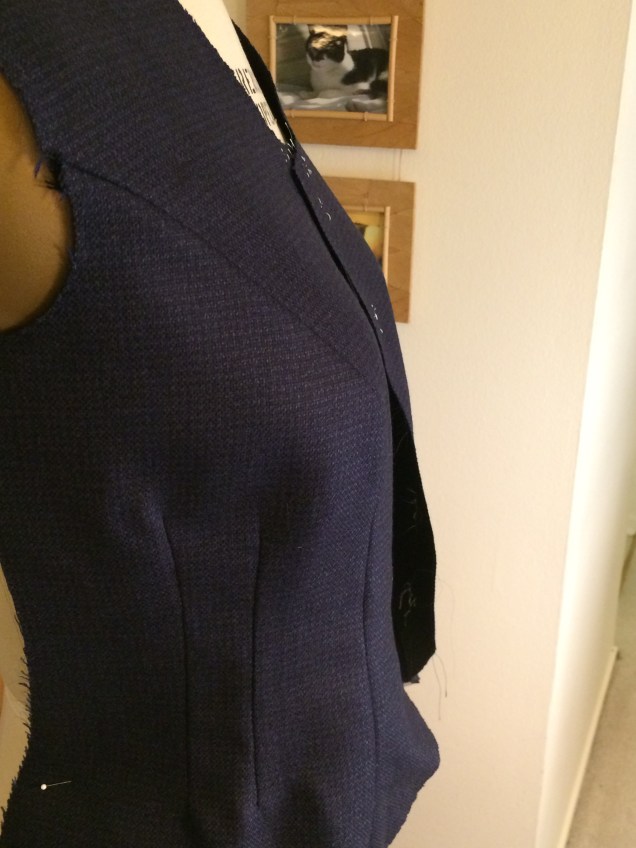
The jacket gets its shaping from armscye princess seams and two vertical darts in the side front panels. Additional structure comes from silk taffeta facings at the flared hem and at the neckline that are interfaced with soft stretch fusible.

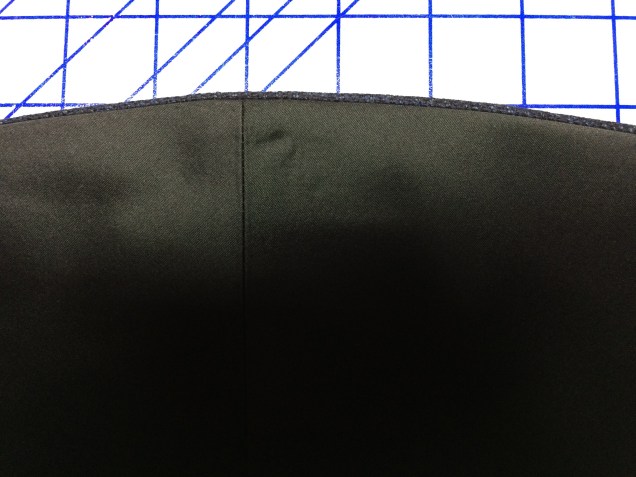
The undercollar is also made of silk taffeta and has fusible interfacing.  In preparing to make this jacket I was able to clear up some confusion I had about undercollars. I knew the undercollar pattern is supposed to be smaller than the collar pattern so that the outer edge of the collar can be “favored” when pressed, as it is in the following picture.

IMG_0937

I also knew that the undercollar typically is cut on the bias. What I didn’t realize is that only the outer edge of the pattern is trimmed 1/8 inch, not the neck edge or the short ends. The undercollar is interfaced, but if it happens to stretch during pressing because it is on the bias, it can be trimmed at the neck edge before basting the edges together and attaching to the garment.

There were two issues with this jacket that were disappointing. I used three-piece sleeves, but forgot that they had really long vents. I only had six of the smaller buttons for the jacket and three for each sleeve was not enough for the long vent. I tried to make adjustments after the fact but ran into problems and ended up making sleeves that have no vents and no buttons.

The other disappointment was that I forgot to take shoulder pads into account when developing the pattern. When I attached the shoulder pads, there wasn’t enough room even though they are very thin. So, I had to sacrifice the nice crisp shoulder line they would have given me in the jacket.

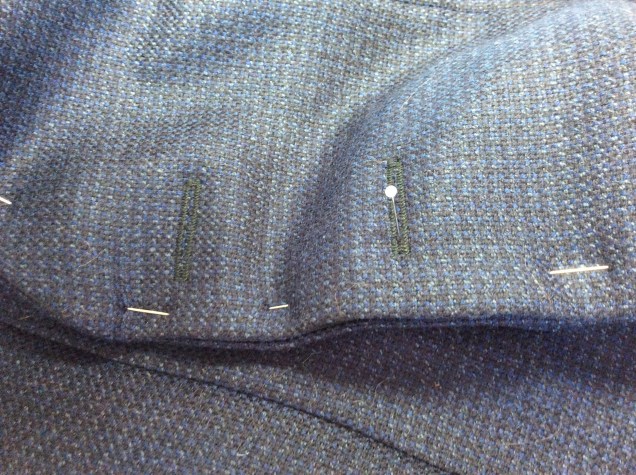
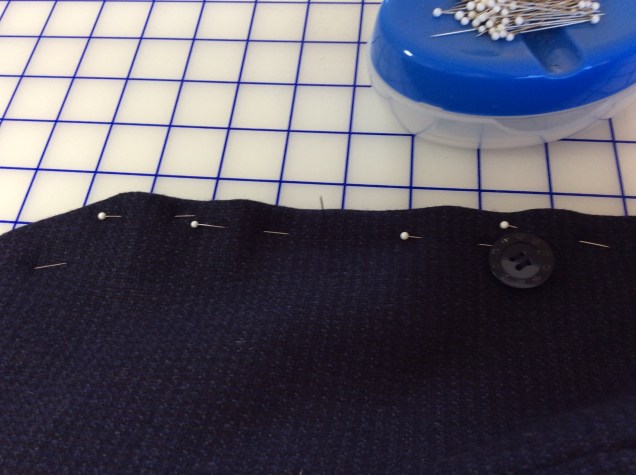
Even though I had used tailor tacks to mark where the buttons and buttonholes would be placed, the markings seemed off to me when the jacket was constructed. I re-measured and pin marked the buttonhole placement and, fortunately, all went well with those. When it came to marking the placement of the buttons, it occurred to me that instead of measuring, I might get accurate results more quickly by pinning the two front pieces together and inserting a pin in the center of the keyhole of the buttonhole, exactly where the center of the button should be.

IMG_0217I used that pin as a guide for sewing on the corresponding button. It worked like a charm.
IMG_0218

Even with the sleeve and shoulder pad glitches, I’m really happy with the way the jacket turned out. I feel great wearing it.

PTPE.Haute Couture Fashion Show.2016-118

PTPE.Haute Couture Fashion Show.2016-119


The Art of Fashion

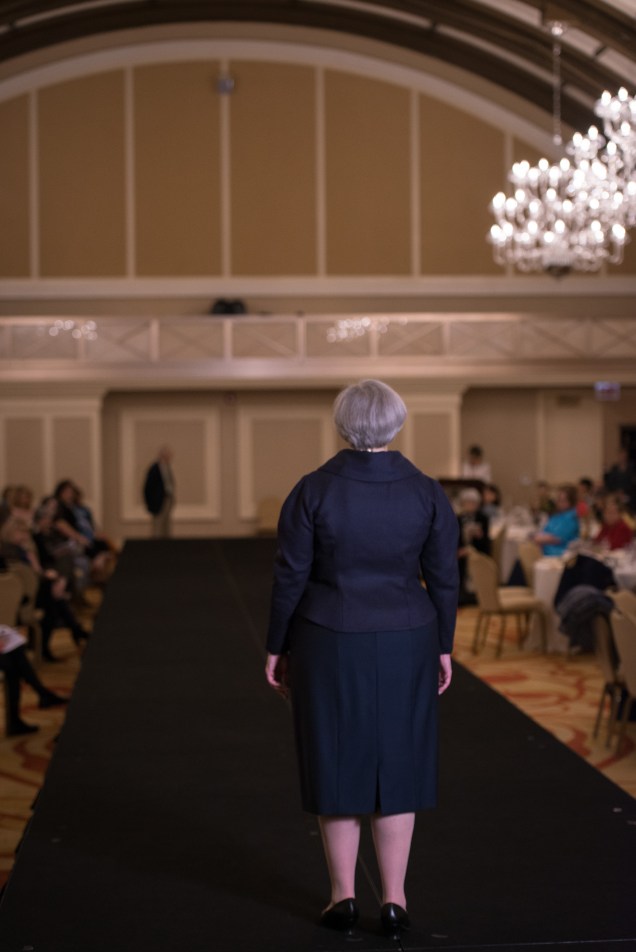
IMG_0232For the past year, I have had the privilege of co-chairing the annual fashion show and luncheon presented by The Haute Couture Club of Chicago. This organization was founded in 1964 by a group of women who had taken tailoring classes from Helen Barker. In its early days, the club had an entrance requirement, which was the completion of a tailored jacket or coat that included a traditional notched collar. That requirement has since been eliminated and members are drawn together by their love of garment sewing. I worked on the club’s 50th anniversary show  and on last year’s show, and so I felt I was familiar enough with the process of putting a show together to partner with Susan Gerbosi in this adventure.

We began last spring, planning our theme, searching for a venue, brainstorming possible show segments tied to the theme, selecting a photographer and mapping out the countless details involved in bringing a show to the runway. The club has monthly meetings with educational programs from September to May and presents challenges to members tied to the fashion show. The club’s shows also involve garment reviews with sewing educators that help members with any tweaks needed in their garments and give styling suggestions for the runway.

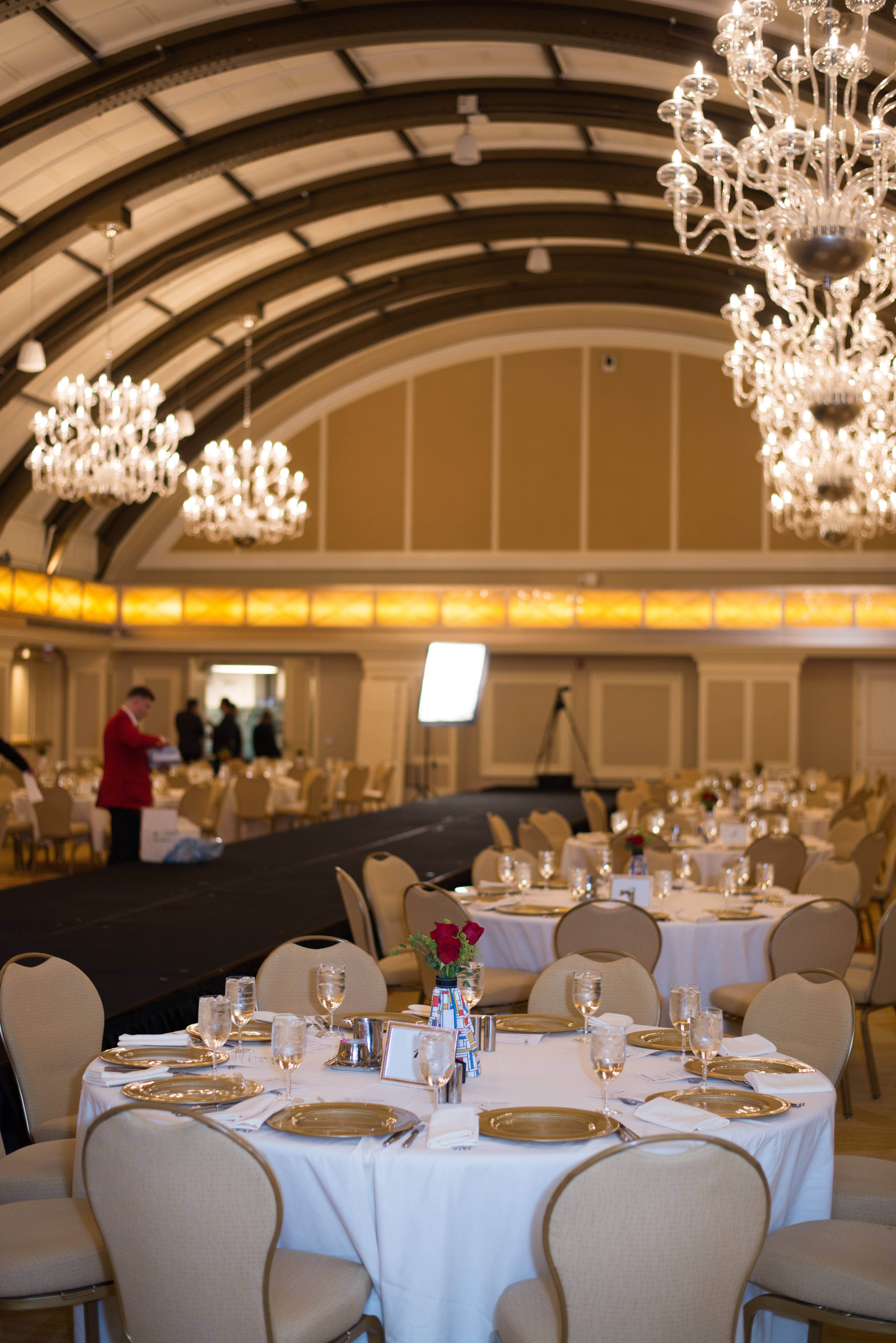
We were ecstatic when the board approved our first choice of venue, the historic Burnham Ballroom at the JW Marriott Chicago.


PTPE.Haute Couture Fashion Show.2016-40

The setting provided the perfect showcase for our members’ work and elevated the experience for everyone. I cannot say enough good things about the professionalism of the staff and the level of service they provide. Everything on the day of the event went off without a hitch and they made me feel as if ours was the most important event they had ever hosted.

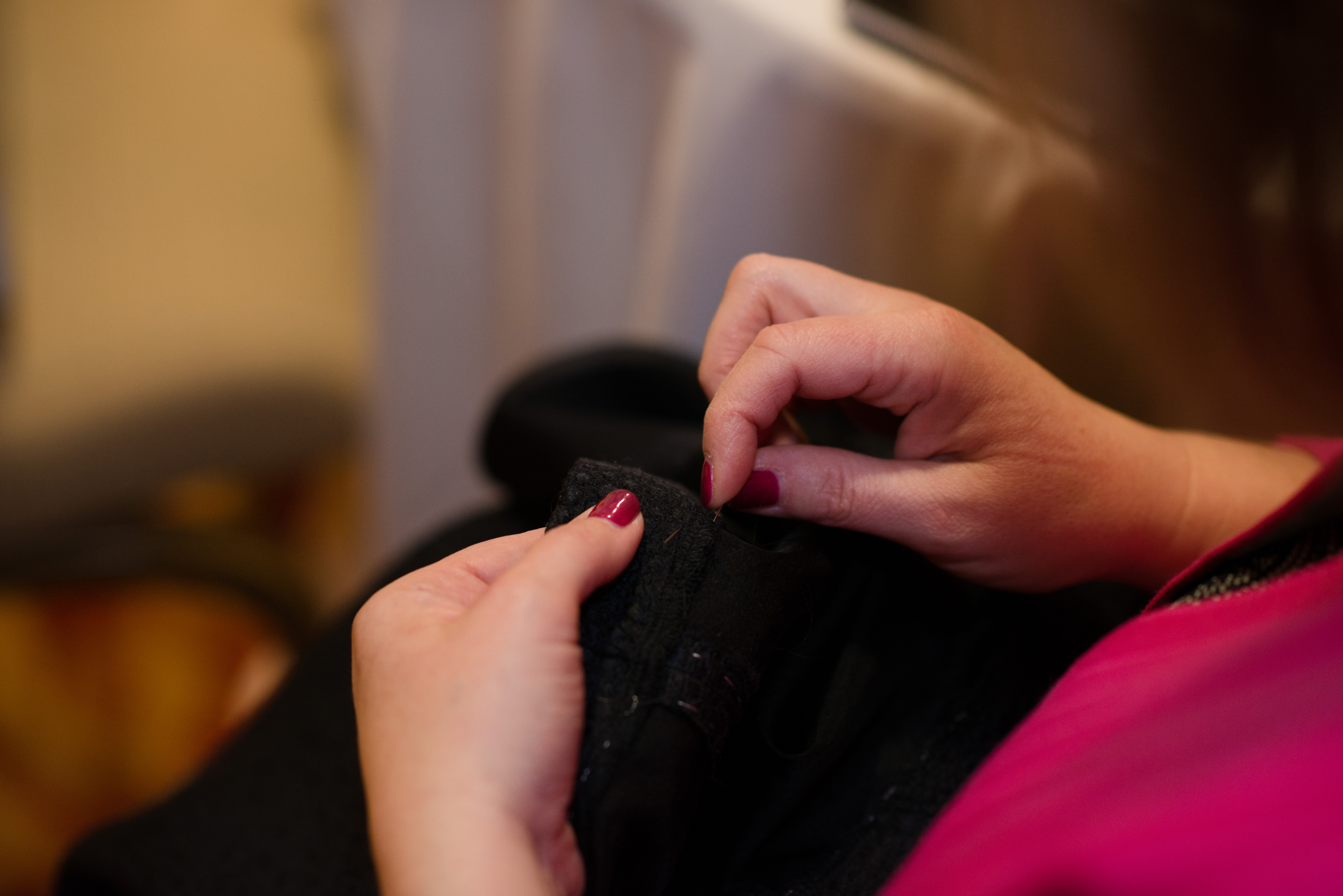
Whenever I volunteer to work on a fashion show, things get really busy at my office and this year was no exception. Juggling that, plus all the things that needed to be done for the show meant that my sewing schedule became more and more compressed. And there was absolutely no time for blogging. I was determined to show all four garments we had included in the program, but that meant having to accept the offer of help from two dear friends.

PTPE.Haute Couture Fashion Show Highlights.2016-9

Those are the loving hands of my friend Stephanie King, who took over from our emcee for the show, Sarah Veblen.

PTPE.Haute Couture Fashion Show.2016-32

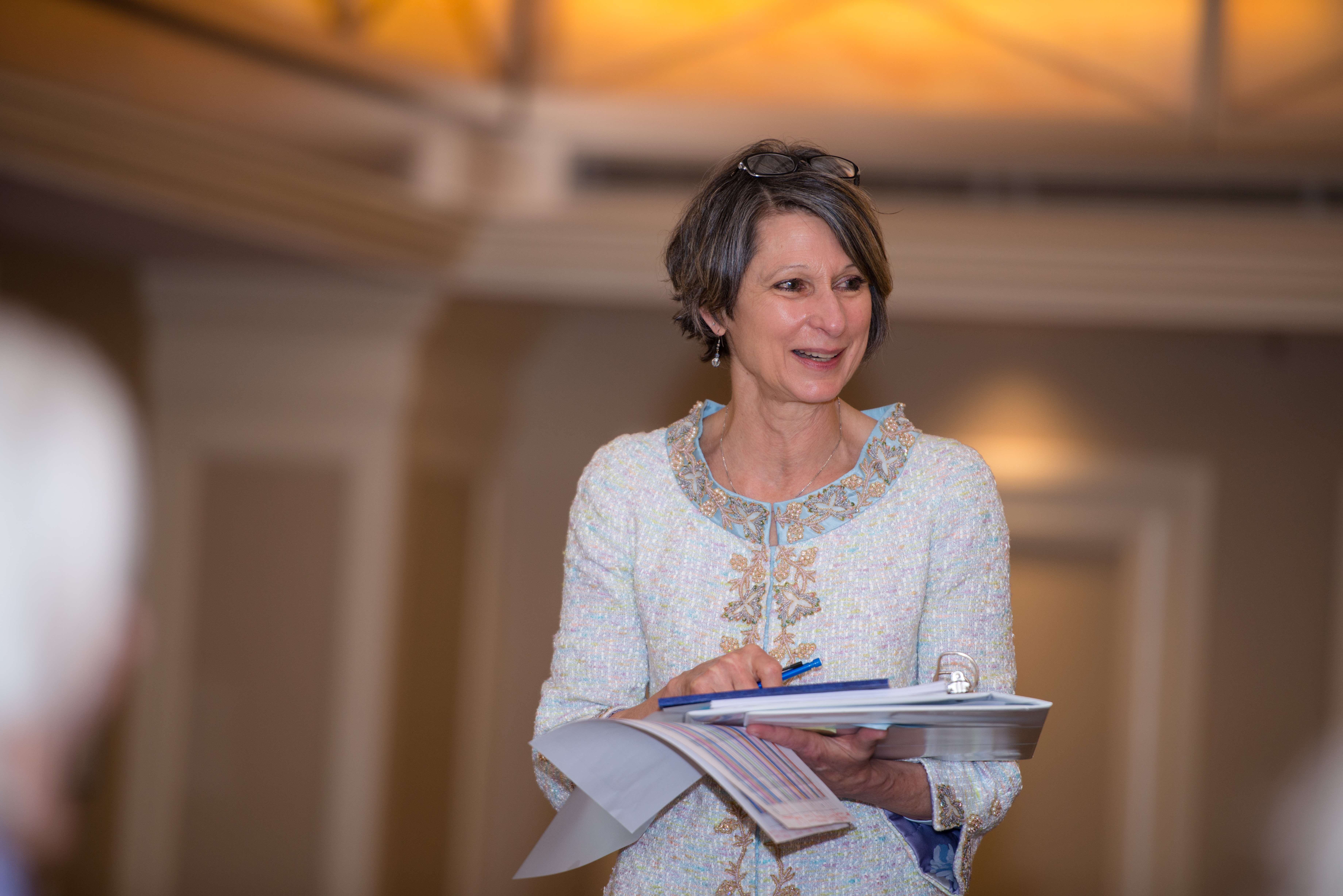
Here is Sarah, briefing the models before the show. Sarah volunteered to provide commentary for the show last spring. She wanted to look at the garments up close on the morning of the show and talk to the members who made them so she could add her own personal comments when they were on the runway. When I developed a new garment submission form to use in this year’s show, Sarah added questions of her own so we could have more to draw on when Susan and I prepared the program and when the commentary was drafted. What Sarah didn’t count on was that I hadn’t been able to draft any of the commentary before she arrived in Chicago and she had to spend two very full days working on it.

PTPE.Haute Couture Fashion Show.2016-3

Here I am helping our fabulous photographer, Peter Thompson, prepare to take the runway photos. The dress I had hoped to make for the luncheon never even got cut out, so I wore navy linen on a day with rain and snow. Who cares, right? I did change into heels when our guests began arriving.

PTPE.Haute Couture Fashion Show.2016-118

The first show segment was “My Homage To…” This was also the first of the sewing challenges this year, in which members were asked to pay tribute to a designer, artist or art movement. The jacket you see here is my homage to Le Bar Suit, which was part of Christian Dior’s debut collection in 1947. If the lines look familiar, it is because this is the second version I made in the space of a year. I documented my frustrations with the first version here. I will give you the details of this version in an upcoming post.

PTPE.Haute Couture Fashion Show.2016-139

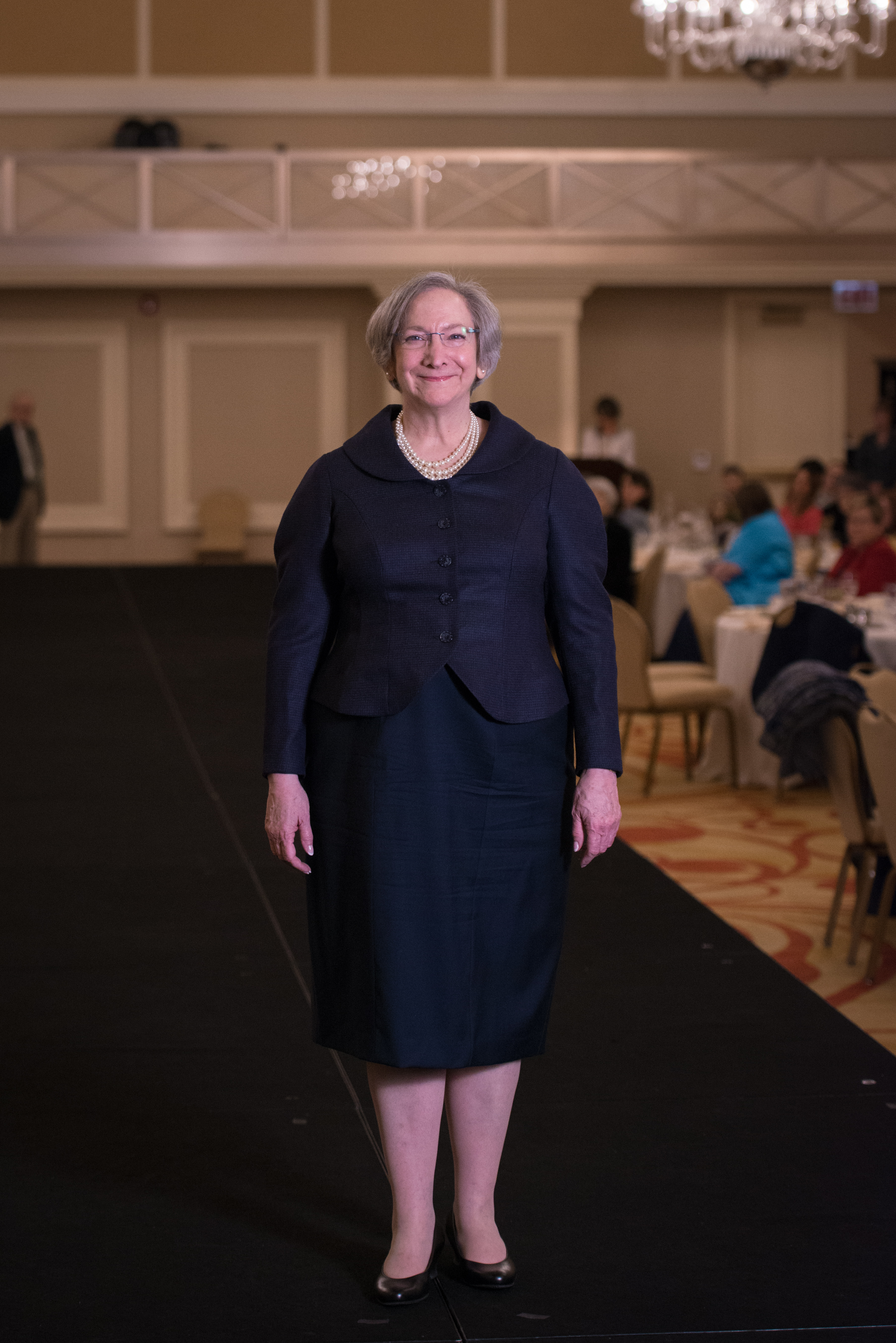
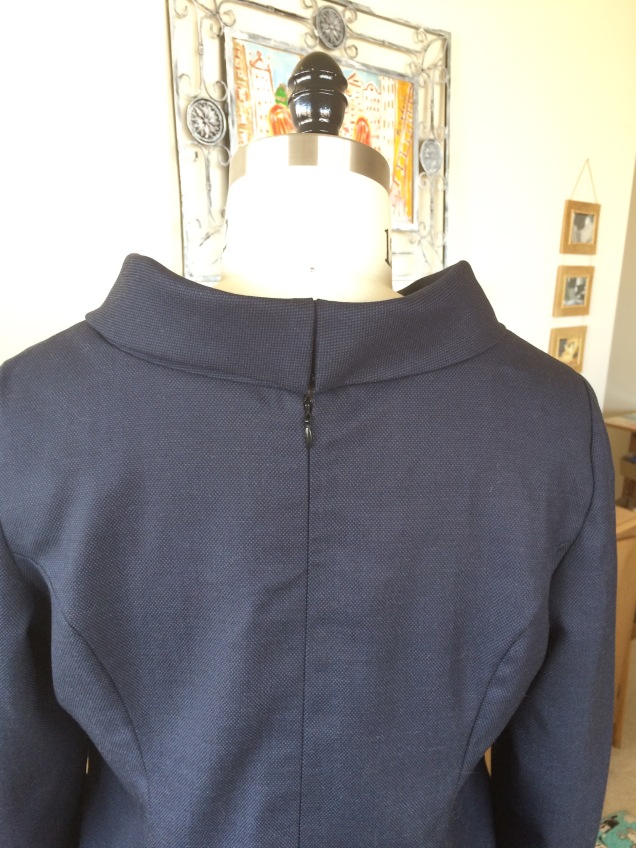
Another segment was “My Signature Style.” I was inspired by the book Lessons From Madam Chic to think about what defines personal style. I chose to make this two-piece dress with a bias rolled collar that evokes the early ’60s, not just because I feel great in the first version that I made, but also because I’ve been told that it suits me perfectly. The color of the first version wasn’t quite right. I’m much happier with this navy and black birds-eye weave wool.

PTPE.Haute Couture Fashion Show.2016-256

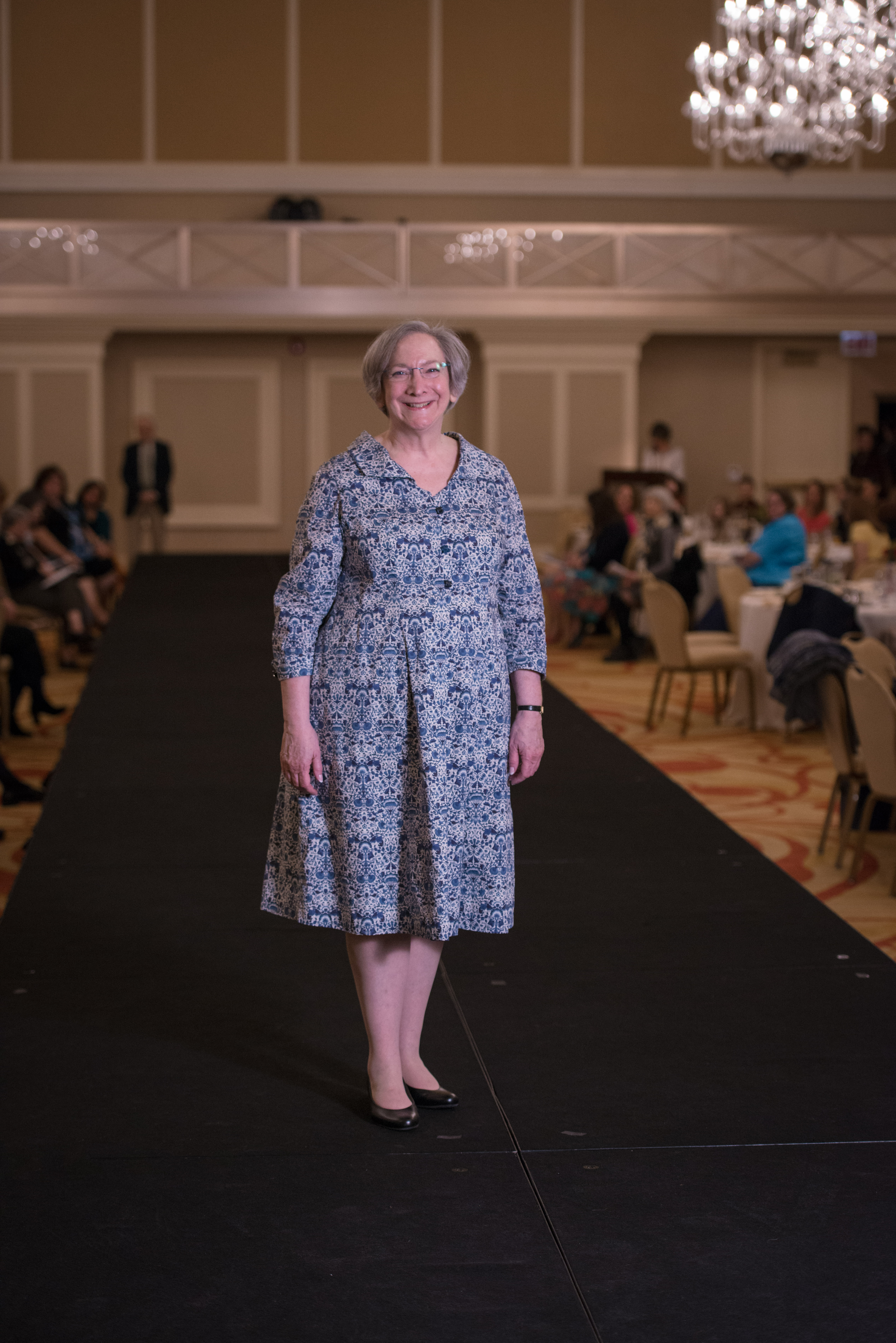
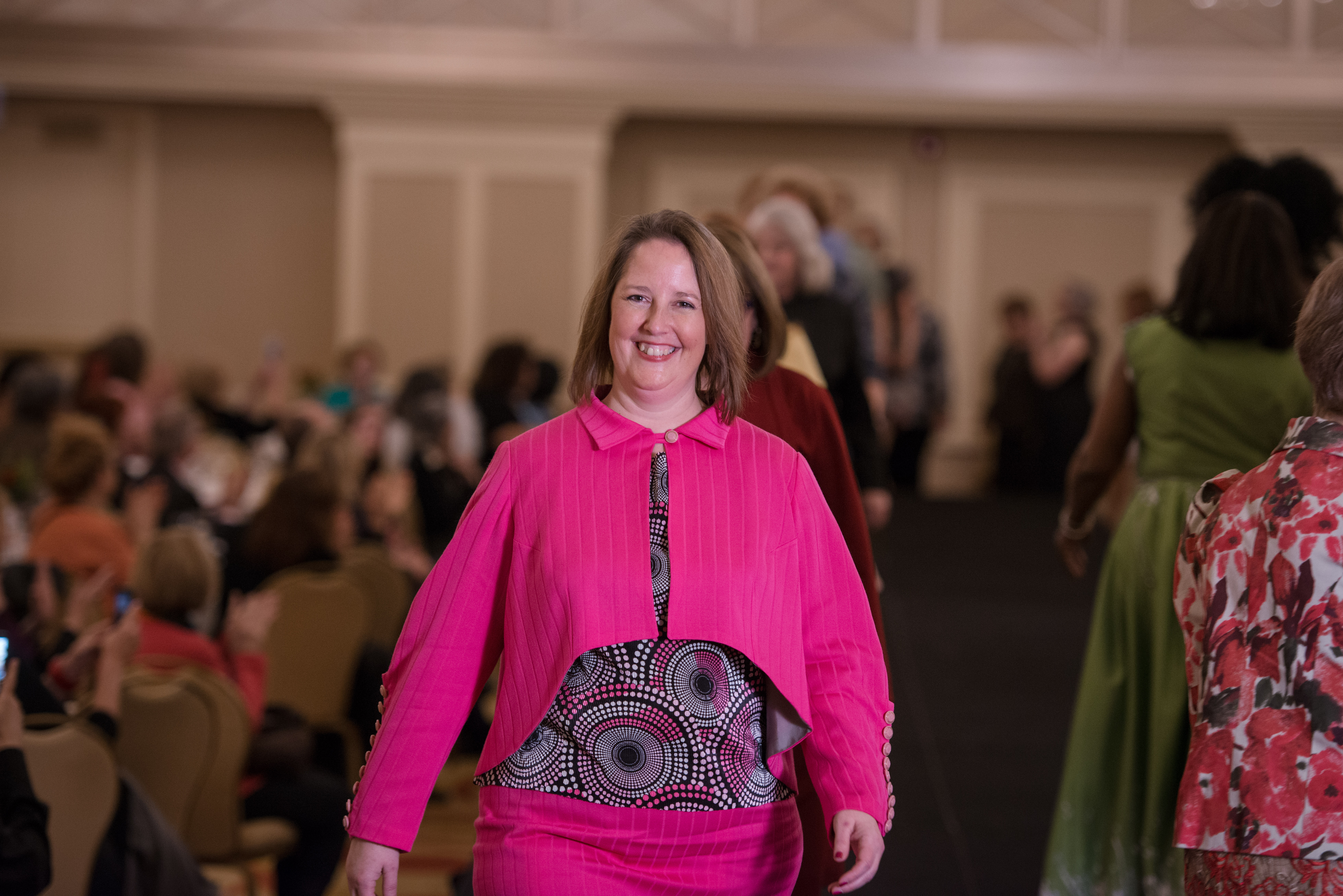
My third trip down the runway was in this cotton lawn shirt dress. I hadn’t planned to put this dress in the show, but we created a segment we called Day Dress Renaissance when we were preparing the lineup and decided this dress fit right in.

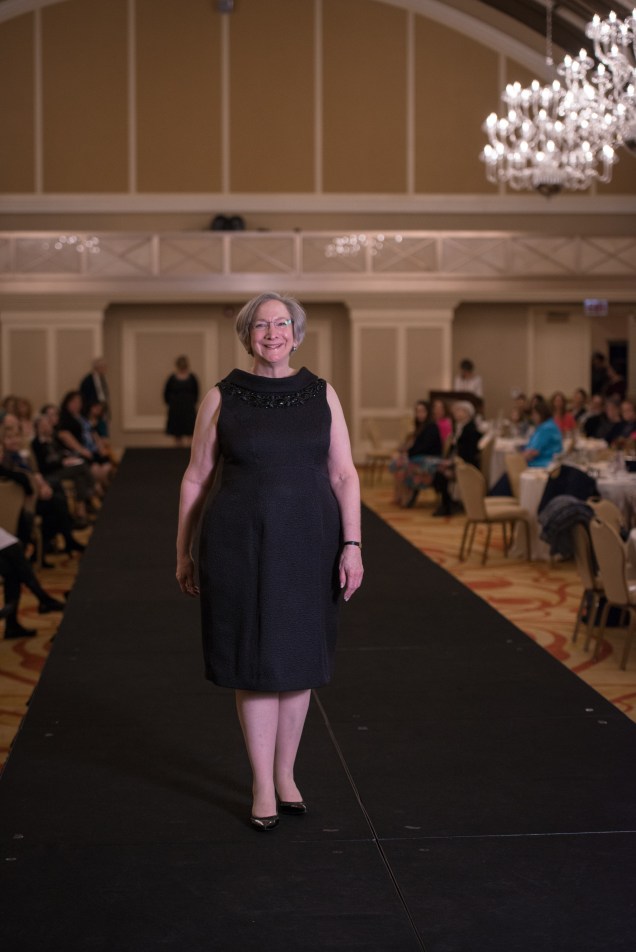
PTPE.Haute Couture Fashion Show.2016

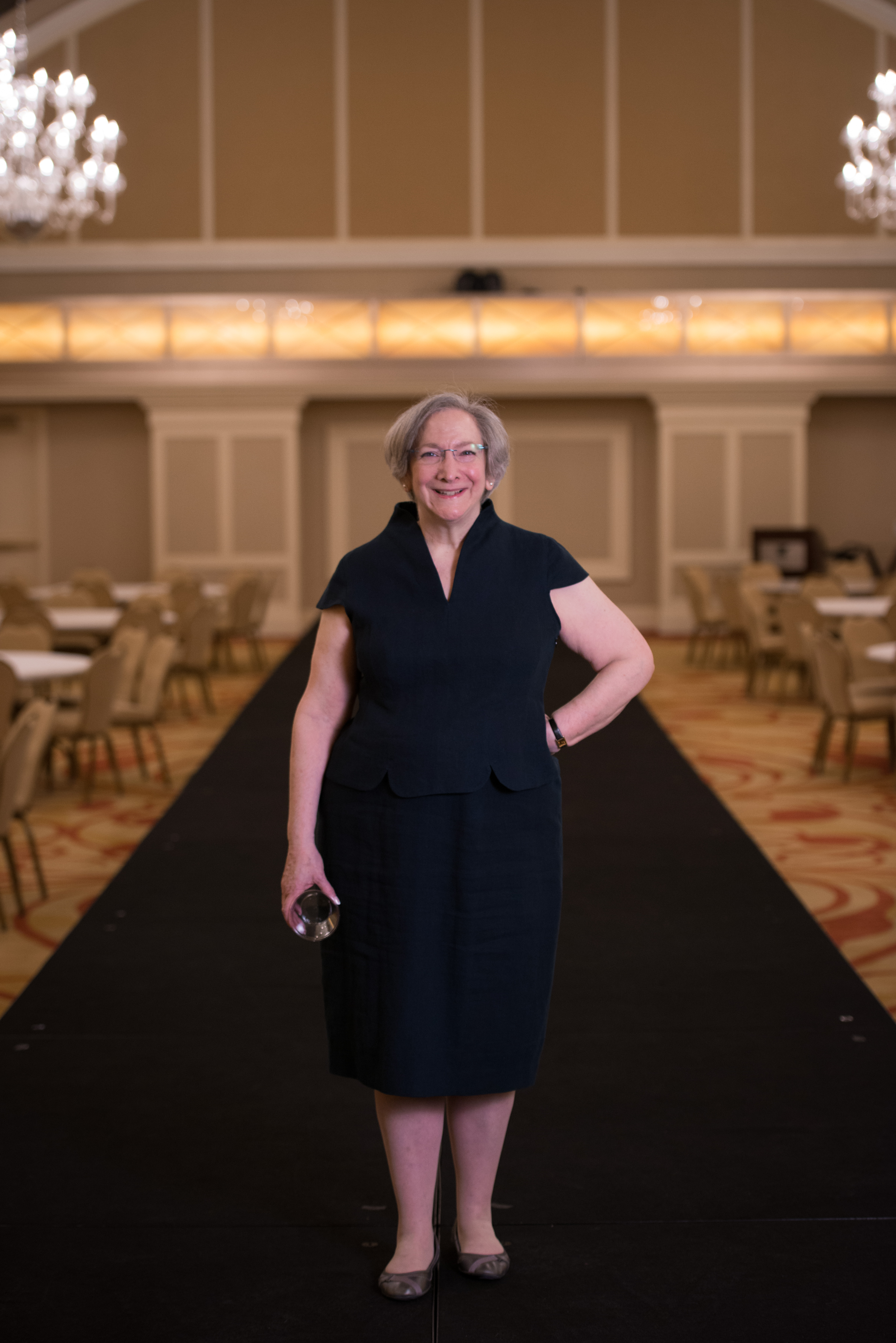
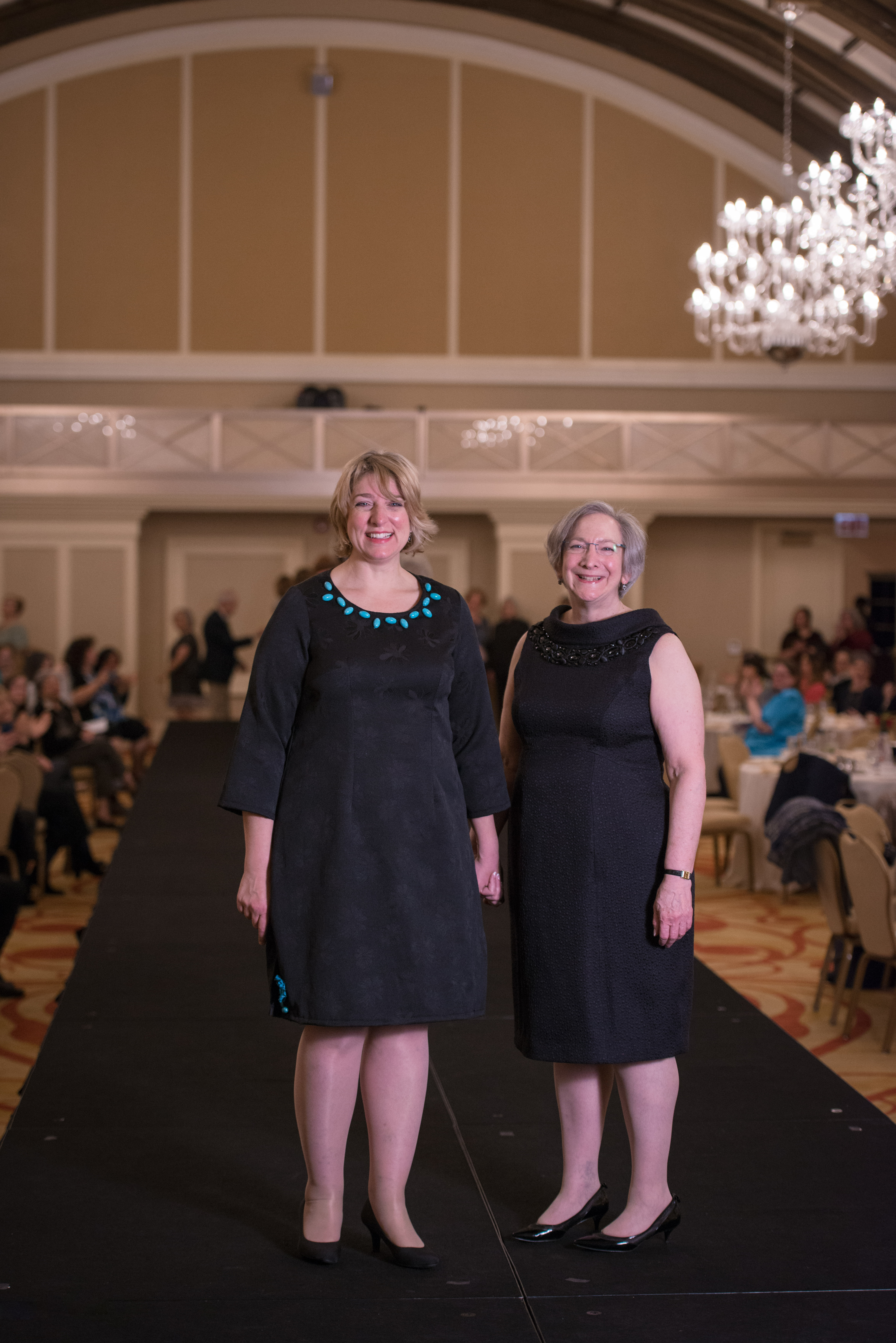
Susan insisted on giving me the honor of closing the show. We appeared on the runway together in the final segment, which we called Gallery Opening. This Little Black dress is the one that made it to the runway with the help of friends and needs to be finished on the inside before I wear it to a wedding in June.

PTPE.Haute Couture Fashion Show.2016-294

Here is my dear friend Stephanie King walking in the finale with a radiant smile.

PTPE.Haute Couture Fashion Show.2016-310

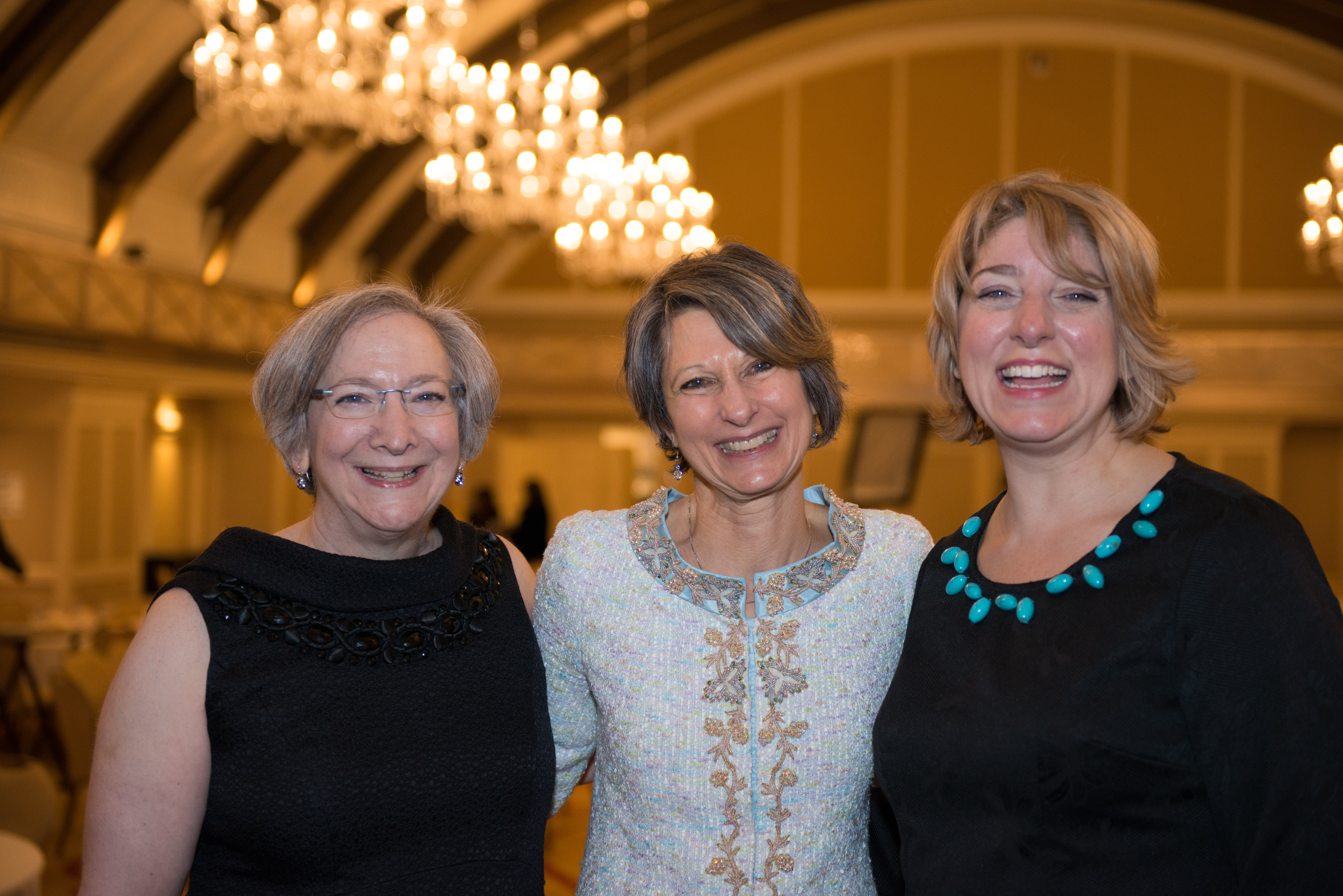
And here I am with Sarah Veblen and Susan Gerbosi, happy that we produced a lovely fashion show that everyone enjoyed.


Princess Seams – A Curvy Body’s Best Friend

There’s no getting around the fact that princess seams are the key to garments that flatter a curvy figure. Darts and tucks and gathers are fine, but they have their limitations. Even in combination, the silhouette they produce is boxy in comparison to the silhouette that princess seams can achieve. 

Okay, so there are shaping darts in addition to princess seams in the bodice on the right, but you get the idea.

The reason for these differences is easy to see in the patterns. Here is a standard darted bodice. The one on the right has the dart intakes cut out and the one on the left has the dart legs meeting the way they would in fabric. 

IMG_0856

As you can see, there is only one place the darts can create three-dimensional shaping. Darts point to the fullness they allow the fabric to make room for, and that one place in most bodices is the bust. That’s fine if your body only curves in that one place and everything else is pretty straight, but how many women are built like that? I never was. 

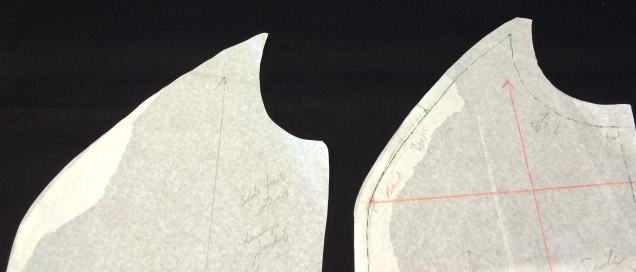
Here is what the front and side front pieces of the jacket I’m working on look like when they’re flat.

IMG_0831

The negative space between the two pieces runs from the armscye almost all the way to the hem and the side front piece makes quite a number of turns as it is joined to the front. That allows for a fair amount of contouring in very specific areas. 

Here is an edge view of what the pieces look like when pinned together.  It’s impossible for them to lay flat on the table for almost the entire length of the seam. 

IMG_0857

Now that you’re convinced that princess seams are the best option for a flattering fit (I hope), let’s talk about construction. I know a lot of sewists shy away from princess seams because they seem intimidating. But now that I’ve had a lot of practice sewing them, I don’t think they’re difficult to deal with.

There are a lot of methods out there for sewing princess seams and there really is no wrong way to do it. If it works and it feels comfortable, then it’s the “right” way to go about it.

First, a word about patterns. My patterns were developed under the guidance of Sarah Veblen, who doesn’t build ease into her princess seams. Commercial patterns almost always have ease and so if you are using one that does, you need to allow for that. The part of the seam that has ease is usually marked with dots and so it’s easy to figure out where the seamline is supposed to match up.

I don’t usually use many pins in my sewing, but I’ve discovered that having a fair number of pins in a princess seam is very helpful. How does it help? It helps me avoid spending quality time with my seam ripper. Whatever adjustments need to be made can be made by moving pins, not unstitching. I think of it as sort of a dress rehearsal. By the time I get to the machine, it’s smooth sailing.

I start the pinning at both ends. At the cut edge of the hem, the cut edges go together just like a front and back go together at a side seam. No big deal.

IMG_0836

At the top of an armscye princess seam, things are more interesting.

IMG_0835

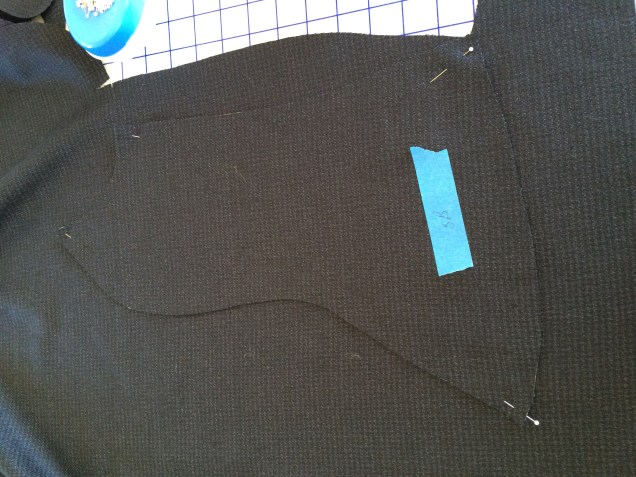
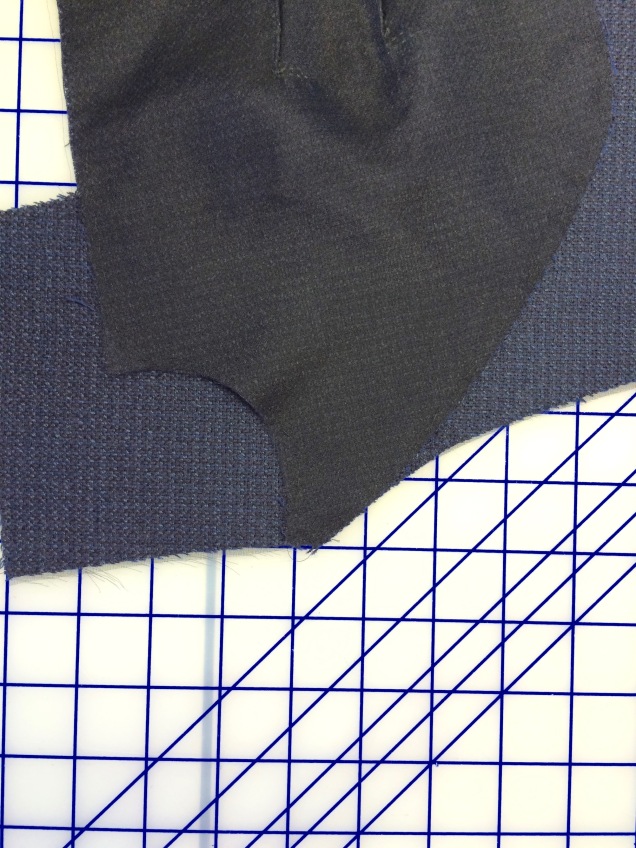
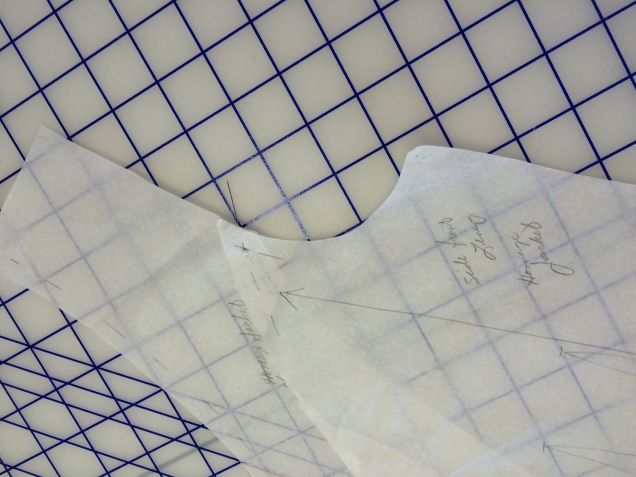
The picture above shows how the front and side front fit together at the top when the side front has been trued. You know exactly where to place the pieces at this end. Below are two side front pattern pieces, one for the fashion fabric (on the right) and one for the lining. Notice that I had forgotten to true the lining piece. 

IMG_0844Commercial patterns leave that point on the pattern piece, so when you pin your fabric together a little tail of the side panel sticks out and you never know how much of a tail is supposed to be left hanging. There are two ways to deal with this issue.

My preferred fix is to correct the pattern. Sarah taught me that to do this, you simply pin the pieces together as sewn and cut off the tail.

The first step is to mark the seamlines if that hasn’t been done already.

IMG_0845

  Here are the pieces laid out on top of one another. Notice that the pin goes into the intersection of the princess seam and the armscye seam. This is the end result we’re going for. 

IMG_0846

Here are the pieces pinned as they will be sewn. Notice the tail where the point of the side front is folded at the seamline. 

IMG_0847

When the tail is cut off, the pieces go together as they should. No guesswork needed.


If you’d rather not change your pattern, there is another solution. It’s one that has to be used every time you use the pattern, but it works fine.

Mark the intersection of the princess seam and armscye seam on both adjoining pieces. I’ve used a Chalkoner to do that here. 

Insert a pin at that intersecting point on both pieces. Now the pieces are positioned correctly at the top. 

IMG_0854

Once I’ve established the proper placement of the top and bottom of the seam and have pinned the pieces together there, I work my way into the middle.

If I’m left with places that are going to pucker, I take out one or two pins and pat the fabric into place to see where it needs to go. The curvy areas are on the bias and so the fabric has a tendency to shift. A little extra handling is usually all that’s needed to find how the two pieces fit together. I know they will fit together because I walked the seams in the pattern and I cut as accurately as possible. 

If the fabric still doesn’t settle into the right spots, I check the edges to make sure they are aligned exactly. Small corrections in alignment will often help the fabric find its place. If nothing is working and it looks like I have a ton of extra fabric in one piece, I double check to make sure I’m not trying to attach a side front to a back piece or a side back to a front. That would explain the problem. 

Once the pins are in and I’m satisfied that the pieces are where they need to be, it’s off to the sewing machine. I like sewing with a 3/8″ seam allowance most of the time and I find it especially helpful when I’m sewing curvy princess seams. I can tell you that sewing princess seams in stiff muslin with 1″ seam allowances is no fun at all, but after a little practice, sewing natural fiber fashion fabric that has some drape in it with 3/8″ seam allowances is a piece of cake. I just sew slowly and keep my eye on the guideline directly across from the needle, not ahead of it. I sew with the machine set to stop with the needle down so if I need to stop to readjust, the needle is anchoring the fabric. 

I also like to sew from the hem up. That means on one side the curvy side panel will be against the feed dogs and on the other side they will be on top. That doesn’t matter as long as I have the pins in place and I’m using my hands to guide the fabric. 

After pressing the princess seams as sewn (but only with the tip of the iron not going much beyond the stitching line), my favorite way of setting in the shaping is to use a June Tailor Board along with an iron that gives plenty of steam.

The seam allowances on this wool fashion fabric, which I’ve underlined with silk organza, pressed open and stayed that way without requiring any clipping. When the seam is on the curved part of the tailor board, if I see ruffles in the seam allowance after pressing, I use that as a guide for clipping.

After the seam allowances are pressed open, I press on the right side over a ham and use a silk organza press cloth.

IMG_0862

With the princess seams done, my project is transformed from flat fabric to a three-dimensional object that holds the promise of becoming a garment I will love wearing.


The Fussy Bits

I know much of my sewing is fussy, but what I think of as the fussy bits are those fine details that can make the difference between a garment I am proud to wear and one that falls under the Five Foot Rule – they look okay but only from at least five feet away. And nobody, but nobody, gets to look inside. Here are some ways I’ve found to avoid the dreaded Five Foot Rule.

Hooks and Eyes

One of the most valuable resources I’ve stumbled upon in my online research for sewing techniques is a series of papers published by the Cooperative Extension of the University of Kentucky. These well-illustrated guides often answer the nagging questions I have that nobody addresses in classes or books and that makes me feel dumb for not knowing the answer. For example, there are plenty of resources that tell us how to sew on a hook and eye but nobody really gets into exactly where they should be placed or when you should use the round eyes, as opposed to the straight eyes that come in the packages. And when you have pieces that meet instead of overlap, which way do the hook prongs point, out or in? In “Hooks, Eyes, Snaps, and Tape Fasteners,” Professor Nadine Hacker answers these and other questions about the nitty gritty details of closures.  So, now I know that the straight eye is used when the garment pieces overlap, as they do on waistbands and at the top of lapped zippers, and the round eye is used when the pieces meet, as they do in this bias collar.

IMG_0826

This is still a work in progress. It needs a good pressing, but you get the idea. 

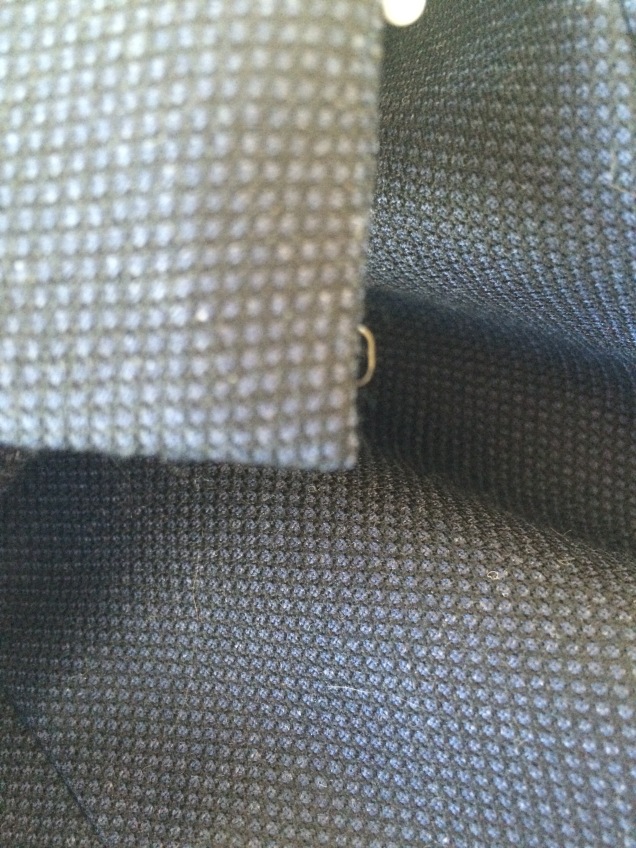
Following the instructions, I set the round eye so that it just barely extends beyond the edge of the collar. 

IMG_0791

I have a lot of trouble getting the hook to line up with the eye, so I engage the two pieces to and sew the hook on while it is attached to the eye. Oh, and the prongs point away from the fabric on which the hook is sewn. 

To get the hook to stay put while I’m sewing the first few stitches, I use a Clover fork pin.  More about these handy little tools in a moment. 

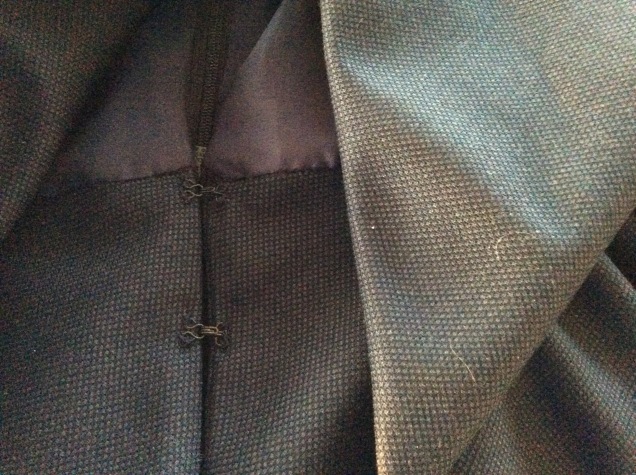
Here are two of the hooks and eyes sewn in. Perfection is still an elusive goal, but these are a lot better than what I was doing before.  

IMG_0199

Strategic Snap Placement

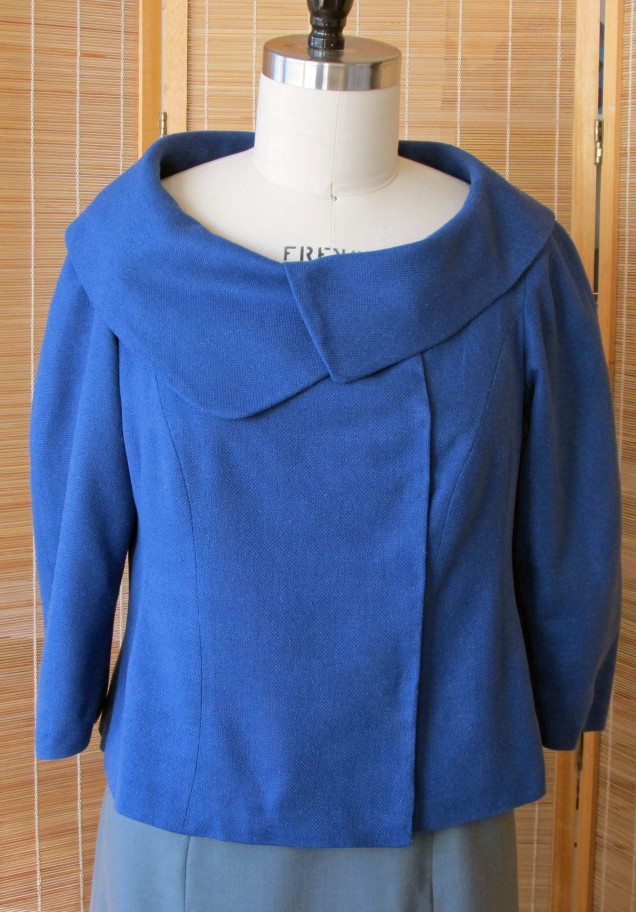
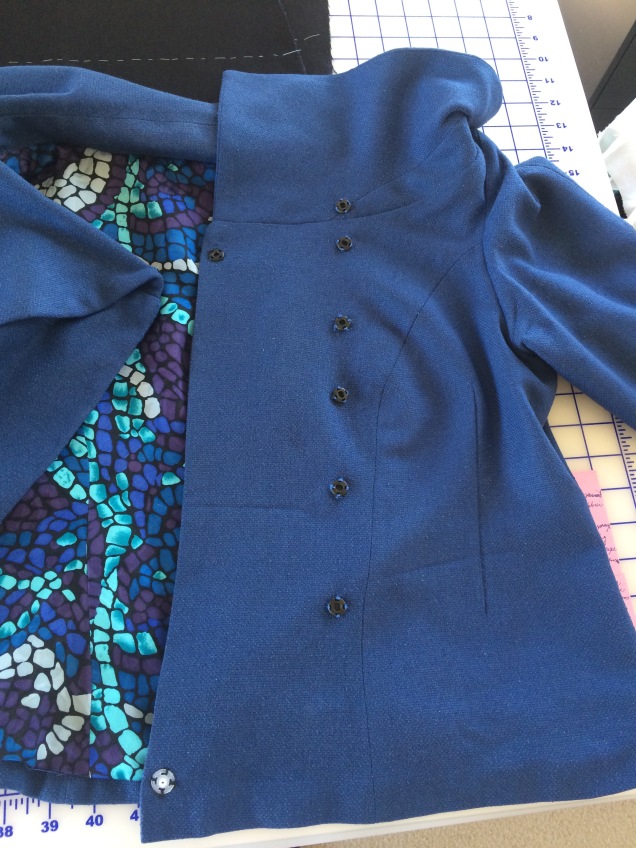
Another fussy bit that was tripping me up was snap placement. In this asymmetrical jacket, I had to put in a pin to keep the underlapped front from hanging below the overlap at the hem.

Blue Asymmetric Jacket

I tried adding extra snaps at the neckline, but it didn’t fix the problem. Finally, I asked Sarah Veblen what to do. Her solution was ridiculously easy: add just one more snap, but place it where the problem was occurring. 

IMG_0788

Sarah demonstrated this in a workshop by adding the plastic snap just above the hem at the edge of the underlap side. It works like a charm. I’ve also come around to preferring plastic snaps to metal ones.
Aligning Intersecting Seams

For intersecting seams, I rely on the Clover Fork Pins I mentioned earlier. Susan Khaljie recommends these clever quilting tools for matching stripes and plaids in fabrics that have a lot of play in them and are resistant to staying put with ordinary pins. They hold the fabric exactly where you need it and they work wonders when matching intersecting seams. I use them to align the seam of my two-piece sleeve to my shoulder seam and to align the princess seams on the bodice and skirt of an Empire waist dress.

The connected end slants upward and the prongs lay flat so you sew right over it.

IMG_0786

Mitered Corners

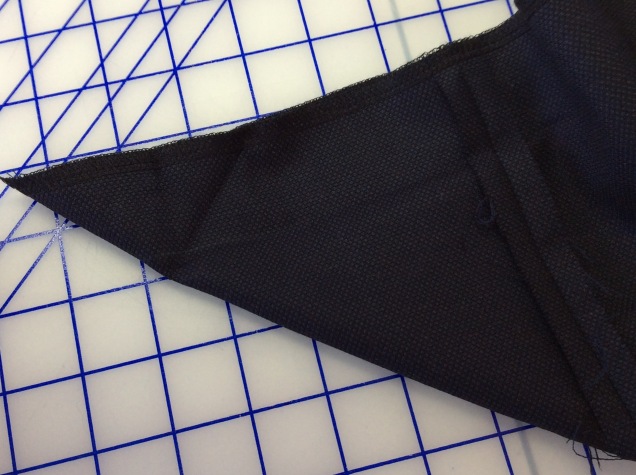
Corners are another area that can get really messy. Turning sewn corners will be the subject of a tutorial down the road, but for now I’d like to go over mitered corners. Specifically, using a miter for the corner formed by the hem and vent of a pencil skirt. This is a fussy bit that’s actually fun to do and the results are nice and tidy. 

The first step is to mark or press the corner, in this case the hem and the vent extension. I’ve marked where the creases intersect with pins. Next, you make a diagonal fold where the two creases meet and press lightly, taking care not to stretch anything out. The pins are lying directly on top of the creases.

You then bring those two pins together, and create an odd-looking point. I always have to remind myself that I’m now working with right sides together, whereas the creases were made working from the wrong side.

IMG_0181

The diagonal fold line is where you need to stitch. 

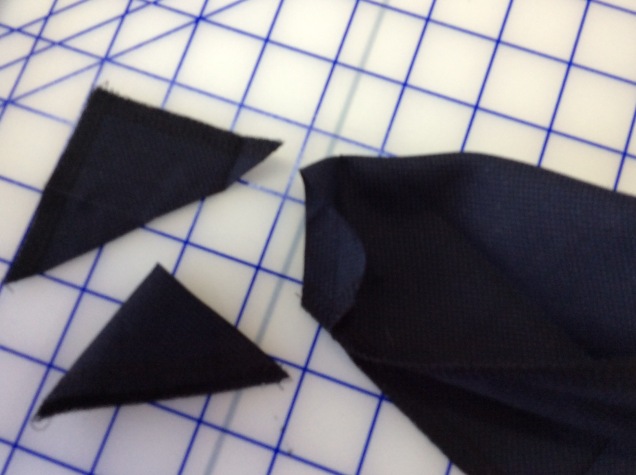
At this point, I test out what I have by turning the corner. This test run is important because the next step is to trim, which cannot be corrected easily. Ask me how I know.

The rough turn test shows that the miters are in the right place and the only thing keeping these puppies from looking good is all that extra fabric inside. So I turn them back and trim off the ends to get rid of the little dolphin noses.

IMG_0185Now they are ready to press, turn and impress.