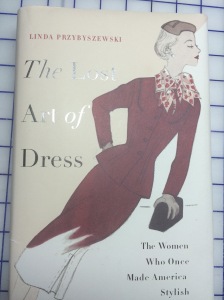
Rediscovering the Lost Art of Dress

IMG_0434Reading The Lost Art of Dress by Linda Przybyszewski opened my eyes to a great deal that I hadn’t known about how women and girls learned to dress appropriately in the past and how well-educated women carved out careers for themselves in home economics departments of leading universities in this country long before women entered male-dominated professions in large numbers.

One thing the book reminded me of is how comfortable shirtdresses can be to wear and how perfect they are to fill that gap between dressed up and casual. Professor Pski herself favors  this style and shirtdresses were a mainstay of my mother’s wardrobe as well as my own back when a dress was the most casual thing I could wear to the office on a weekday. And so I was inspired to develop a pattern for a shirtdress.

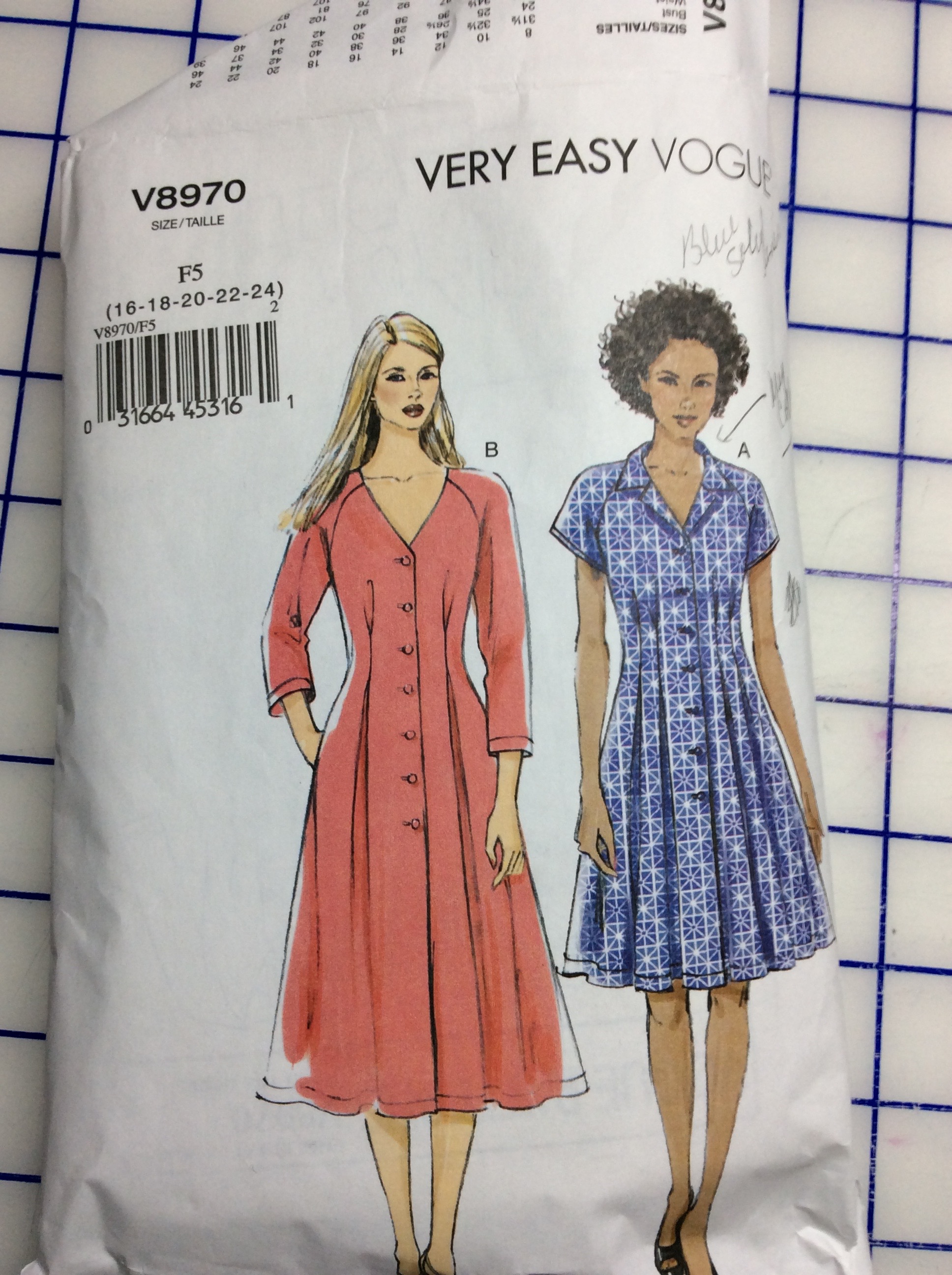
Of course, I had some specific requirements for this shirtdress. First, I never liked wearing dresses that have buttons all the way down the front, because there is always pulling and gapping when I sit in them. I also liked the idea of having release pleats to control the transition between the fitted bodice and a flared skirt.

Vogue 8970 pretty much fit what I had in mind in terms of the shape.
IMG_0136The blouse pattern Vogue 1412 provided the solution I was looking for to avoid having buttons all the way down the front.
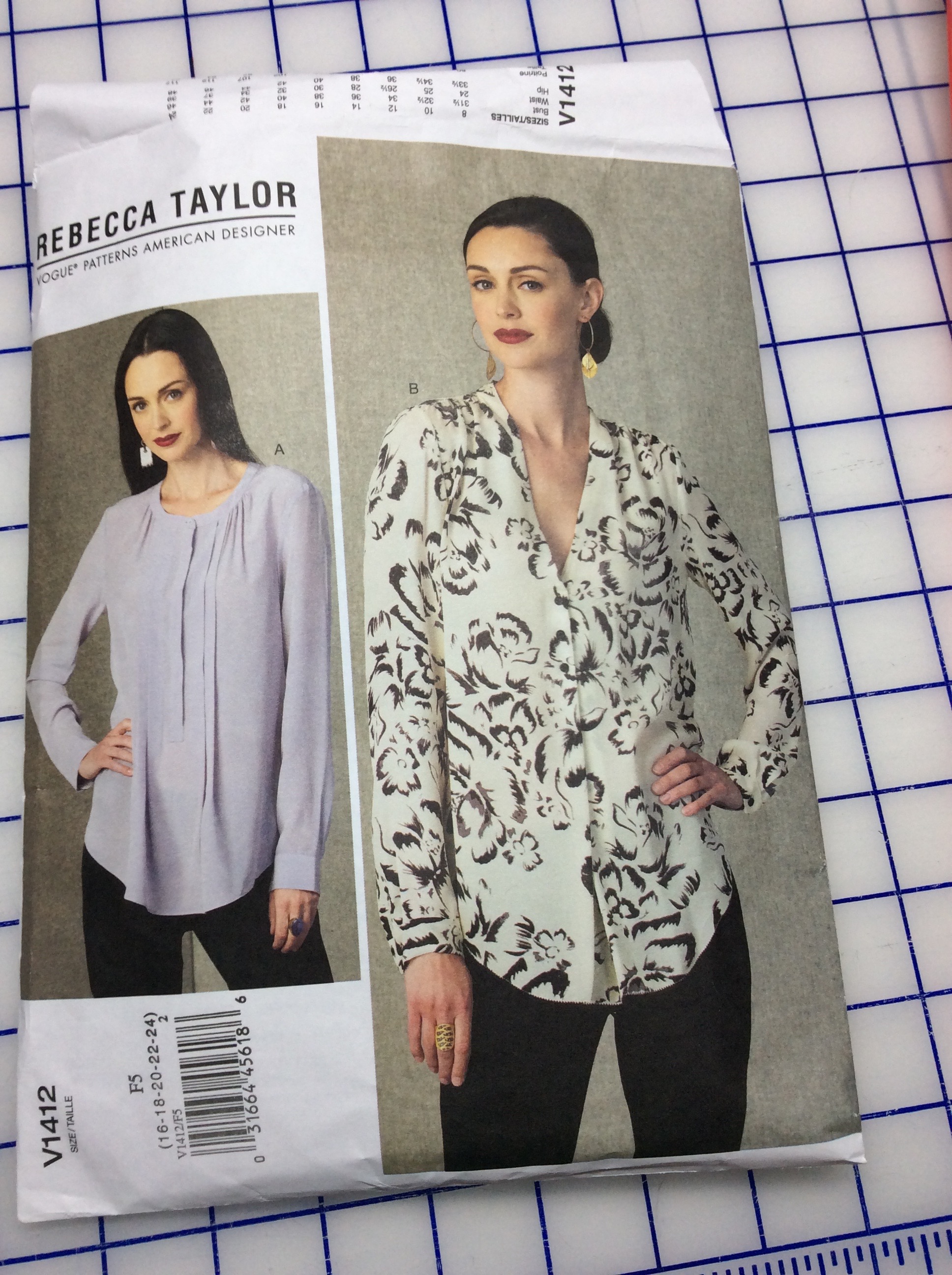
IMG_0135This pattern has a few buttons on a placket and transitions to a pleat that extends to the hem. I opted for a facing rather than a placket, but incorporated the pleat.

The first order of business in developing the pattern was to get the shape of the skirt. I had a false start trying to trace the side seams of V8970, but quickly found that adapting that pattern to my armscye princess sloper either wouldn’t work or would be much more trouble than it had to be.

Going from the sheath pattern to the shape I wanted for the shirtdress was pretty simple. Yes, there was math involved, but just to the point of approximation.

The method consists of cutting the existing pattern into strips, from hemline to a horizontal balance line (HBL) that will be used as a pivot point. Each strip needs to be cut to, but not through, the point where one of the cut lines meets the HBL to form a hinge. Here is an example of how this works.
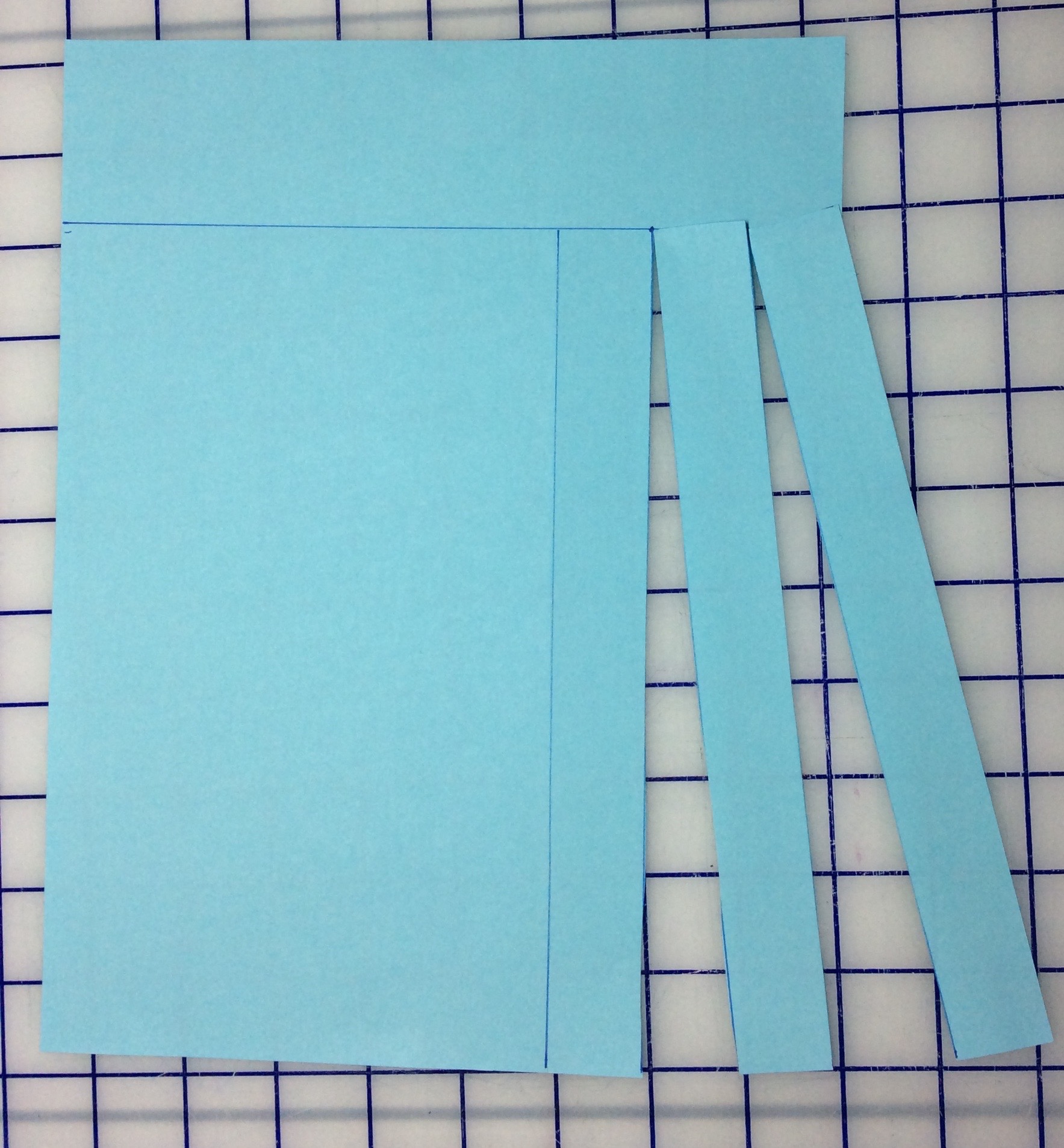
IMG_0138I decided how wide I wanted the dress to be at the hemline, subtracted the total circumference of my sheath pattern at the hem (not counting seam allowances), and divided that number by four. After rounding for convenience, I subtracted the width of each pattern piece at the hemline to arrive at how much I needed to add to each pattern piece. Then it was a question of cutting strips of equal width to the HBL, cutting the hinges, placing more pattern paper under the work and spreading the strips the same distance apart from one another at the hemline. I think I opted for ½-inch spreads to distribute the additions evenly throughout each pattern piece.

I left center back and center front alone and worked only to one side on those pieces, whereas the side front and side back had to have new graininess drawn after the process was completed. Then I taped it all down and arrived at pieces that look like this at the bottom.
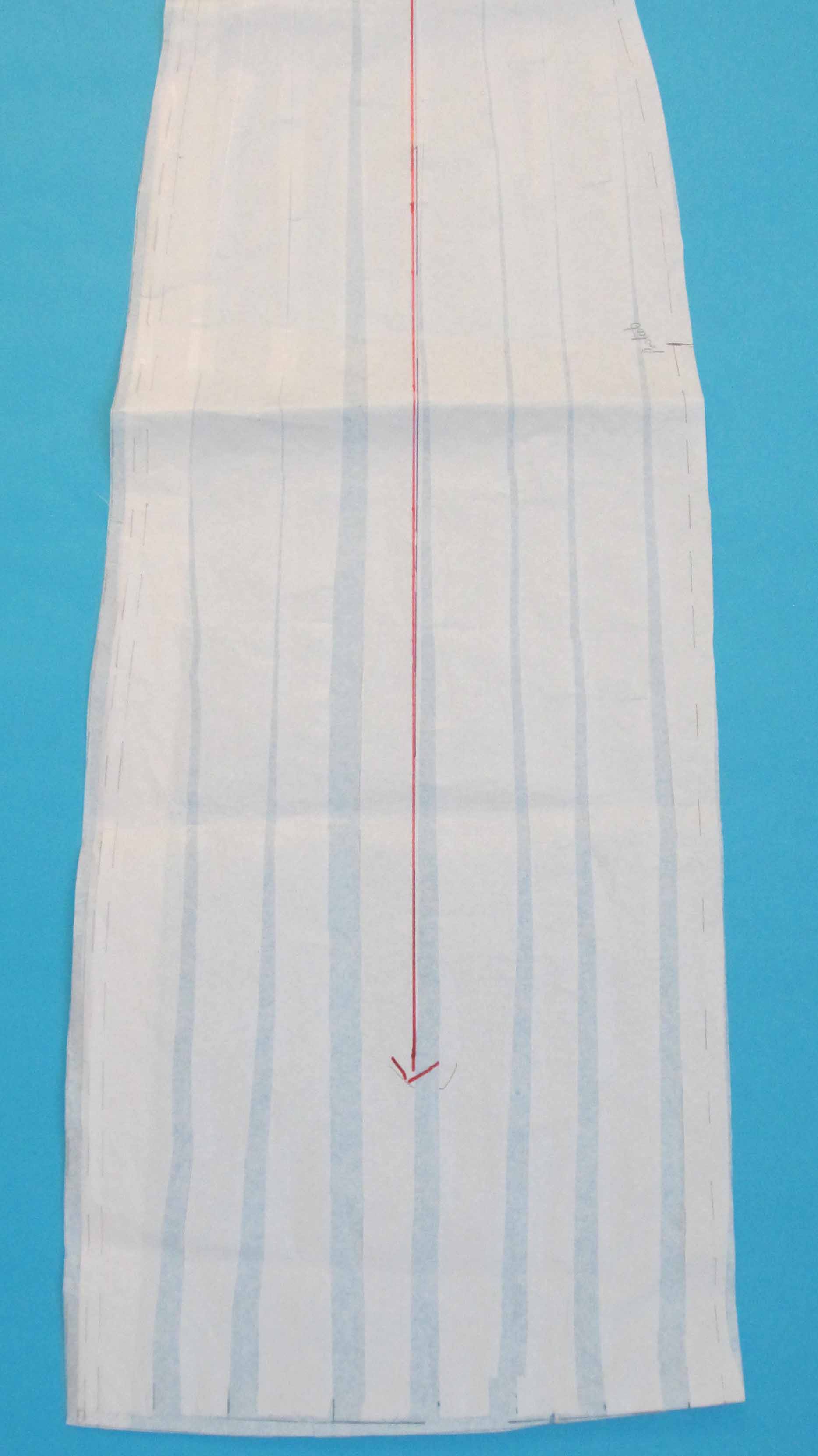
SkirtSpreadHere is what the pattern looks like in the hinge area.
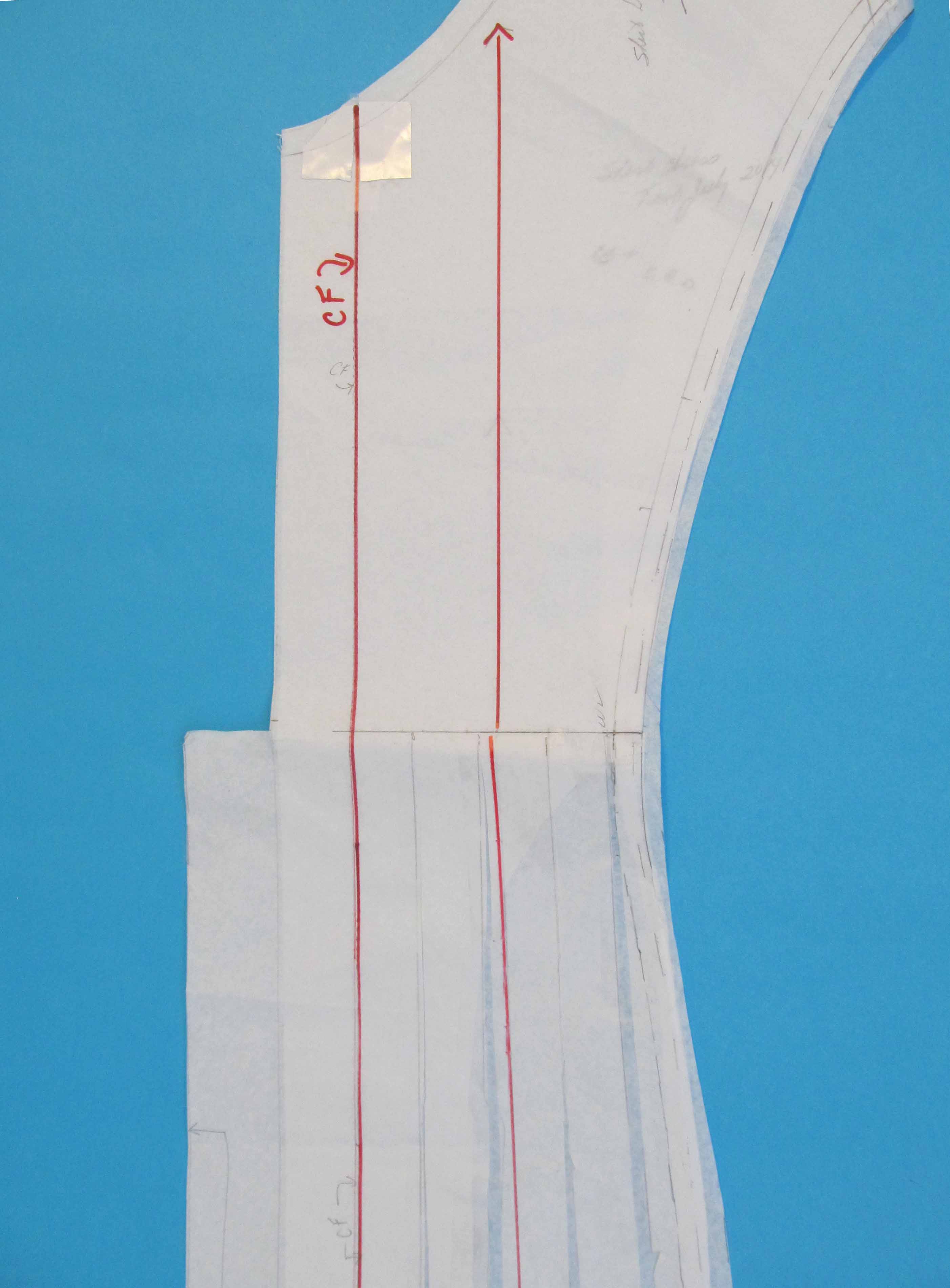
ShowHingeThe picture above also shows the extension for the center pleat, which is cut on the fold, and the extension for the opening where the buttons and buttonholes are placed.

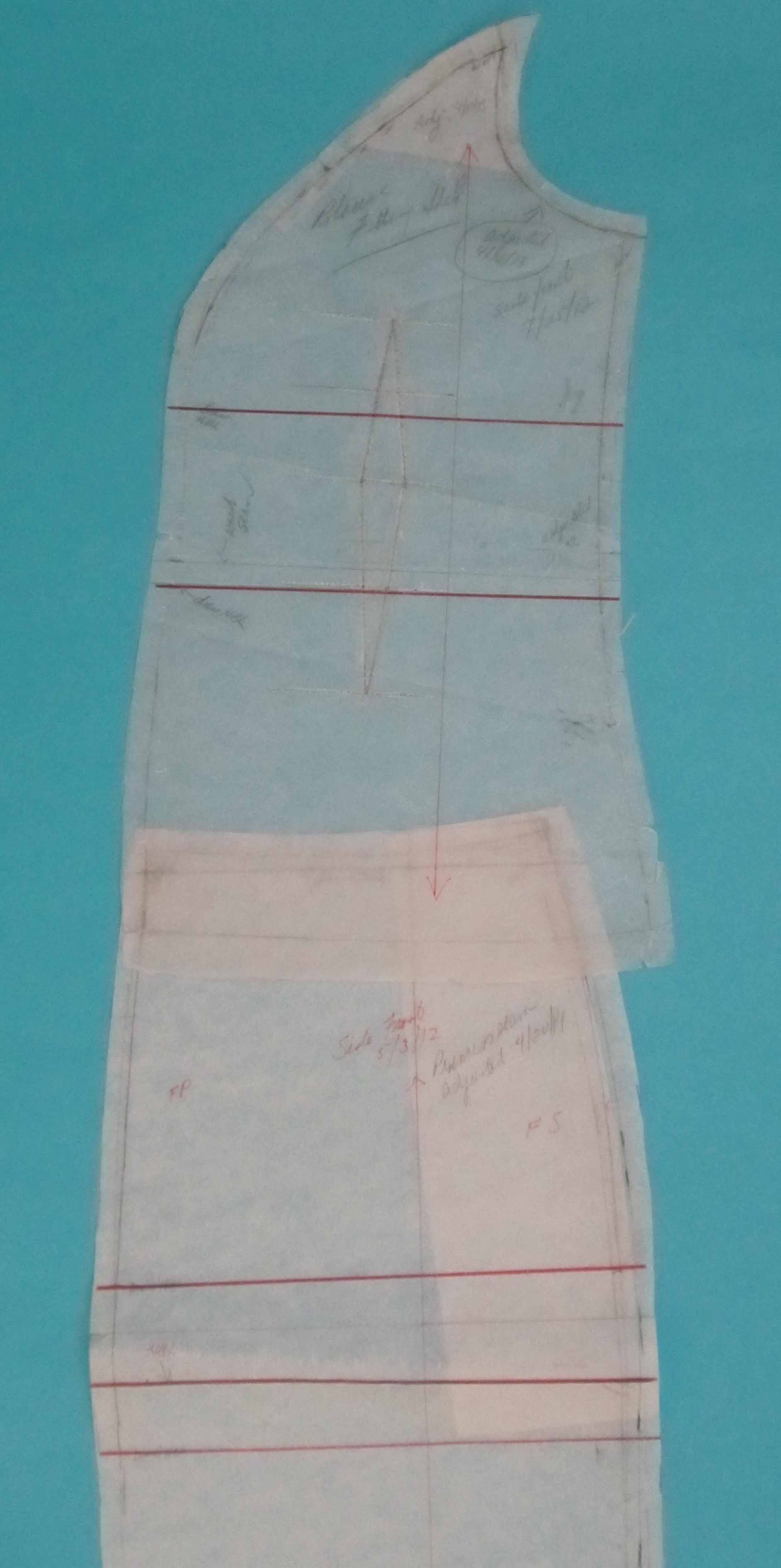
I had a friend mark the placement and depth of the release pleats for me in the side front and side back panels. Here is how that looks on the pattern. Shirtd_SF_Top
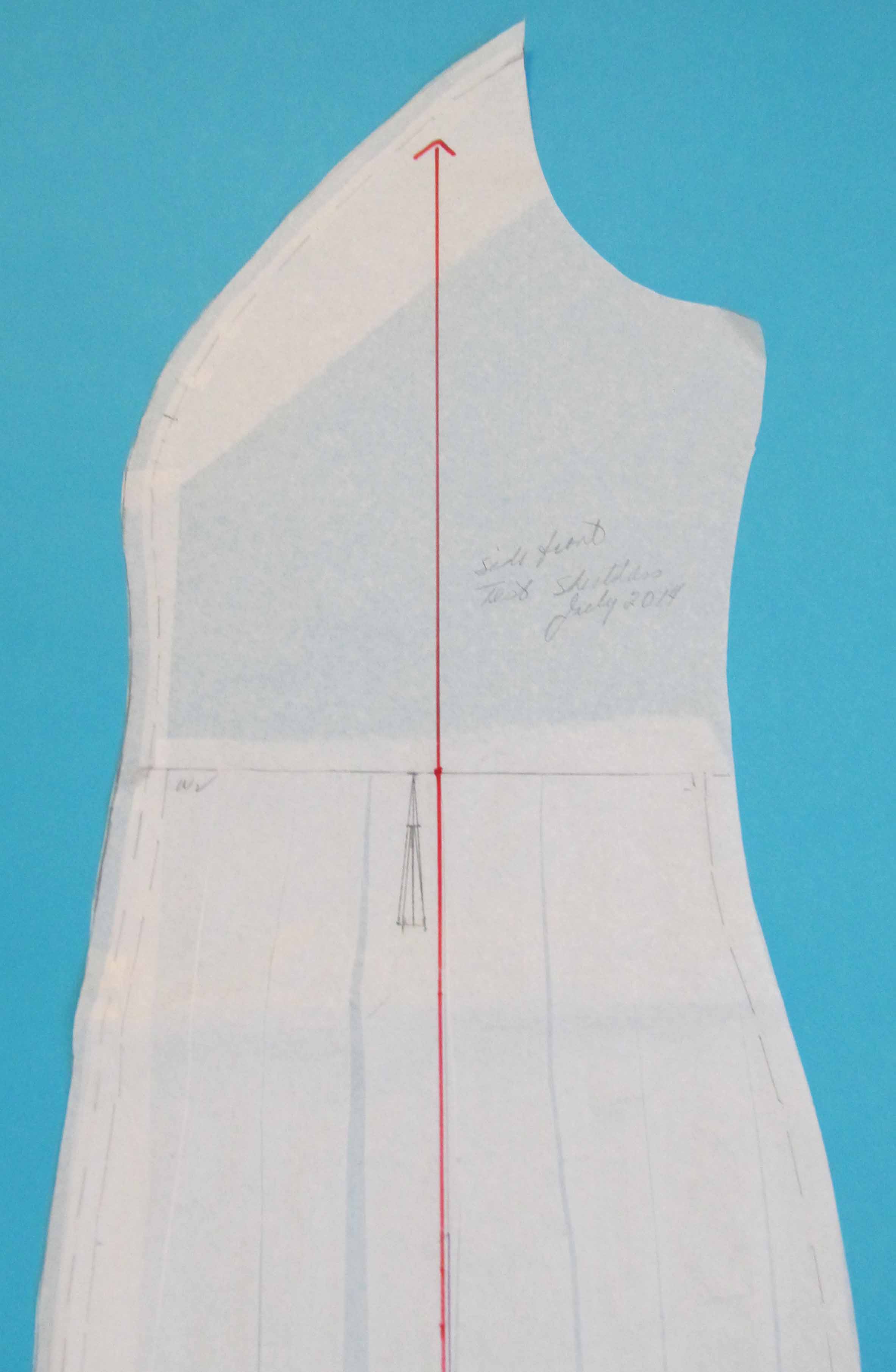
I added in-seam pockets to the pattern and was good to go.

This was another project that I intended to complete in the summer of 2014 in linen. When I didn’t get to the sewing in time, I made the first version of the dress with 3/4 sleeves and turn-back cuffs out of a Liberty cotton lawn lined in white cotton batiste.
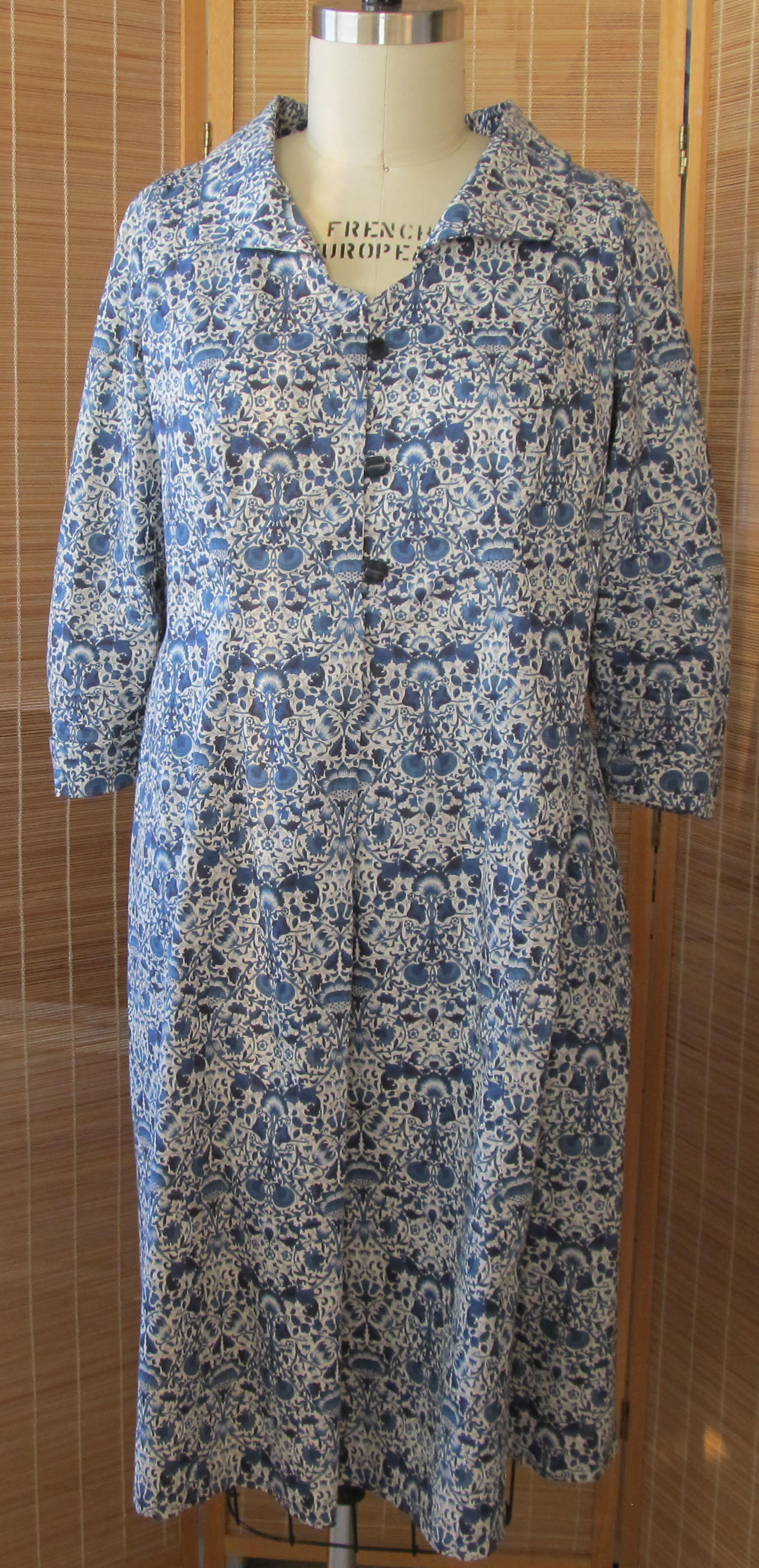
Liberty Shirtdress

I ran into some issues with buttonholes, so I opted for button loops. I drafted the collar pattern myself and, although I love wearing the dress I decided that next time I would raise the back neck and make corresponding adjustments to the collar. I did that in this linen version, which I finished in July and wore for the rest of the summer.
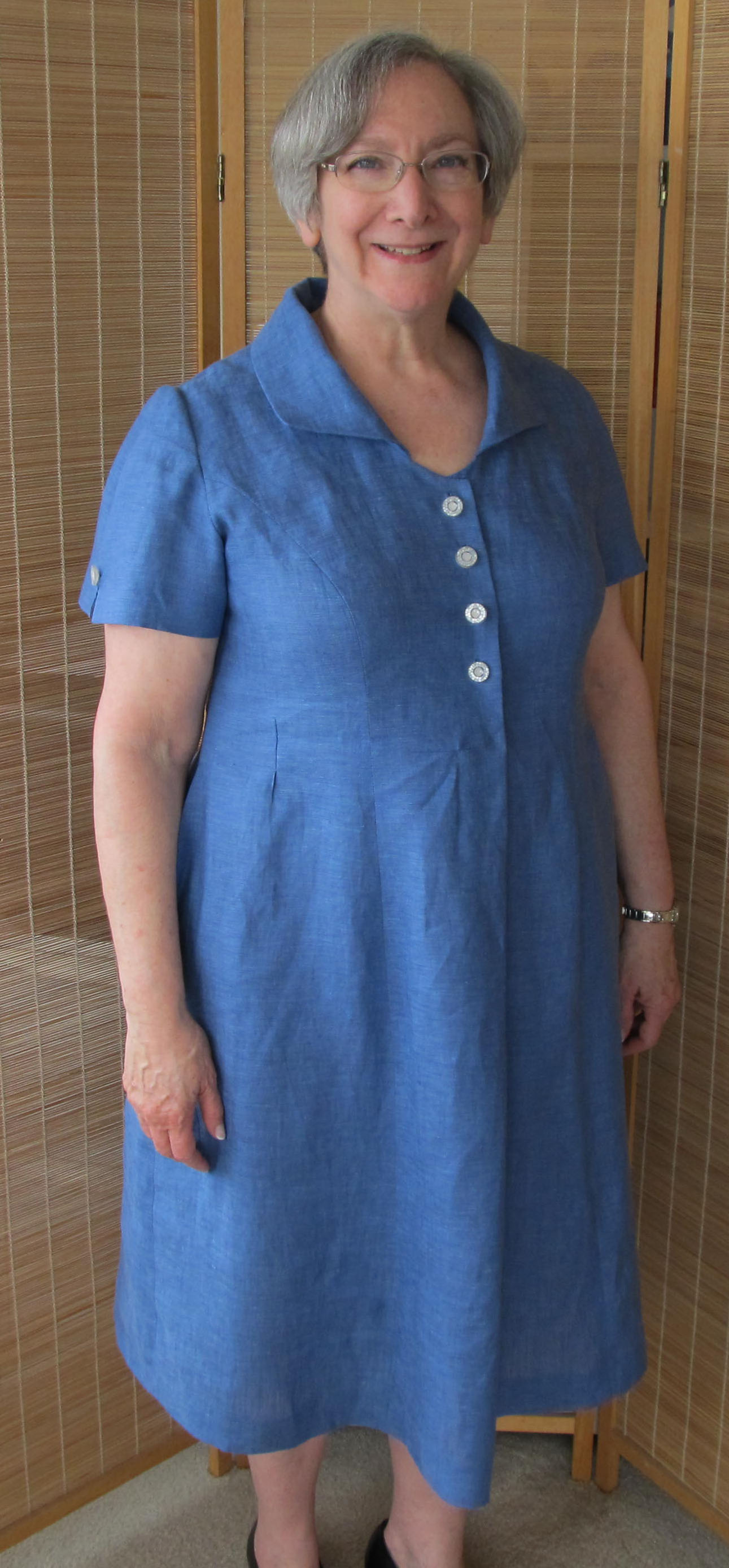
Linen ShirtdressYou can see the release pleat clearly in this solid fabric. As you can see, I overcame my buttonhole issues for this version. The buttons on both of these dresses are from Soutache.

I’m much happier with this neckline and the way the collar sits in the back. I definitely want to use the collar again, maybe in a blouse next time.

I have some cotton shirting I want to use for another version of this dress with a Mandarin collar. I also have some crinkle rayon that I think would look nice with a shawl collar. As you can see, this is becoming a staple in my wardrobe.
Connecting the Dots

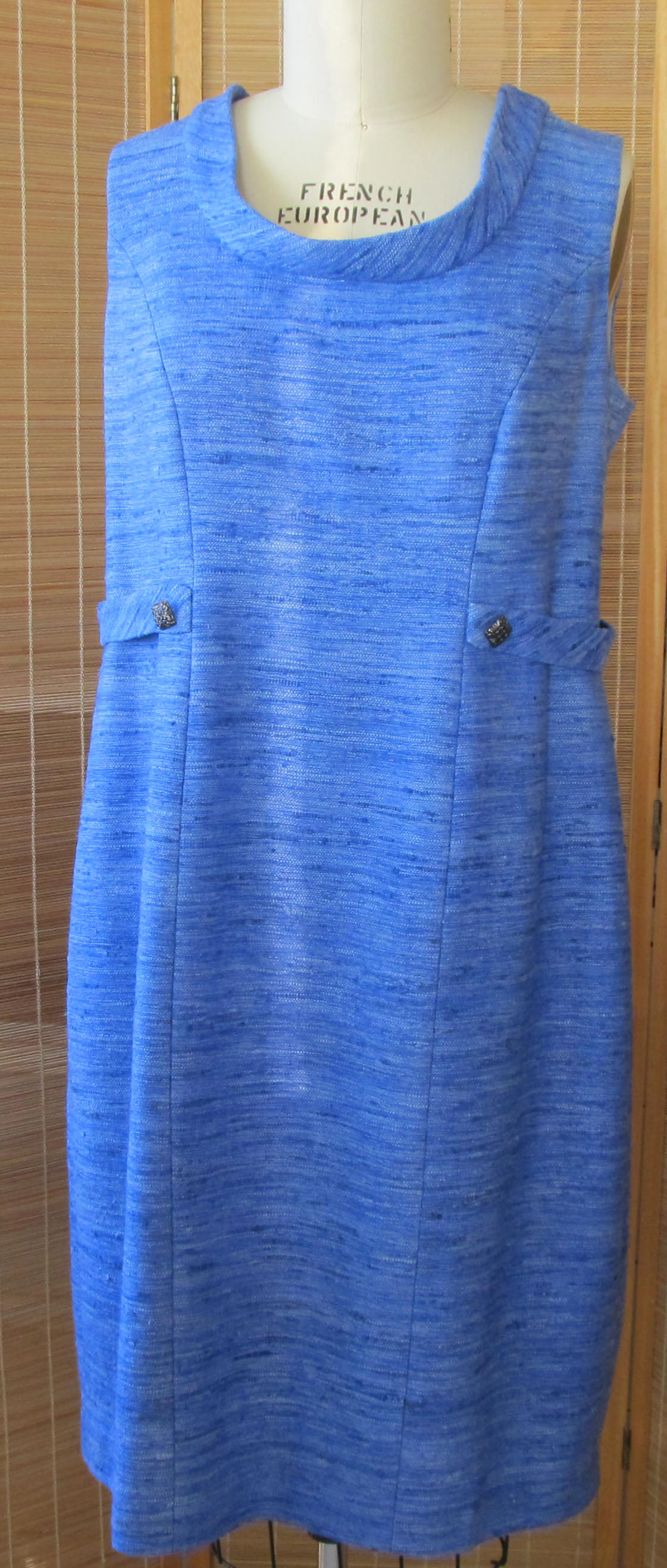
Blue SheathOkay, time to take the two-piece dress pattern and convert it to a pattern for a sheath dress. No big deal, right? Well, not a really big deal but there were issues.

The first hurdle was to decide where the bodice pattern leaves off and the skirt pattern begins. Why wasn’t it just a matter of extending the bodice piece? Isn’t that how we’re told we can convert commercial blouse or shirt patterns into dress patterns? Yes, that is what we’re told, but it doesn’t work on me.

First, let’s take a look at the two-piece dress sloper, or master pattern.

2pc front

See how the bodice is nipped in a bit, but not as much as the waistband on the skirt, then flares out? If you continue that flare the silhouette wouldn’t be anything close to a sheath.

There’s another problem lurking here. I’m one of those women with a tilted waist. And, because of my shape—lots of tush, less of me at the waist—the center back seam is not the same length as the center front seam. You can get a sense of that tilt from this picture, which also approximates the way the two pieces overlap as worn.

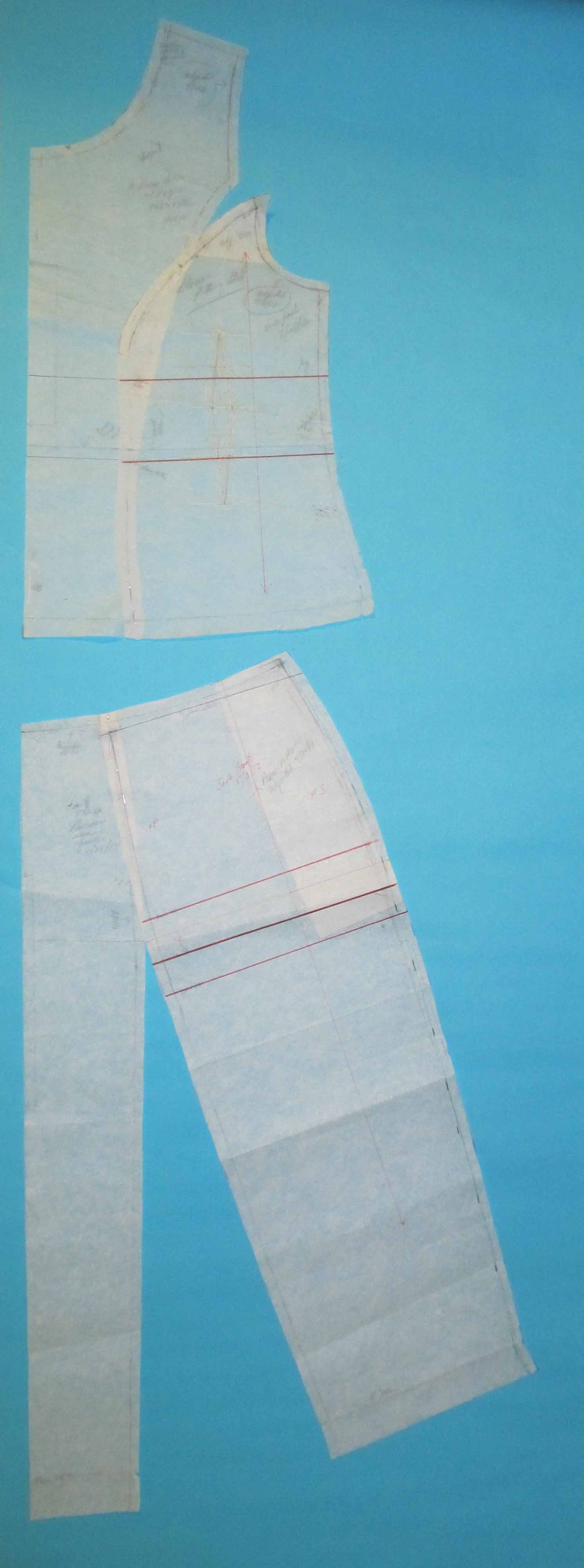
SideSeamOverlapHere’s where working with horizontal balance lines that Sarah Veblen teaches us to use comes to the rescue. When developing a pattern from one that has been fitted using Sarah’s method, there are two things you know for sure. The hem will be parallel to the floor, making hemming a breeze, and the horizontal balance line or lines (HBLs) used in the fitting process will also be parallel to the floor/perpendicular to center front and center back. HBLs are drawn somewhere below the bust on blouses and jackets and in the hip area on skirts and pants. That means I was able to use everything above the HBL in the bodice and everything below the HBL in the skirt for my sheath dress mock-up. The mystery was what the pattern needed to look like in between those HBLs.

You may be wondering why all the angst about something I’m going to mock up in muslin and can fine tune anyway. For one thing, I was still reeling from all the trial and error that had gone into getting a good fit before I started working with Sarah. A big chunk of that time was spent trying to make a sheath dress, and that includes a workshop in which everyone was close to finishing a dress at the end of the weekend and I was still getting a muslin repinned that never made it to a completed garment. In other words, this project had even more baggage than usual associated with it.

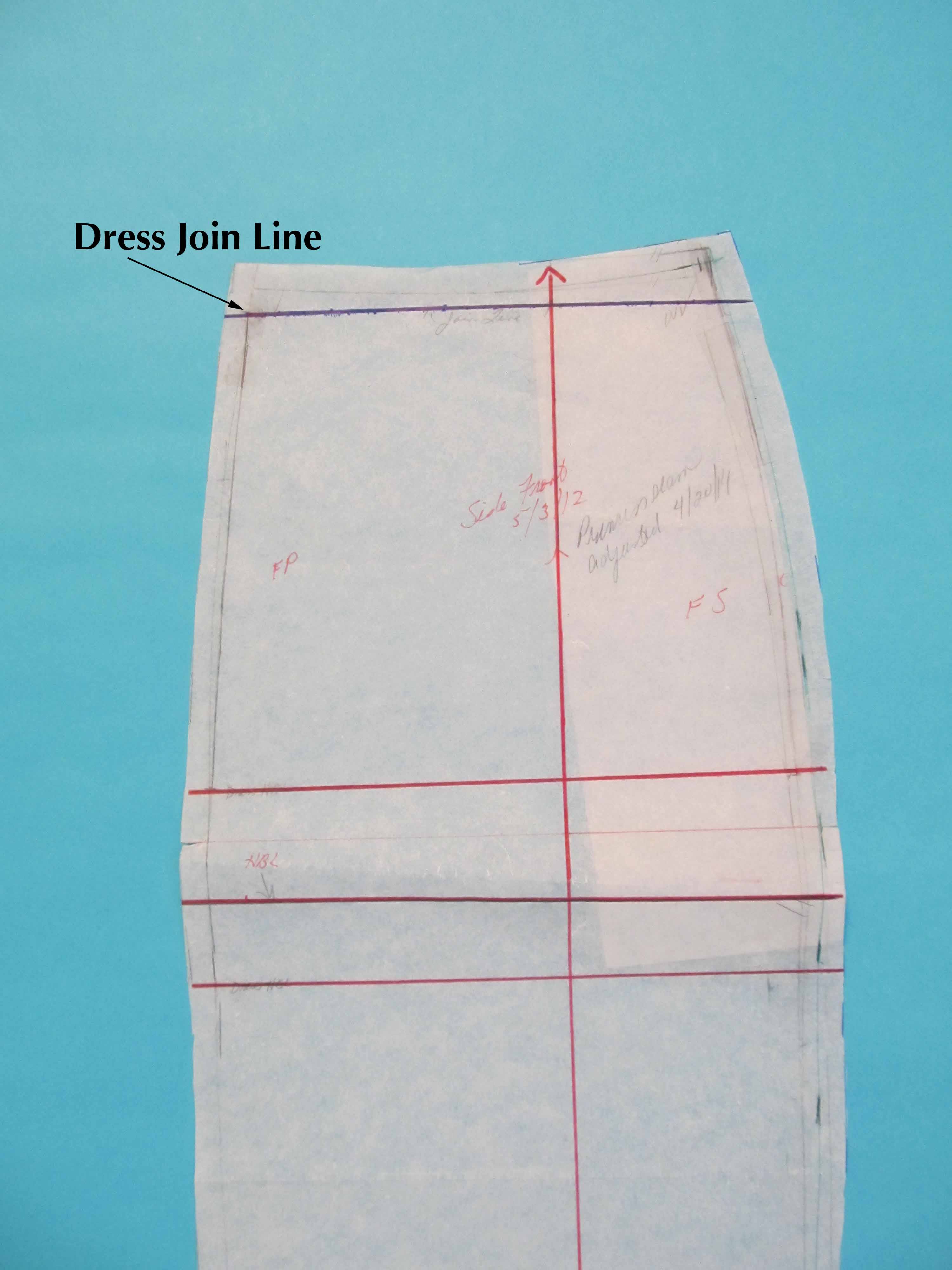
In consultation with Sarah, I chose a point on the bodice and a point on the skirt to attach the two pieces. I drew a line perpendicular to center front at that point and walked the adjoining seams (front princess, side seam, back princess) until the line was extended all the way through each of the two garment patterns.

Here is the connecting line on the skirt side front. This picture also gives you a clear view of how much tilt there is to my waist.

Skirt Join

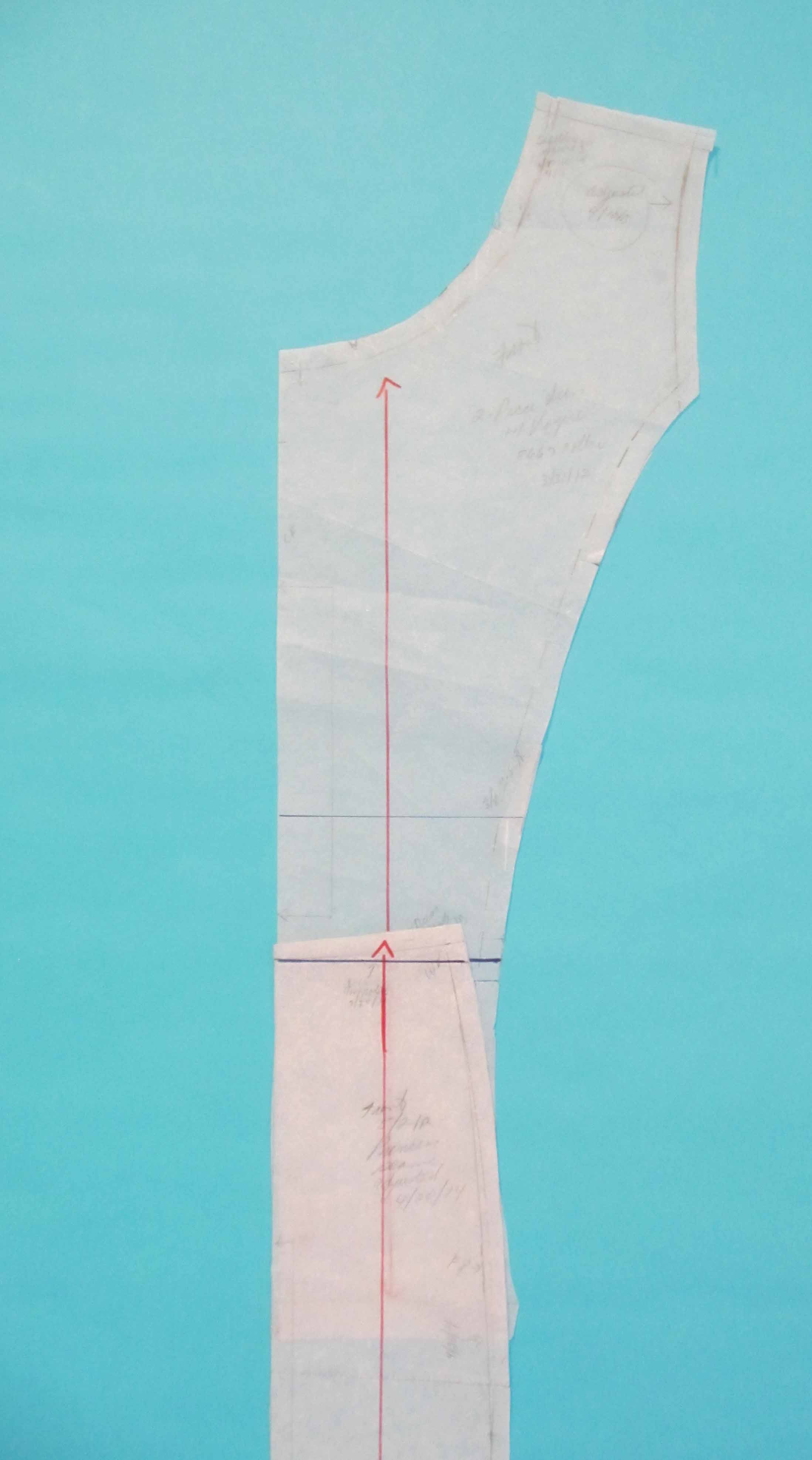
Here is how I ended up connecting the bodice and skirt front pieces.

Connected

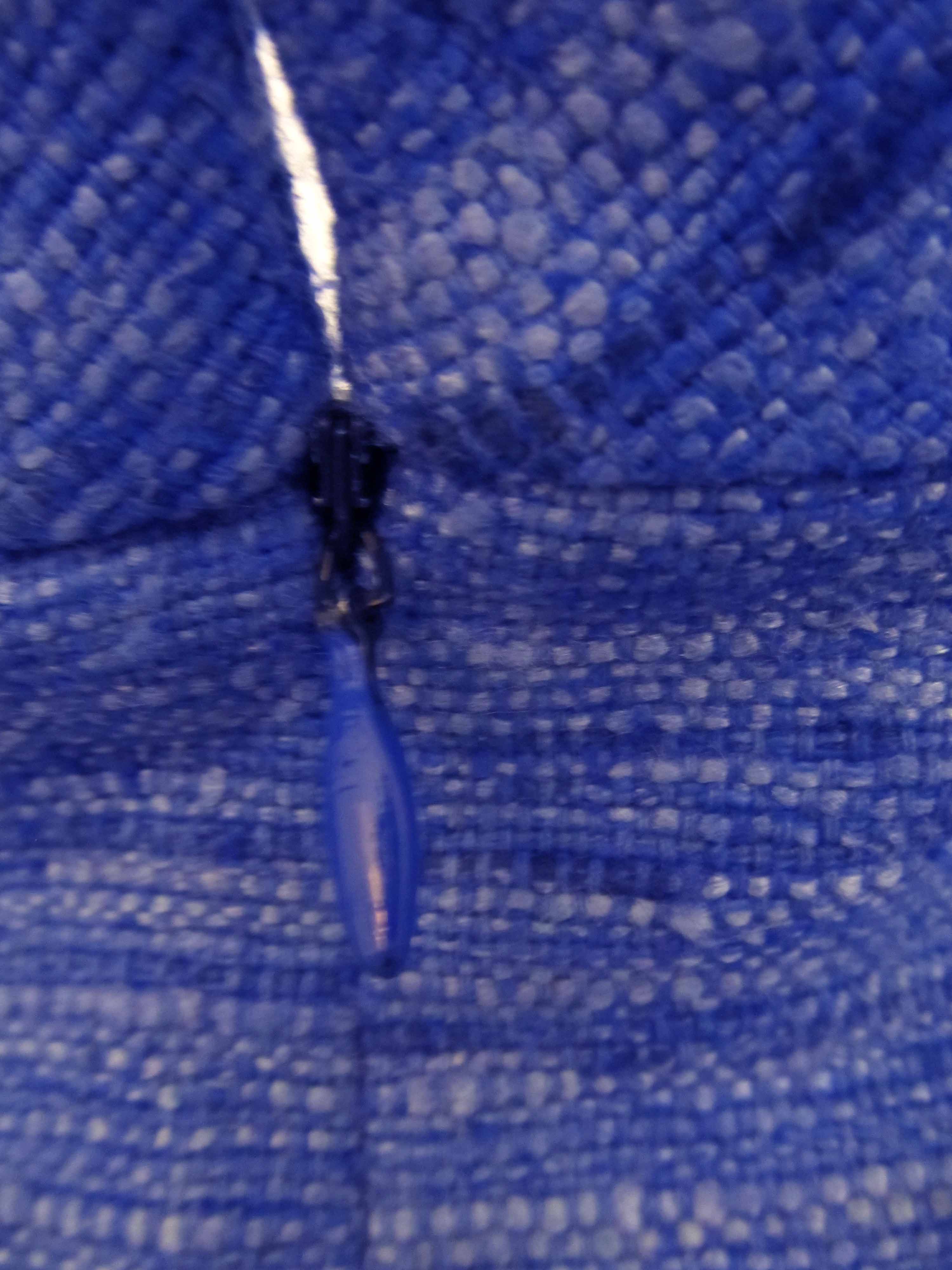
Once I mocked up the dress in muslin, I used a fit appointment with Sarah for fine-tuning. We added more shaping to the princess and side seams and everything looked good to go. After transferring the markings to the pattern, I proceeded to make up the dress in a fabulous variegated silk from Emma One Sock. I even used nail polish to make the pull on a black invisible zipper to blend in with the fabric.

ZipperPullBefore attaching the lining, I tried on the dress and absolutely hated what I saw in the mirror. There was nothing wrong with the fit, but it was definitely not flattering.

Before tackling this project, I had asked a couple of teachers, including Sarah, whether a sheath was not the right silhouette for me. That’s why I had opted for the two-piece dress in the first place. Having the skirt hugging the waist underneath the bodice and the bodice skimming over the area between the bottom of the rib cage and high hip seems much more pleasing to me than what I think of as the sack-of-potatoes look when that area is covered by a continuous layer of fabric. But I was told not to give up on a sheath and so I had invested even more time and money and I was feeling as if it was all wasted.

I put the dress on my dress form and walked away from it. Later, I wondered whether adding a collar would help by diverting attention away from the problem area. I played around with some extra fabric, cutting it on the bias and draping it along the neckline on the dress form. It certainly gave the dress a different look, but I just didn’t know. I went on to work on other projects while the dress stared back at me from the dress form.

The next time I saw Sarah, I put the dress on to show her and while she would never in a million years use a term like “sack of potatoes,” she understood why I was unhappy with the dress. Her solution was to add a design element as an “interruption” in the area I was unhappy about. I was skeptical, but it actually worked.

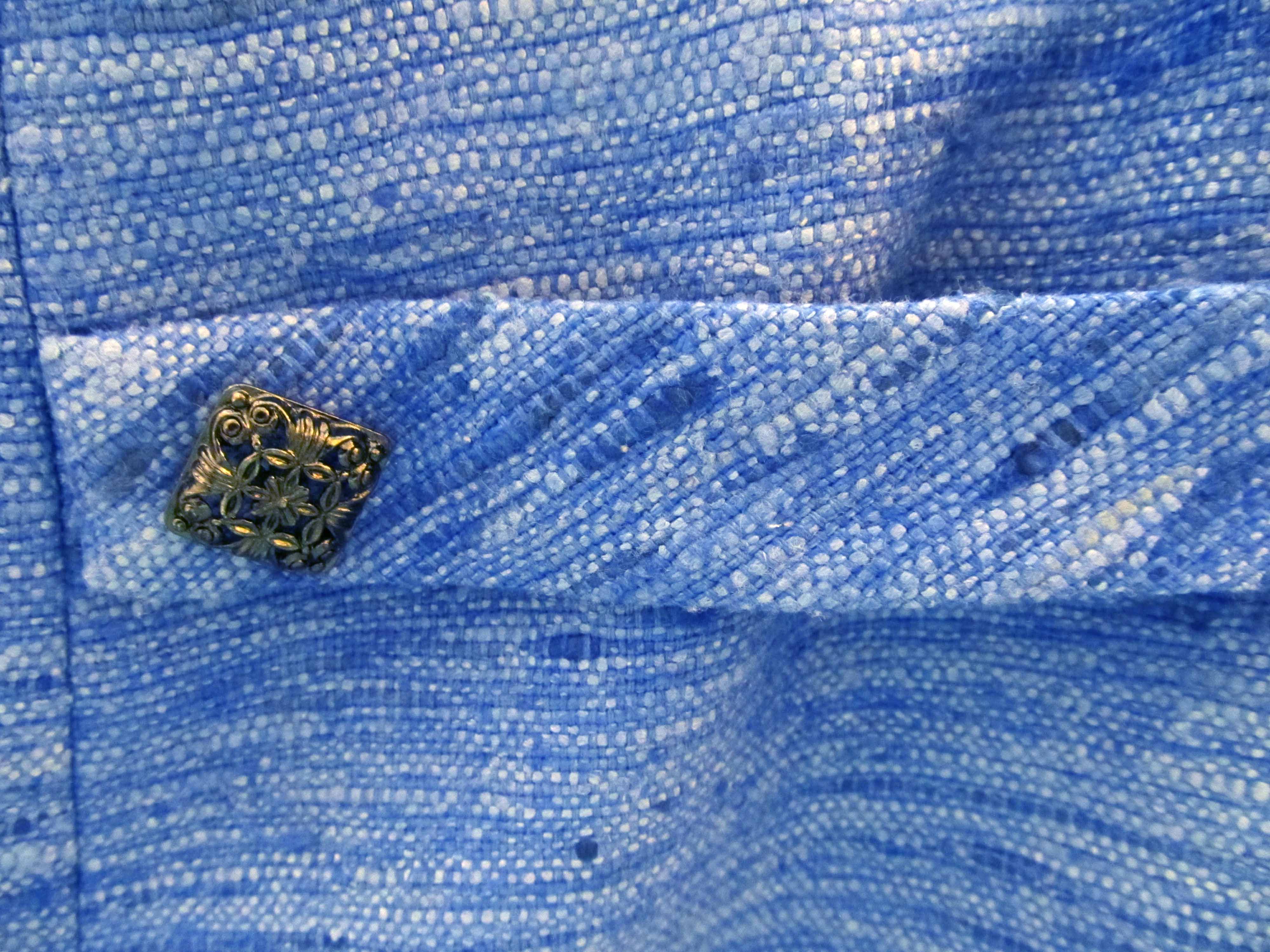
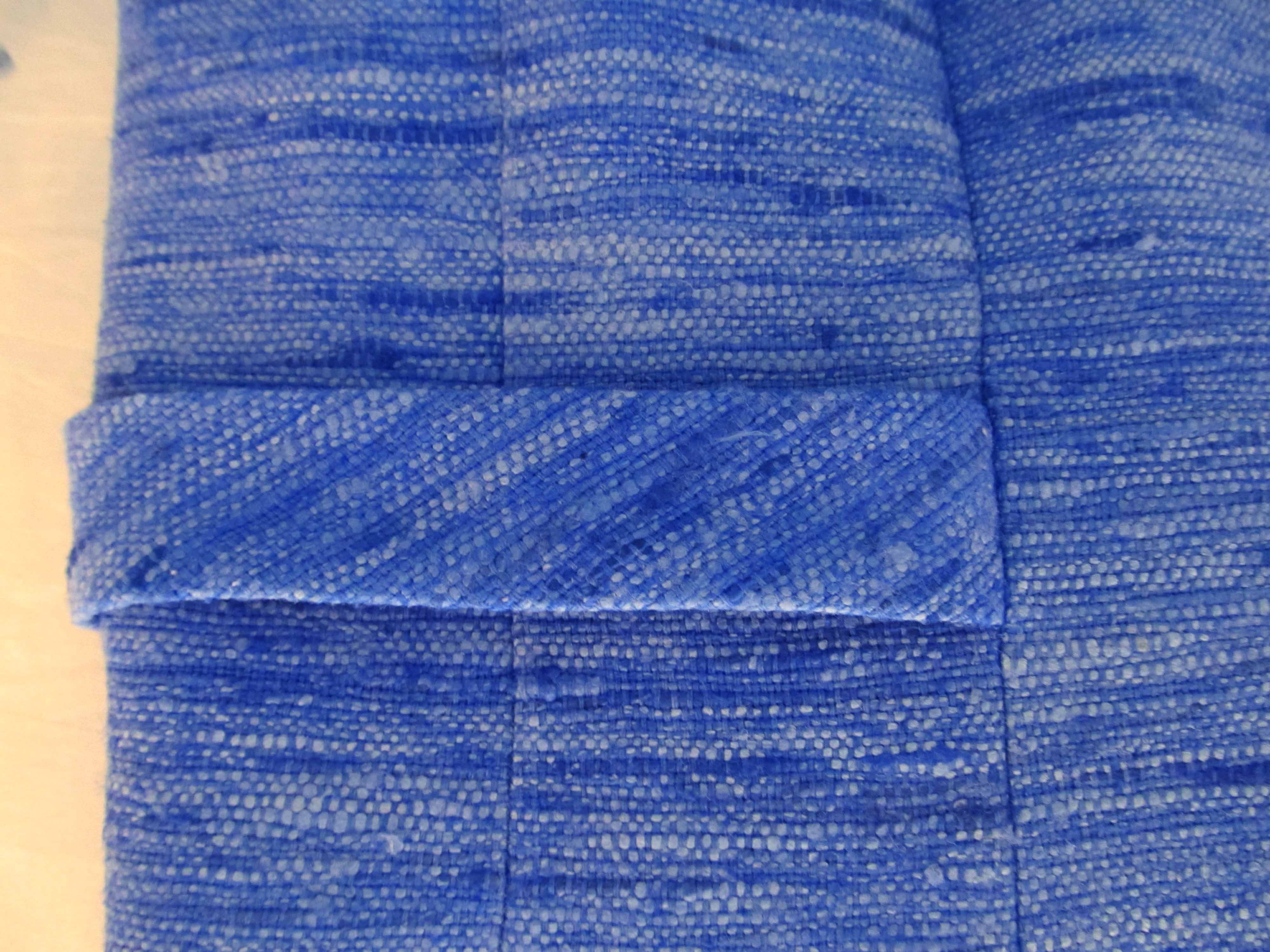
ButtonTab TabBackIt’s just a self-fabric partial belt or tab that sits next to the front princess seam on each side with a decorative button from Soutache, my favorite ribbon and trim store which is right here in Chicago.  The belt crosses the side seam and disappears into the back princess seam on each side. It’s subtle, but I think it’s effective. At least it got me to finish the dress.

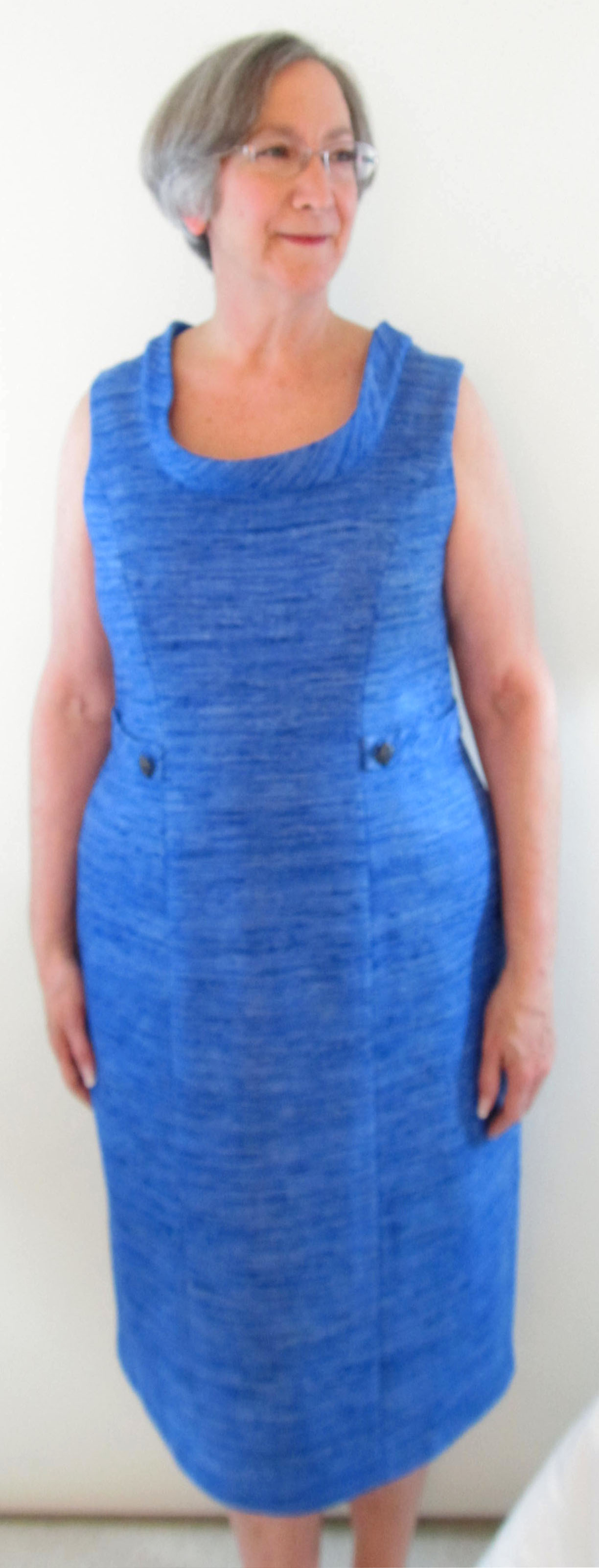
Sarah thought I should also add the collar, which surprised me. But that’s what I ended up doing. Here is the result.

Wendy Blue Sheath Sep 2014I’ve worn this dress several times and I feel great in it. I’m planning another one with a different neckline and collar.

The Disorienting Experience of Constructing the Tulip Dress

Time has an annoying habit of flying by, whether you’re having fun or not, doesn’t it? I really am sorry so much time has passed since my last post. The first few days were spent away from work with friends. I should have known those days would be too full to finish another post. Then it was back to work in full immersion mode and I didn’t emerge from that for another three weeks. Okay, enough about that. We’re here to talk about sewing.

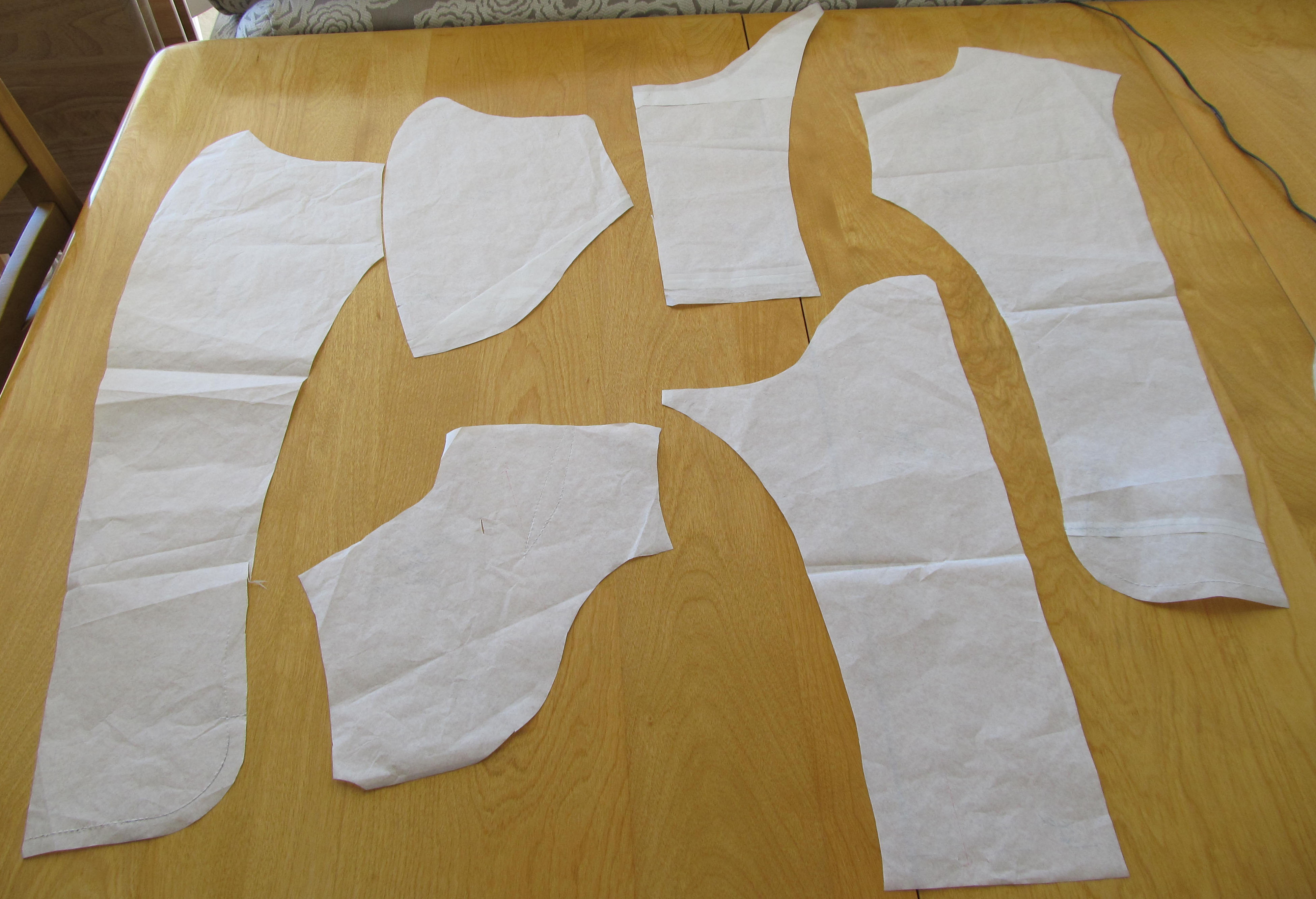
What I promised to tell you about last time was sewing the two-piece tulip dress, which was quite an adventure. Looking at fabric cut in the pieces you see below, plus all the other pieces that didn’t fit into the frame, made me think of a jigsaw puzzle with no picture to give a hint as to how to put it together. I also found the sheer number of pattern pieces daunting. Both the bodice and the skirt have princess seams, so that’s 14 main pattern pieces right off the bat.

Puzzle

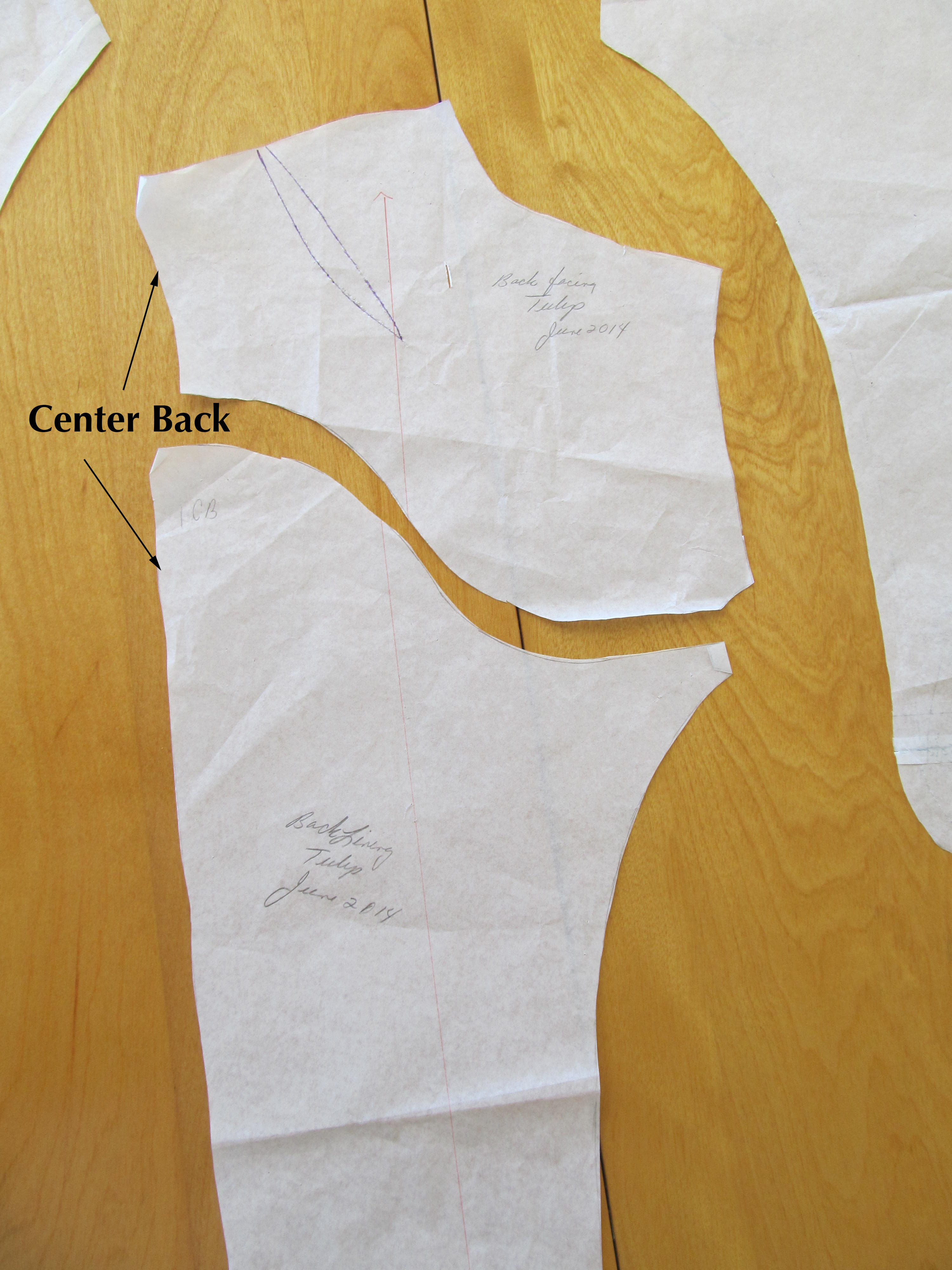
Then there are the facings for the shaped bodice hem and the front and back facings for the neckline, plus the cap sleeves and lining pieces that look pretty strange, at least in the bodice, where they hang down from facing pieces.

Back facing and liningLike I said, daunting.

This is where painter’s tape became my best friend. I usually use it to label my pattern pieces and distinguish the right side of the fabric from the wrong side. In skirts, I need to add arrows showing me which side is the princess seam and which is the side seam so I don’t repeat the mistake of trying to sew a side seam to a princess seam. For this project, the notes on the tape were more detailed and still I found myself having to refer back to the pattern to figure out which way was up. Add to that the complication that I actually cut this dress out last summer and put it aside until this spring, because linen isn’t exactly a three-season fabric in Chicago.

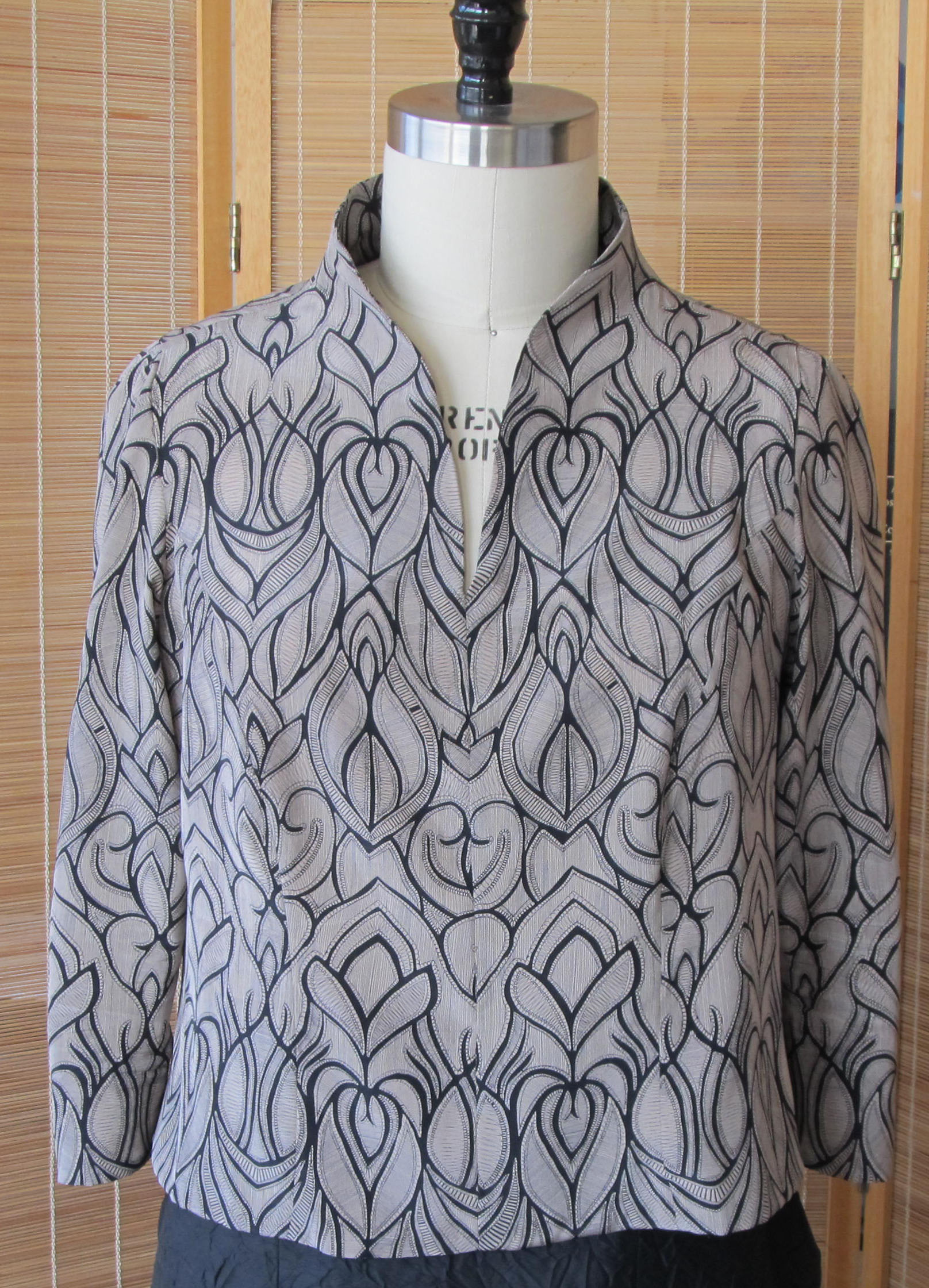
Once the pieces were cut and labeled, I tested some fusible interfacing on swatch “sandwiches” to find one with the right amount of body to support the neckline and retain the shape of the hem on the bodice piece. I chose fusible tricot for the neckline facings and fusibles with less body for the hem facings and the area around the invisible zippers (one in the side seam of the bodice and the other in the back of the skirt). This is where I should mention that linen worked particularly well for this design. I tried the same neckline in a light silk (broadcloth maybe?) and it tends to collapse when I move.

Silk Tulip Top

So, if I want to make it again in a a fabric with that much drape, I need to give it a little less length. Or, should I say height?

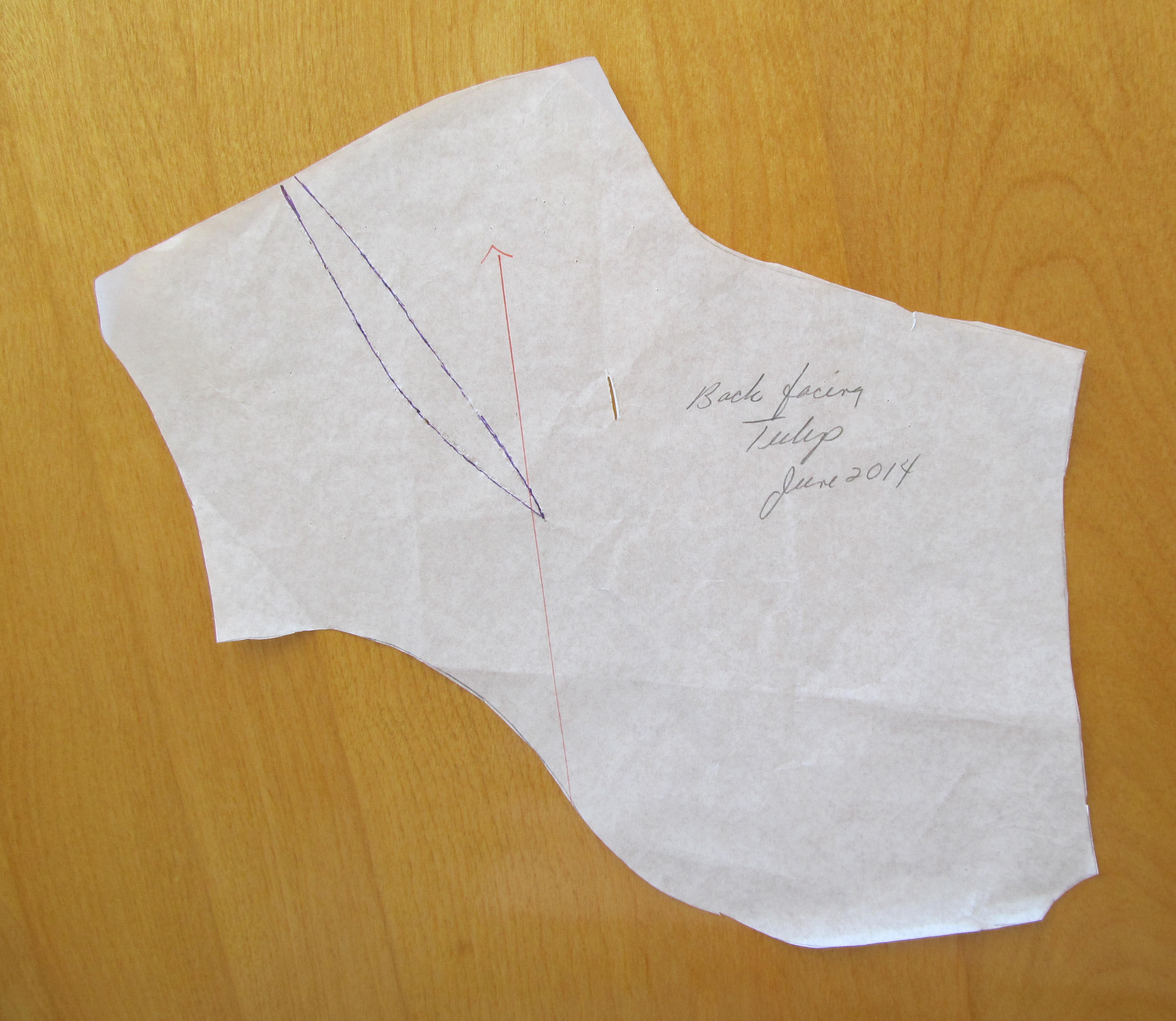
As I mentioned in my last post, the key to achieving the shape I was after in this neckline is two curved darts in the back.

Back Facing

It looks like a bear to sew, doesn’t it? But the method I use for sewing any dart accurately actually makes sewing these darts pretty much routine.

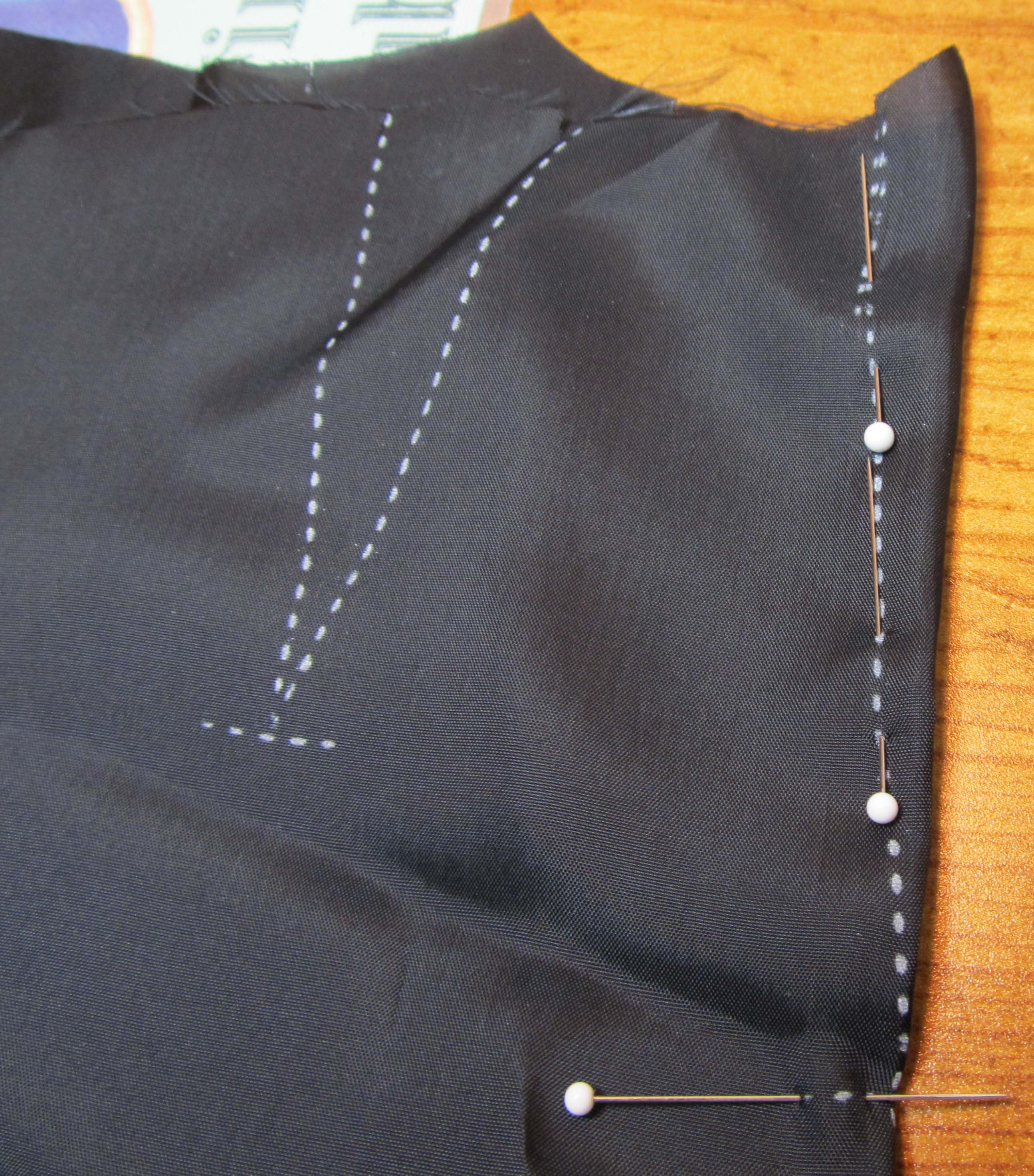
A lot of the fabrics I work with are drapey and some are also slippery, and I was getting frustrated with the way my darts were turning out. I’d mark them carefully, usually with a tracing wheel, plus snip marks at the cut edge. Then I’d pin them across and get everything lined up, but when they came out of the sewing machine only the side I could see as I was stitching followed the markings. The hidden side almost always came out all wonky. Couture’s answer to this problem is hand basting, but I was still in avoiding hand basting mode when I tackled this problem. The solution that works for me is actually pin basting, which looks something like this.

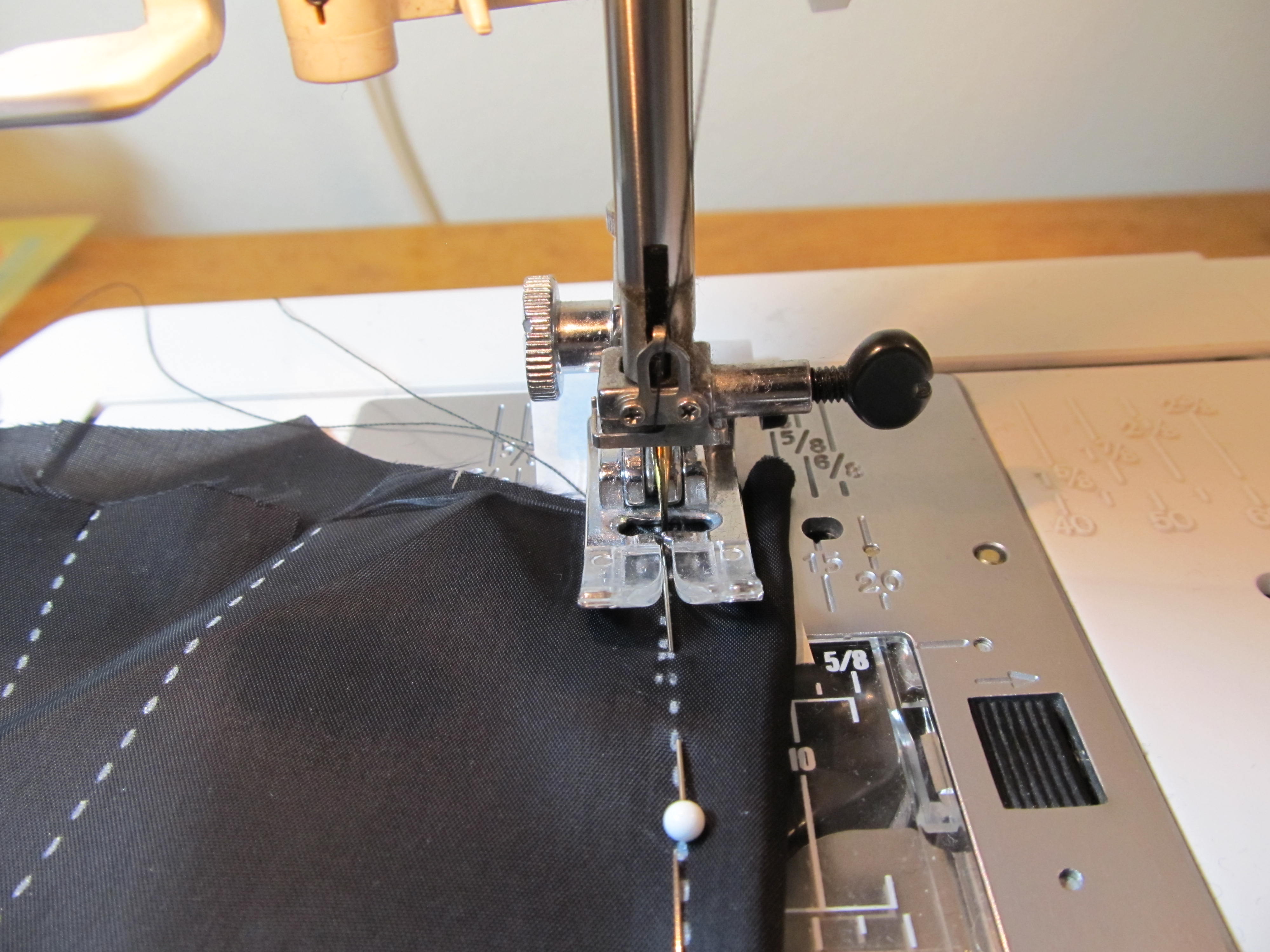
Pin BastingDepending on how wiggly the fabric is, I might weave each pin through twice. I also always put a pin across the work at the point so I can see clearly where the stitching needs to end.

Once the pins are in with the heads facing me I slide them toward me as I sew with the marked line centered between the toes of the presser foot and remove each one as I get to it. I always set the machine to stop with the needle down, so everything stays pretty much where it is supposed to be.

Dart StitchAs for the big debate about whether to start sewing darts at the cut edge or the point, I think there is something to be said about both approaches. For the most part, I start at the cut edge, but for really narrow darts or times when when hitting the point exactly as marked seems critical, I start at the point.

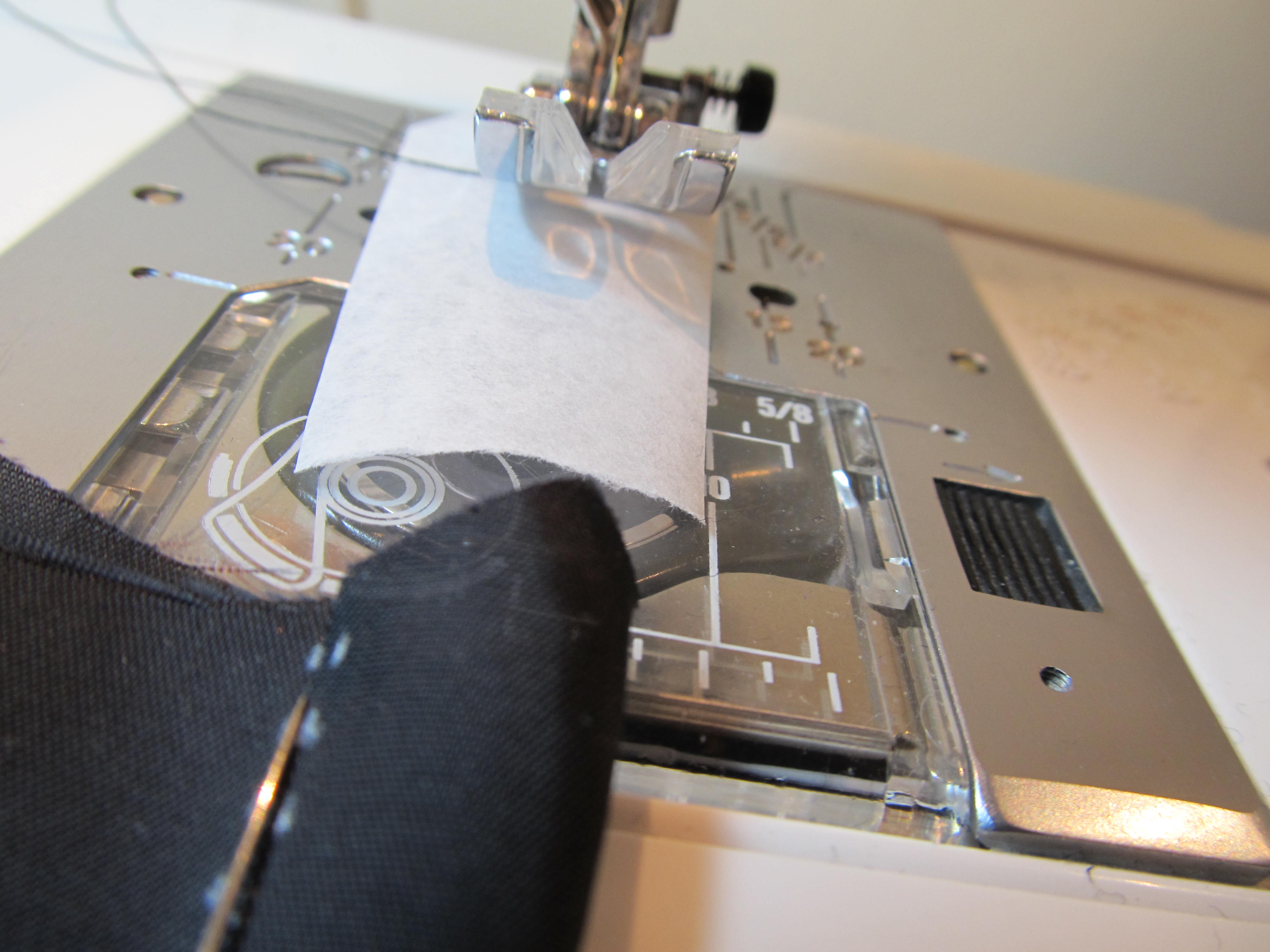
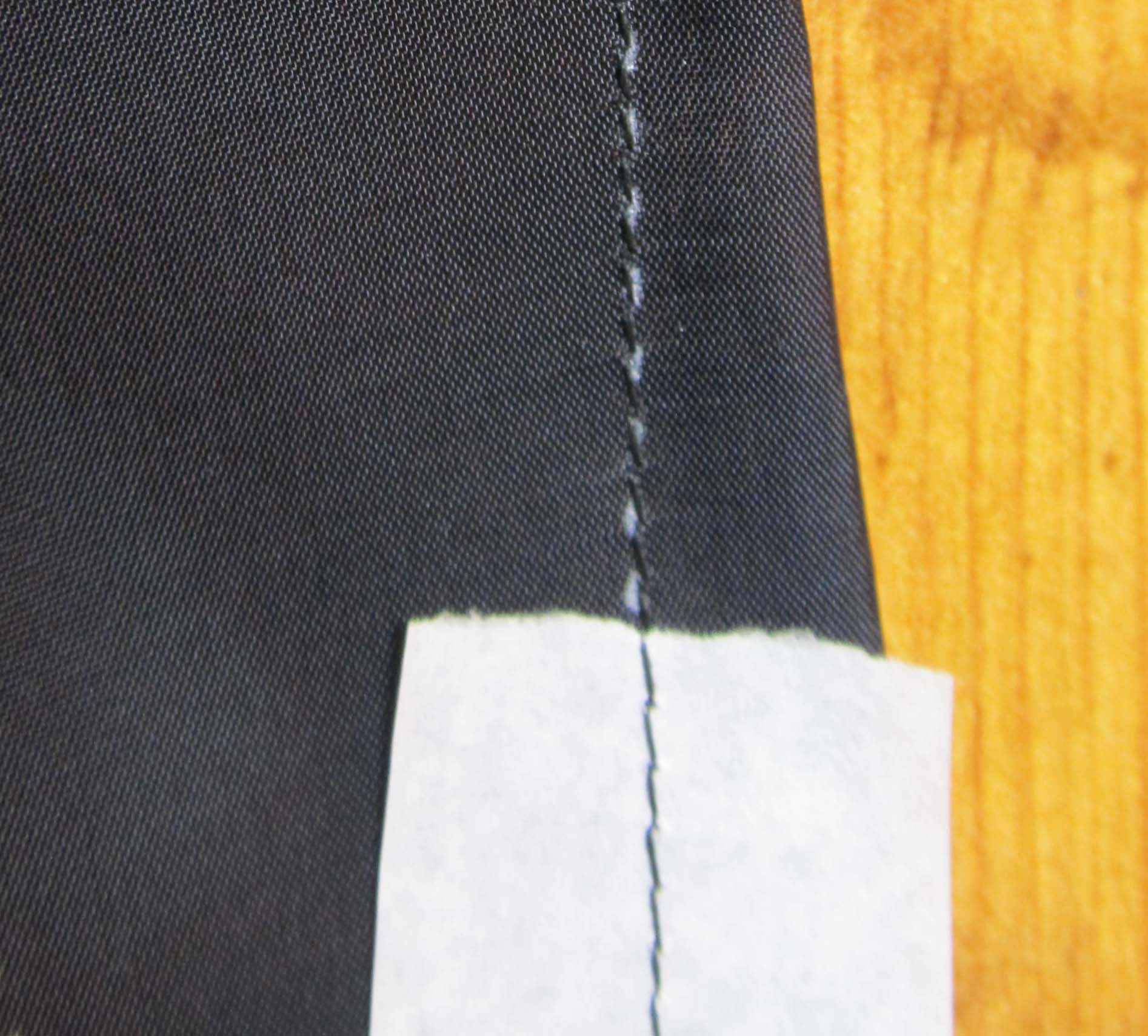
One cool trick I tried out while sewing the tulip dress was using paper to keep the cut edge of the lining fabric from disappearing into the machine. This doesn’t happen often with my machine, but with China silk lining, why not try an ounce of prevention? Some teachers say you should use a paper stabilizer for the entire seam on certain fabrics, but I recently saw a teacher use just a small scrap of paper at the beginning of the seam. It works like a charm.

Paper on MachineThis is what it looks like from the back.

Paper BackFor some seams, I used paper at both the beginning and the end. You could do the same with a dart, using paper at the point if you think it would help.

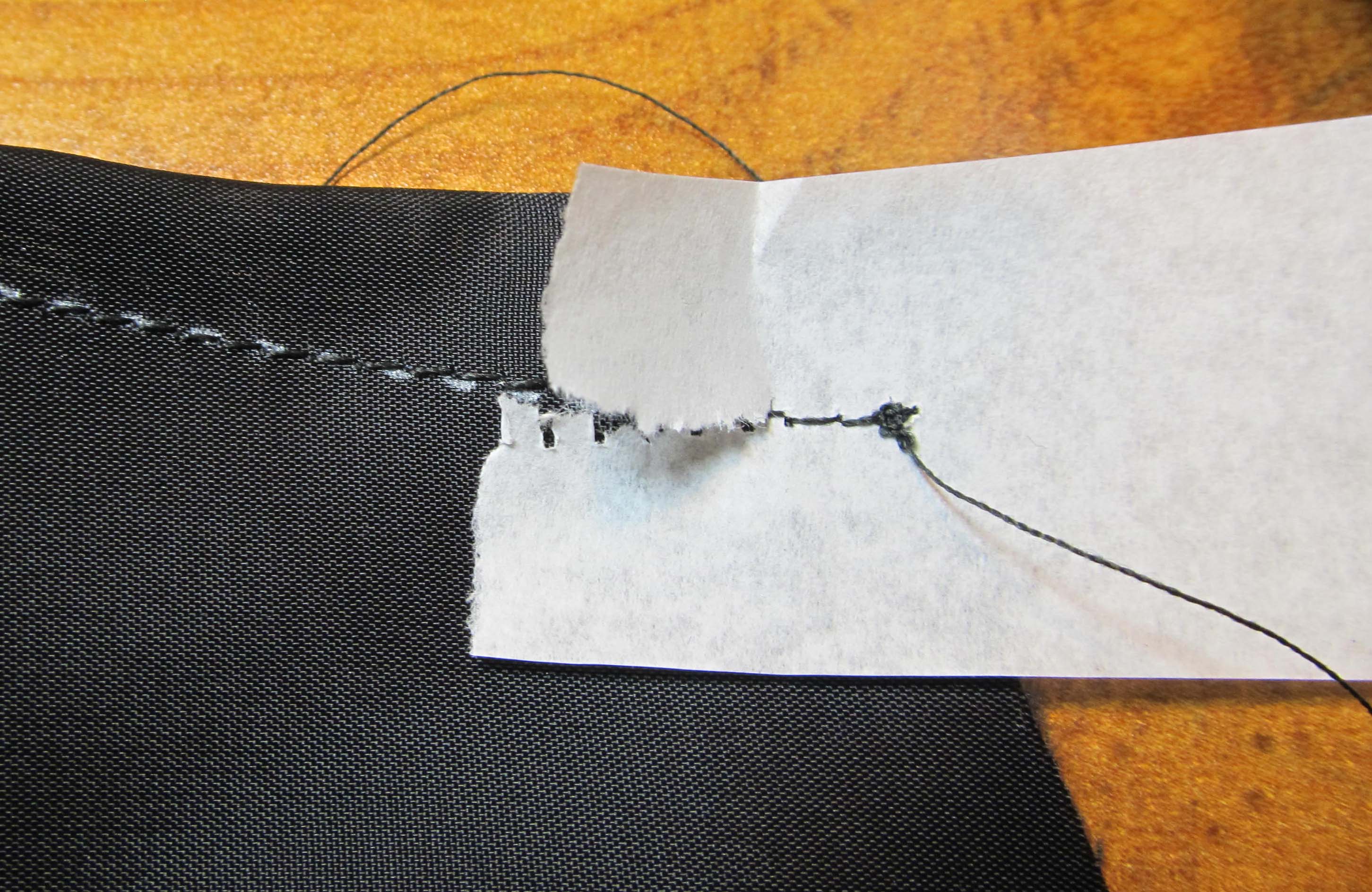
When you finish the seam or the dart, the paper tears away easily. And, if it doesn’t, that’s why we keep a pair of tweezers handy.

Tear Paper

My general approach to construction order once any darts I might have are sewn and pressed is to sew the princess seams so I have full front and back units. I know some people like to stay stitch and clip (or just clip without stay stitching) the curved part of princess seams, but I find that working with 3/8″ seam allowances and fabrics made from natural fibers that are pretty cooperative allows me to manipulate the curves with a few pins and stopping to manipulate the fabric with my hands. I love the tactile experience of sewing and this is a big part of it. When I press the princess seam allowances open using the curves on a tailor board, I can tell what areas need to be clipped and so I just do the clipping right there.

Usually, the next order of business is to get the zipper sewn in while the garment is flat. We can talk zippers another time.

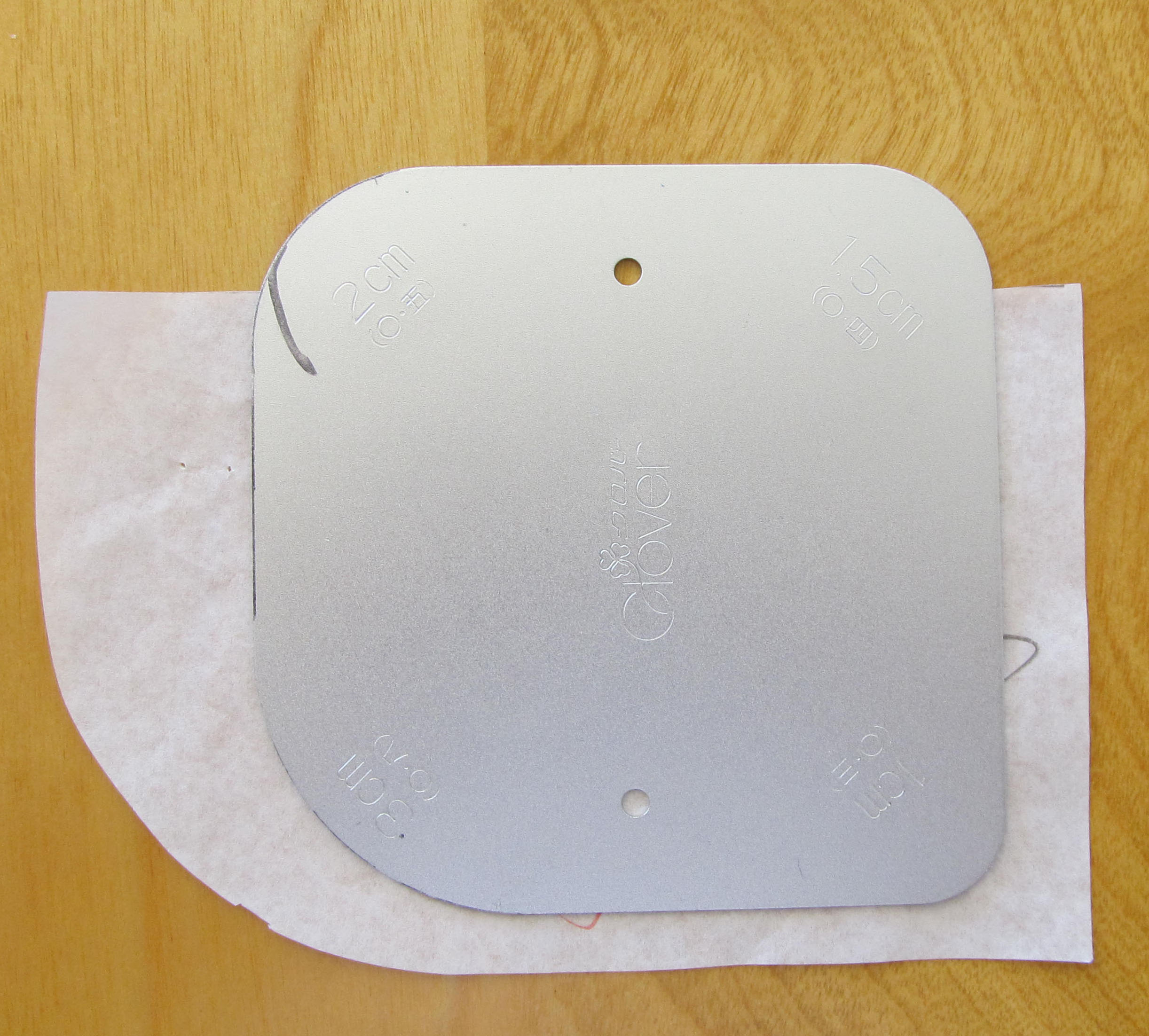
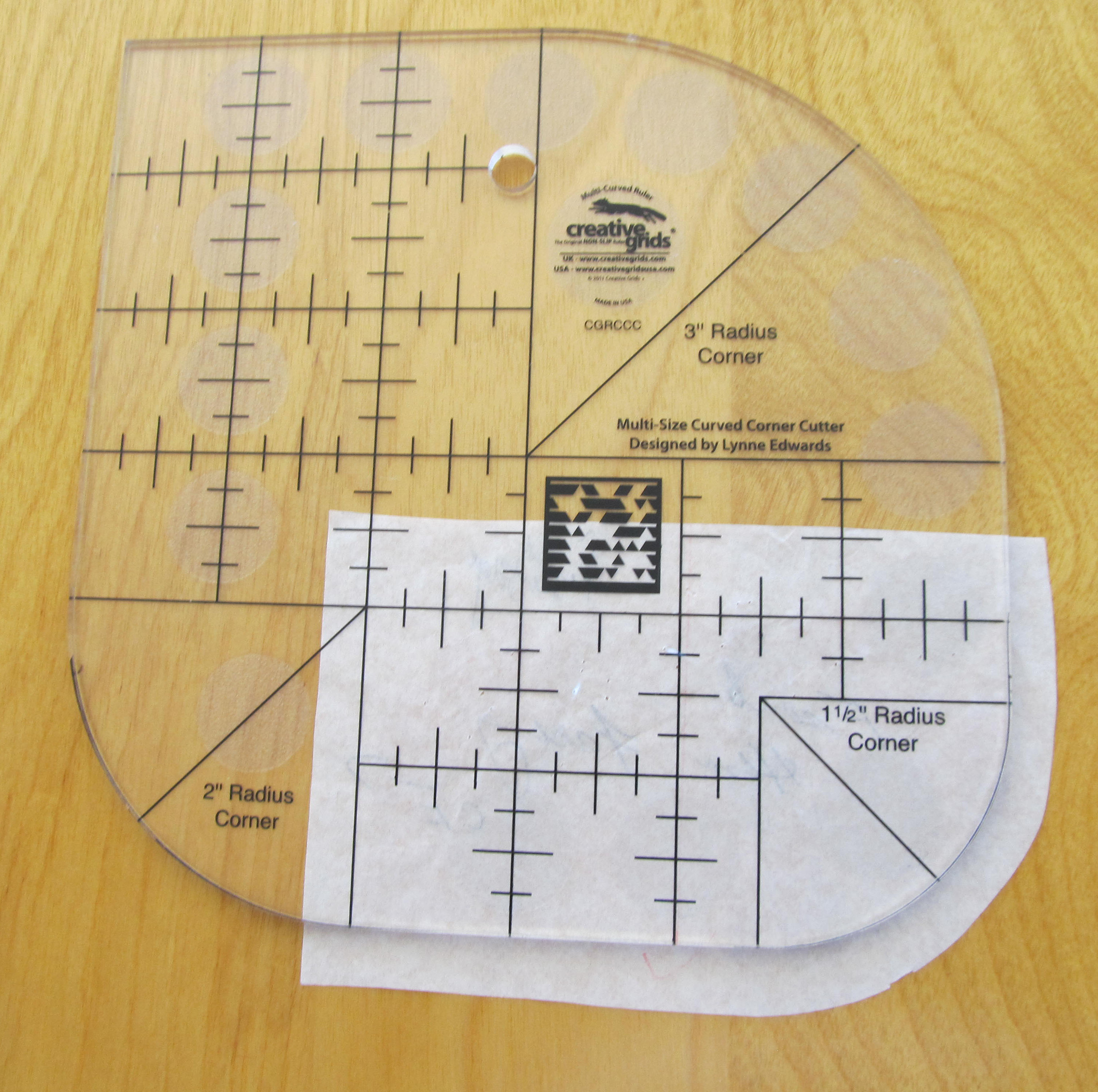
This was the first time I tried a shaped hem with facings. As  I was approaching that step, I asked myself why I had thought a shaped hem was a good idea. How was I ever going to get each one of those curves to look the same? The answer, of course, is to mark the stitching lines using a rounded corner template. Curve 2Except I forgot which template I had used to make the pattern(!) In fact, I forgot I even had the one I used. Remember. I said I cut this garment out months before I started to sew it.

Right curve

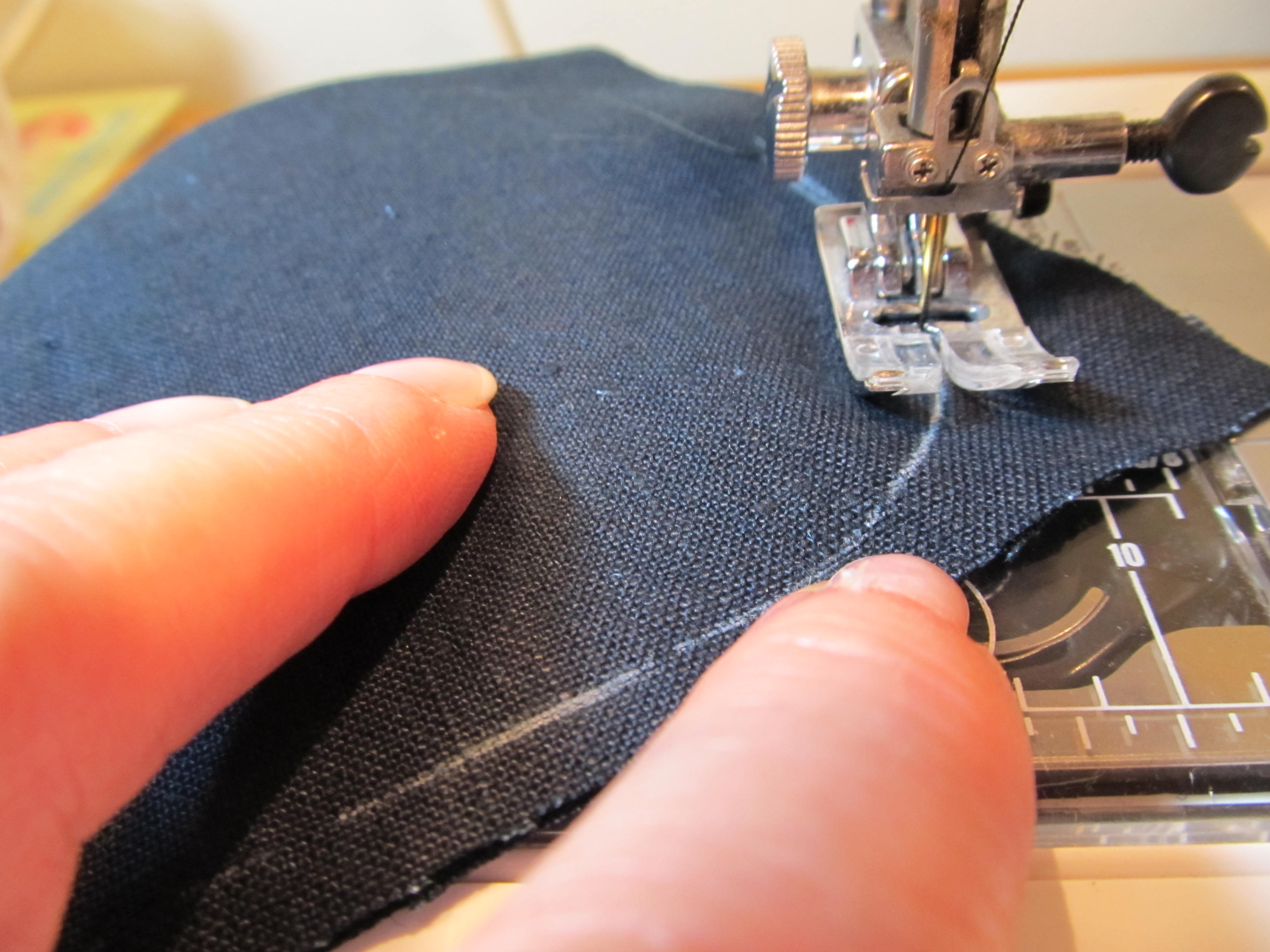
One option for marking the stitching line would have been to draw it on the pattern and use a tracing wheel and waxed tracing paper. Had I done that at the beginning, I wouldn’t have wasted all that time trying to figure out where that particular curve came from. What I ended up doing is tracing the template with a chalk pen made by Bohin that makes a very thin line. Sarah Veblen told me about this. It’s one of those wonderful tools quilters know about and garment sewists find out about later. Here it is with my trusty roll of painter’s tape.

Tape and Chalk PenOnce the line was drawn, sewing the curve slowly with smaller stitches got the job done.

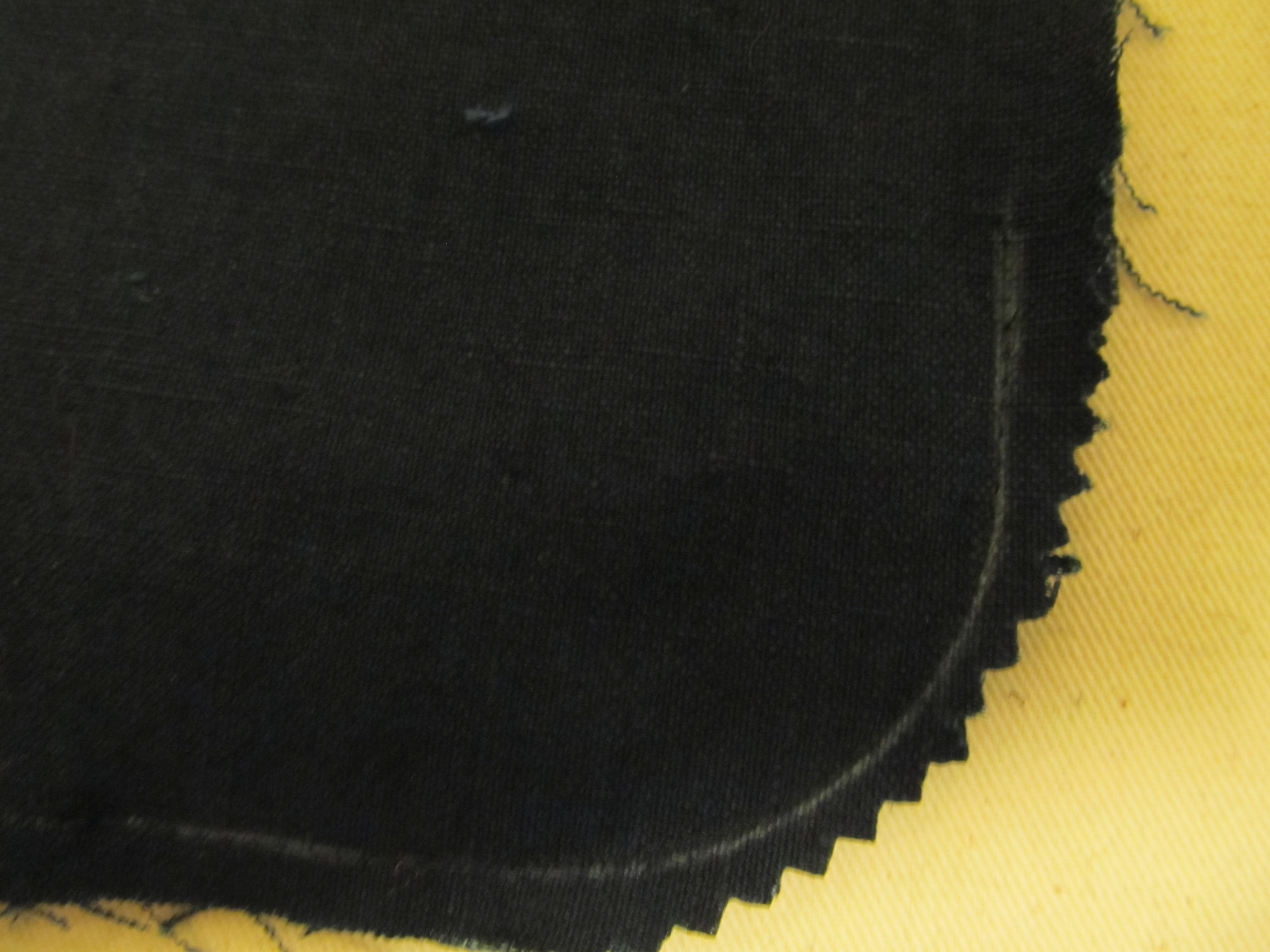
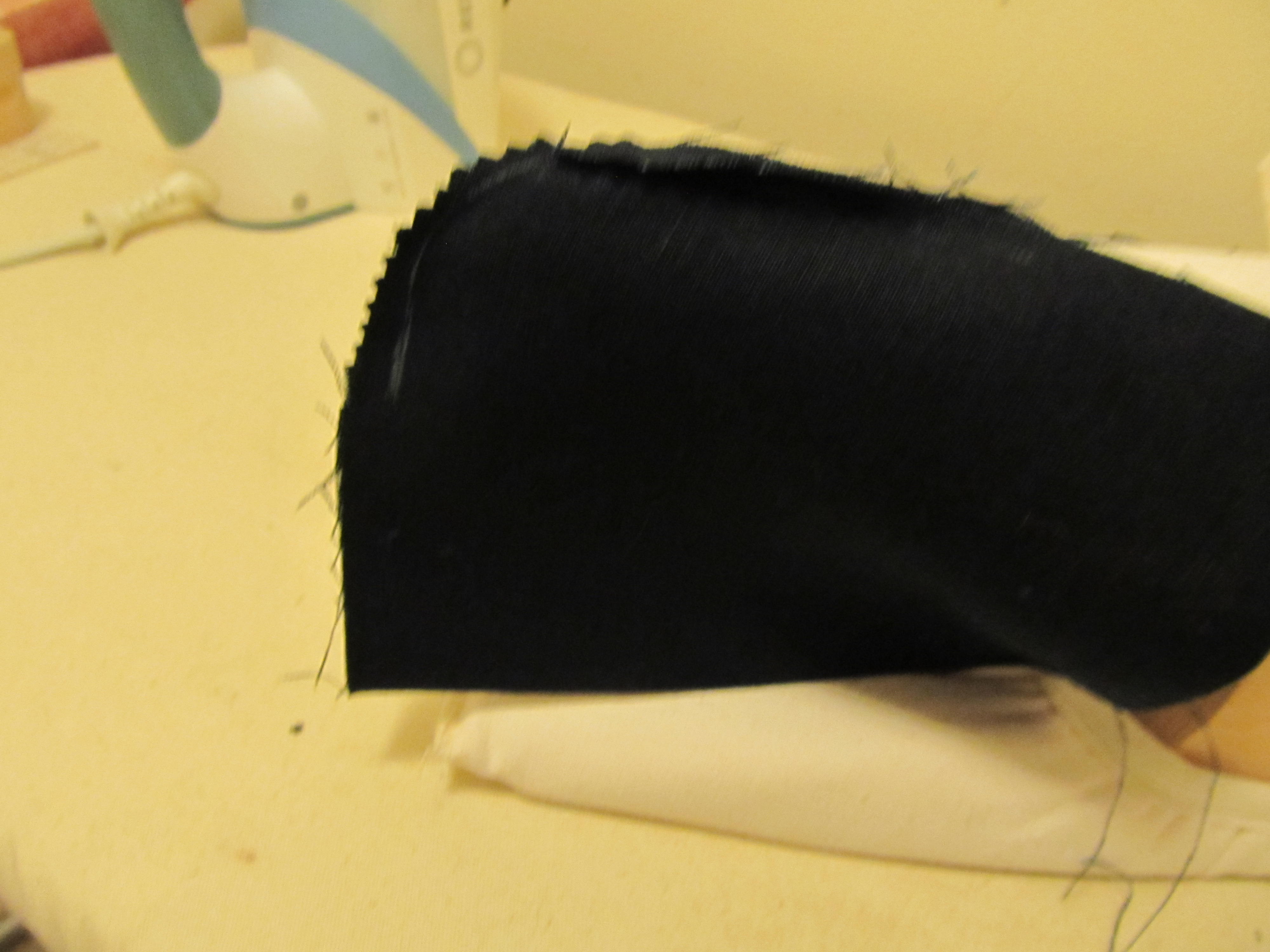
Sew Curved CornerThen I followed another tip I picked up recently, which is to trim curves using pinking shears instead of making a bunch of snips or clips one by one. How great is that?

Trimmed 2Next, I pressed the seams open over a tailor board. I know it sounds weird, but I got in the habit of doing this after taking a workshop a while back and it seems to make points and curves turn more easily and allow you to favor one side when you do the final press.

On Pt Presser

Press Open Curve

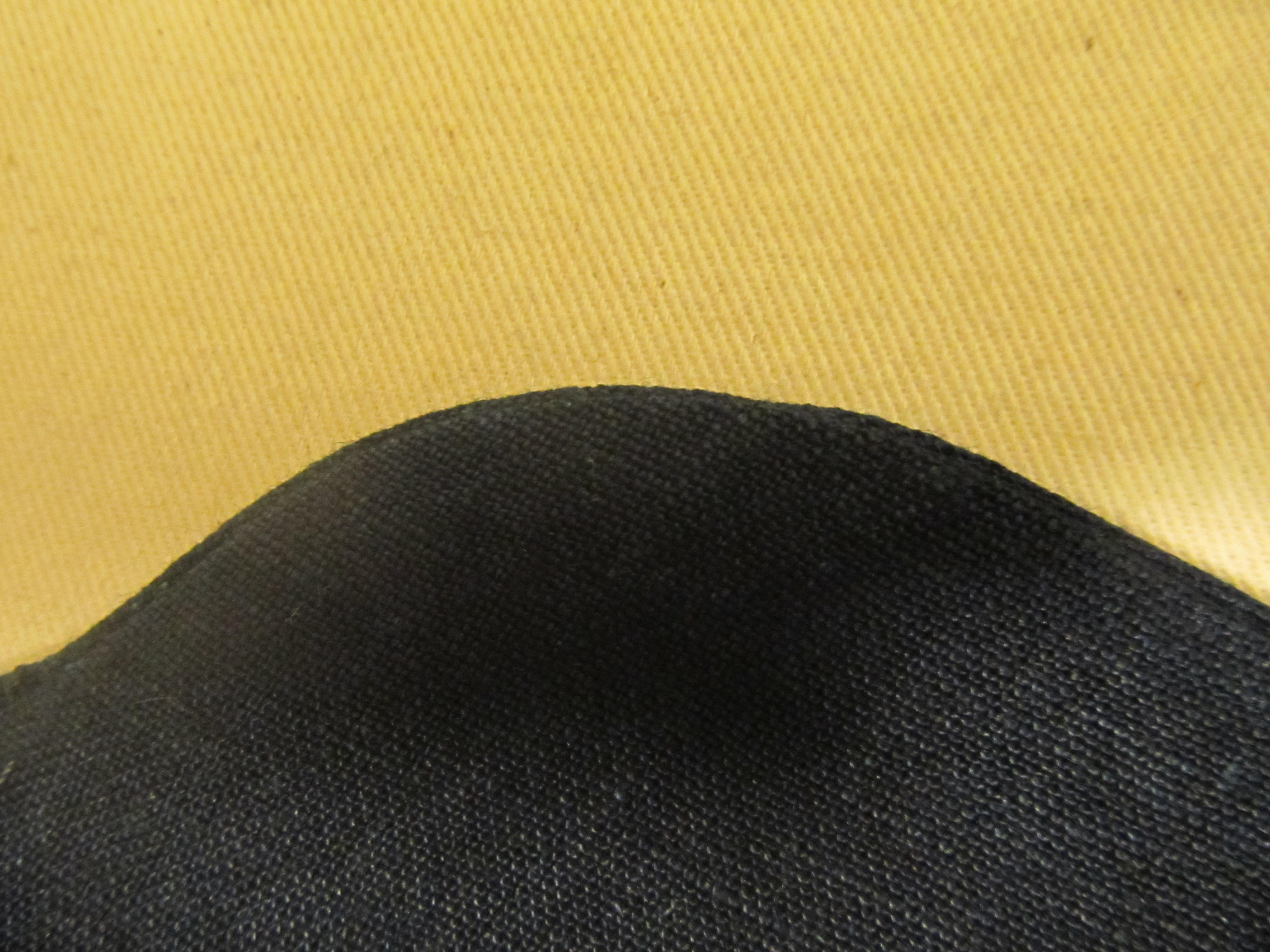
Turned Curved CornerThe one thing about constructing this dress that was exactly like every garment I make is that it took much, much longer than I had thought it would. A lovely friend of mine tells me that the reason I always underestimate the amount of time something will take is because I’m an optimist. I’m going to go with that.

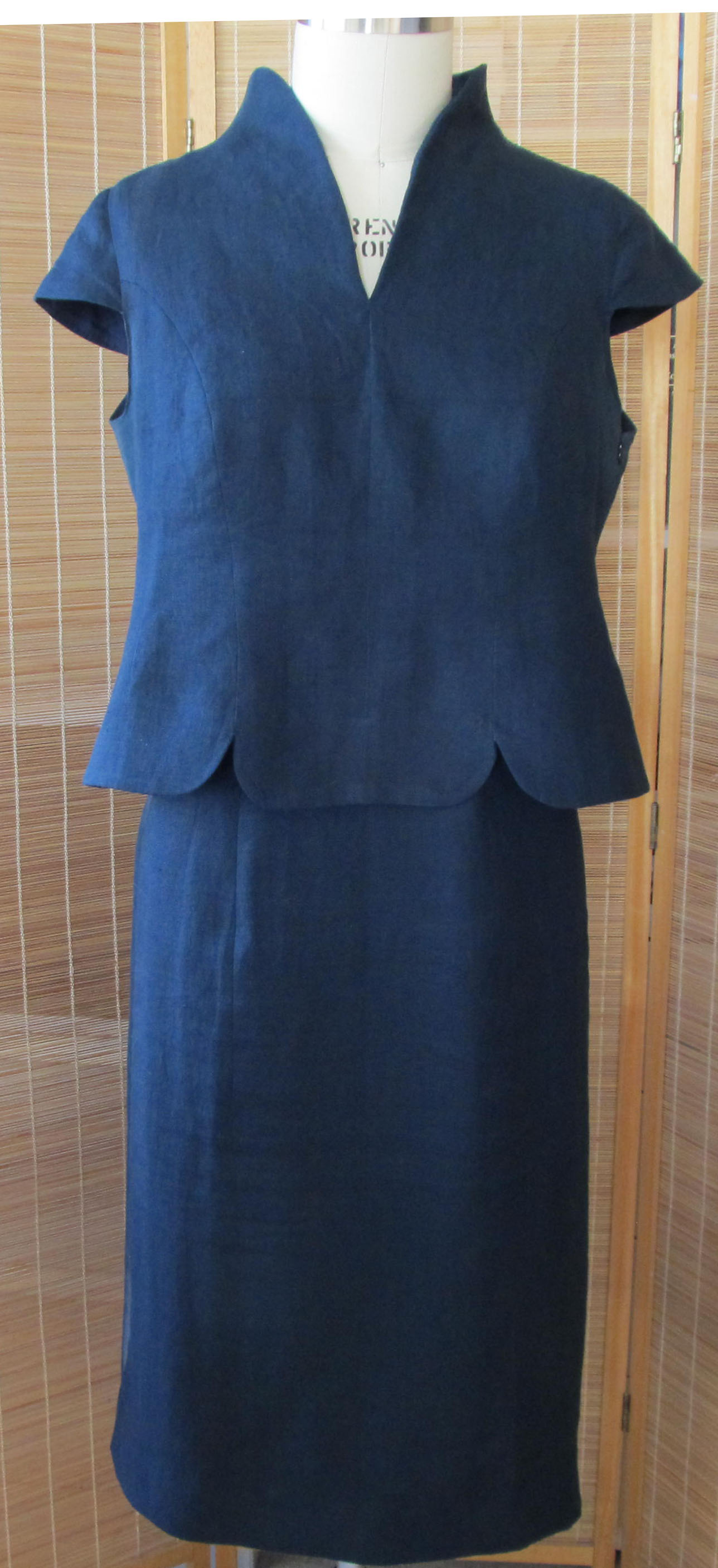
The thing is, after all that time and no small amount of anxiety, I really enjoy wearing this dress.

Linen Tulip Dress